

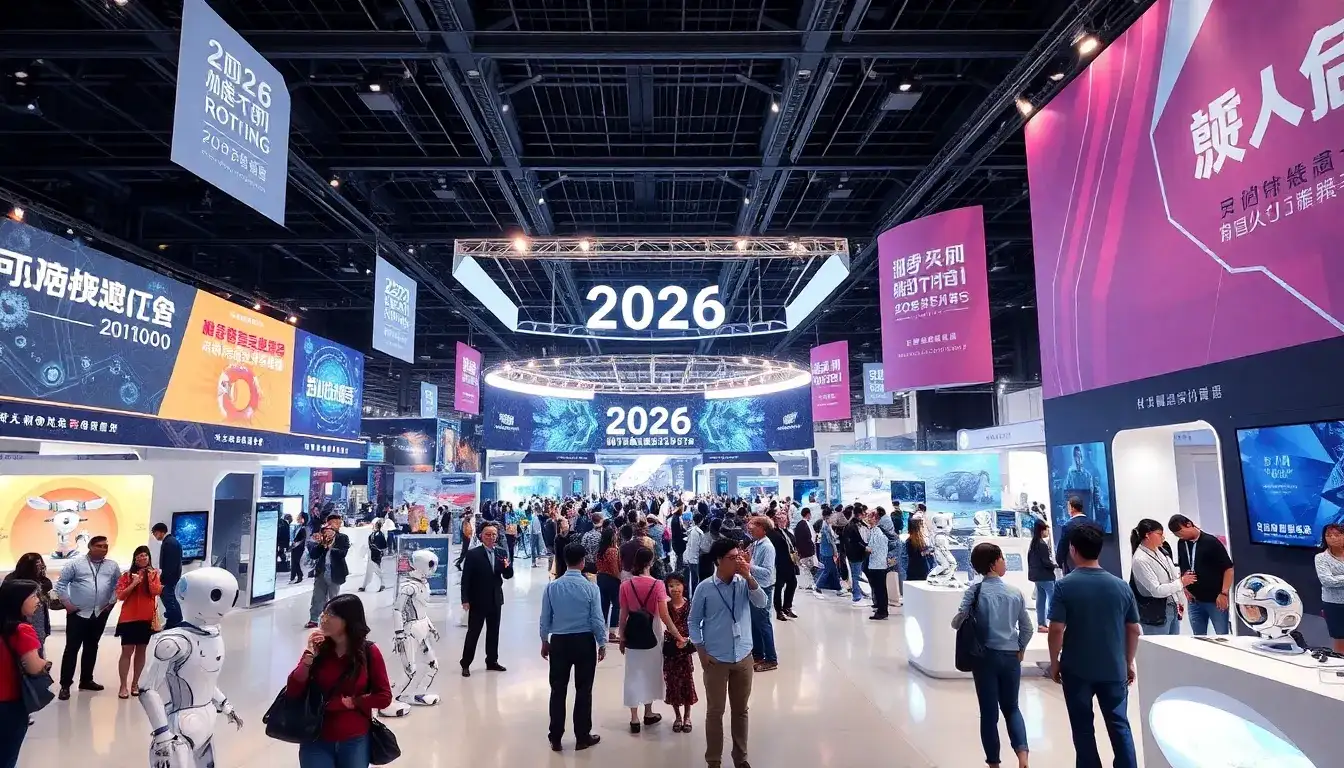
On March 18, 2026, the Beijing International Artificial Intelligence Application and Robotics Innovation Expo opened at the China International Exhibition Center (Chaoyang Hall). The event showcased impressive products, including the humanoid robot G1 from Yushu Technology, the four-legged robotic dog Go2, and the M20 wheeled robot from Yunsen Mountain. These robots displayed agile movements and easily performed complex obstacle navigation tasks. The highly biomimetic dexterous hand, Y-Hand M2, demonstrated its high degree of freedom, allowing for precise and delicate operations that attracted numerous buyers.
The expo, lasting three days, featured approximately 450 exhibitors from both domestic and international sectors, presenting cutting-edge technologies and products. The event highlighted the latest research achievements and applications in the field of artificial intelligence and robotics.
Currently, artificial intelligence is transitioning from a period of technological breakthroughs to a phase of industrial implementation. It is making significant strides in perception, cognition, decision-making, and control. AI is enhancing public safety and establishing a new ecosystem for intelligent urban defense. Embodied intelligent robots are being deployed in high-risk environments, such as mines and transportation, where they can navigate autonomously, perceive surroundings, and identify hazardous materials, thereby enhancing safety and intelligent inspection. Additionally, traditional Chinese medicine consultation robots can produce health reports in a short time. The expo unveiled many encouraging advancements in AI and robotics, showcasing a glimpse of future possibilities.
As a crucial driver of the new wave of technological revolution and industrial transformation, artificial intelligence has become a focal point for technological competition, a new arena for future industries, and a new engine for economic development. In the global race for AI industrial advancement, China is leveraging its unique comprehensive advantages to carve out a path of high-quality development.
Looking at the current trends, China’s industrial structure is actively transforming and upgrading, leading to a strong demand for new technologies like artificial intelligence. With the world’s most complete industrial chain and an enormous market, every industry possesses rich application scenarios and databases, enabling the training of models that better understand “issues.” Moreover, artificial intelligence is rapidly reshaping the global economic landscape. China has made strategic deployments and is set to implement the “AI +” initiative comprehensively. Data indicates that China accounts for 60% of global AI patents, with the user base for generative AI exceeding 500 million people, demonstrating continuous improvement in overall AI capabilities.
As a burgeoning industry, it is imperative to seize and capitalize on this strategic opportunity in artificial intelligence—there’s no room for hesitation or complacency. As we embark on the “14th Five-Year Plan,” the rollout of the “AI +” initiative will drive a transformation in research paradigms. By integrating artificial intelligence with industrial development, cultural enhancement, public welfare, and social governance, China is poised to continually ascend the heights of AI application and gain a competitive edge in the global tech arena.
Original article by NenPower, If reposted, please credit the source: https://nenpower.com/blog/emerging-as-a-leader-in-the-global-ai-competition-highlights-from-the-2026-beijing-international-ai-and-robotics-expo/

