

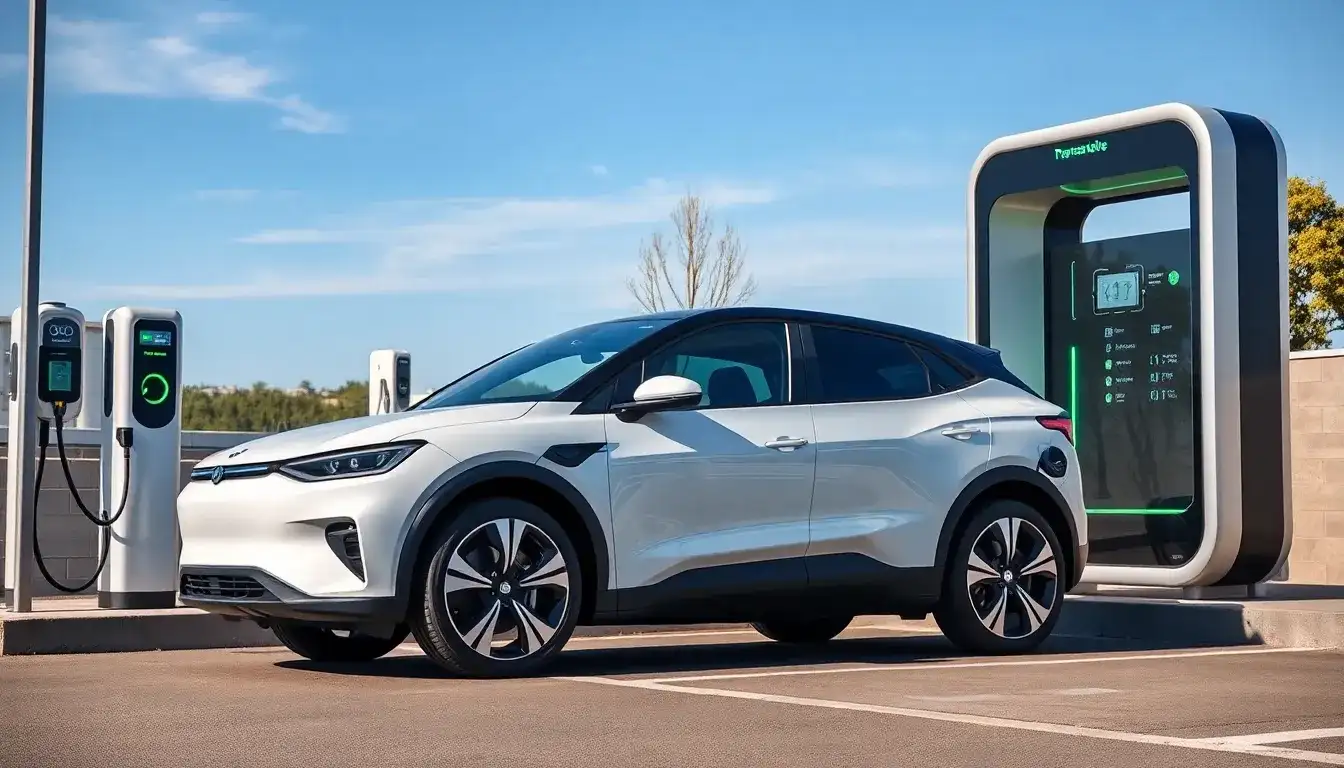
Recently, CATL and NIO signed a strategic cooperation agreement. Under this agreement, both parties will work towards unifying industry technical standards and deepening collaboration at both capital and business levels to create the world’s largest and most advanced battery swapping service network for passenger vehicles. This partnership is not only a significant step for two industry giants but is also seen as a crucial turning point for the battery swapping model as it transitions from an exploratory phase to a more mature stage.
The two main methods for replenishing energy in electric vehicles are charging and battery swapping. Compared to charging, the battery swapping model significantly reduces the time required for refueling electric vehicles, making it as quick as refueling a traditional gas vehicle. For instance, NIO’s battery swapping stations can complete a battery swap in just three minutes, even under extreme temperature conditions, and their fourth-generation stations can do so in as little as two minutes and 24 seconds. Additionally, the “separation of vehicle and battery” sales model can effectively lower the cost of purchasing a vehicle, making it more consumer-friendly. Furthermore, since battery swapping does not require users to exit their vehicles, it addresses common issues such as occupancy of charging spaces and the inconvenience of heavy charging cables, making it particularly suitable for urban residents without fixed parking spots.
However, the battery swapping model is capital-intensive, requiring high investment and a long development cycle. Currently, the lack of unified battery technology standards makes it difficult to achieve economies of scale or to close the commercial loop in the short term, leading to skepticism about its future. As charging technology continues to evolve, with rapid charging, ultra-fast charging, and even flash charging becoming more prevalent, the necessity of battery swapping has come under scrutiny. Some companies have also fueled concerns about the viability of battery swapping by heavily promoting the imminent mass production of solid-state batteries, with some even suggesting that “now is the time for the battery swapping model to exit the market.”
Such doubts may be rather short-sighted and one-sided, lacking a scientific and rational basis. In reality, whether it’s fast charging or ultra-fast charging, these methods are better suited for emergency charging scenarios. For instance, when a vehicle’s battery is nearly depleted, and there is an urgent need to reach an important destination, or during long-distance travel when charging stations are sparse, fast charging plays an irreplaceable role.
Nevertheless, there are two sides to every issue. Frequent use of ultra-fast charging can lead to a “binge” effect, which may significantly shorten battery life and create challenges for users in terms of vehicle and battery maintenance. In China, the warranty period for electric vehicle batteries is typically eight years. Between 2025 and 2032 alone, nearly 20 million electric vehicle batteries will reach the end of their warranty periods, posing potential issues such as loss of battery warranty, mismatched battery life with the vehicle, and high replacement costs.
As for solid-state batteries, current global research and development face three major challenges: technology, manufacturing processes, and costs. For example, the “solid-solid interface” issue is unlikely to be resolved in the short term, and the material costs are significantly higher than those of existing liquid batteries. Industry experts generally believe that solid-state batteries are still quite a long way from large-scale production, and the semi-solid batteries that have made it to market still belong to the category of liquid batteries and should not be confused with solid-state batteries.
The social value of the battery swapping model extends beyond enhancing user experience; it also emphasizes the scientific management of the entire battery lifecycle. Batteries are not merely energy storage devices; their performance can vary based on factors such as usage environment, charging and discharging methods, and frequency of use. Under traditional models, each battery is tied to a single vehicle, making management less specialized and optimal usage difficult to achieve. Furthermore, since batteries are owned by users, manufacturers must repurchase used batteries for disposal, which is complicated by the diverse locations and varying models of batteries owned by users, creating significant hurdles for recycling. However, under the battery swapping model, centralized battery management allows for timely identification of battery performance and status issues, enabling efficient charging, maintenance, and replacement, thereby promoting tiered utilization and efficient recycling, aligning with the principles of a circular economy and green development.
From the perspective of national energy strategy, the battery swapping model offers unique energy synergy value. Each battery swapping station functions as a distributed energy storage node, and once a national battery swapping network is established, it will form the nerve endings of a smart energy internet. This vehicle-to-grid (V2G) technology can transform electric vehicles into mobile energy storage units, playing a critical role in enhancing the flexibility and stability of power systems, promoting efficient integration of renewable energy, and optimizing economic operations of power systems. As the installed capacity of renewable energy in China continues to grow, the flexible peak-shaving capacity of battery swapping stations is expected to become instrumental in accommodating the variable nature of wind and solar power. This also underlies the deeper reasons for the government’s strong support for the construction of battery swapping stations and the promotion of battery swapping vehicles.
Charging and battery swapping should not be viewed as alternatives, but rather as complementary and symbiotic technological combinations. In the face of the wave of electrification, intelligence, and decarbonization in industrial transformation, China’s vast market provides ample space for technological and model innovation. Thus, we should not simplify the relationship between charging and battery swapping into a binary opposition, but rather embrace a multifaceted approach that includes “chargeable, swappable, and upgradable” thinking. When charging networks intersect with battery swapping systems, and when “private charger sharing” looks towards “battery banks,” the convergence of ultra-fast charging technology with modular battery swapping will ignite sparks of innovation that illuminate the path towards high-quality development for electric vehicles in the future. Perhaps, as the century-long history of the automotive industry suggests, truly great innovations are never the result of a single choice, but rather the wisdom of multiple selections.
Original article by NenPower, If reposted, please credit the source: https://nenpower.com/blog/embracing-synergy-the-complementary-roles-of-charging-and-battery-swapping-in-electric-vehicle-evolution/

