

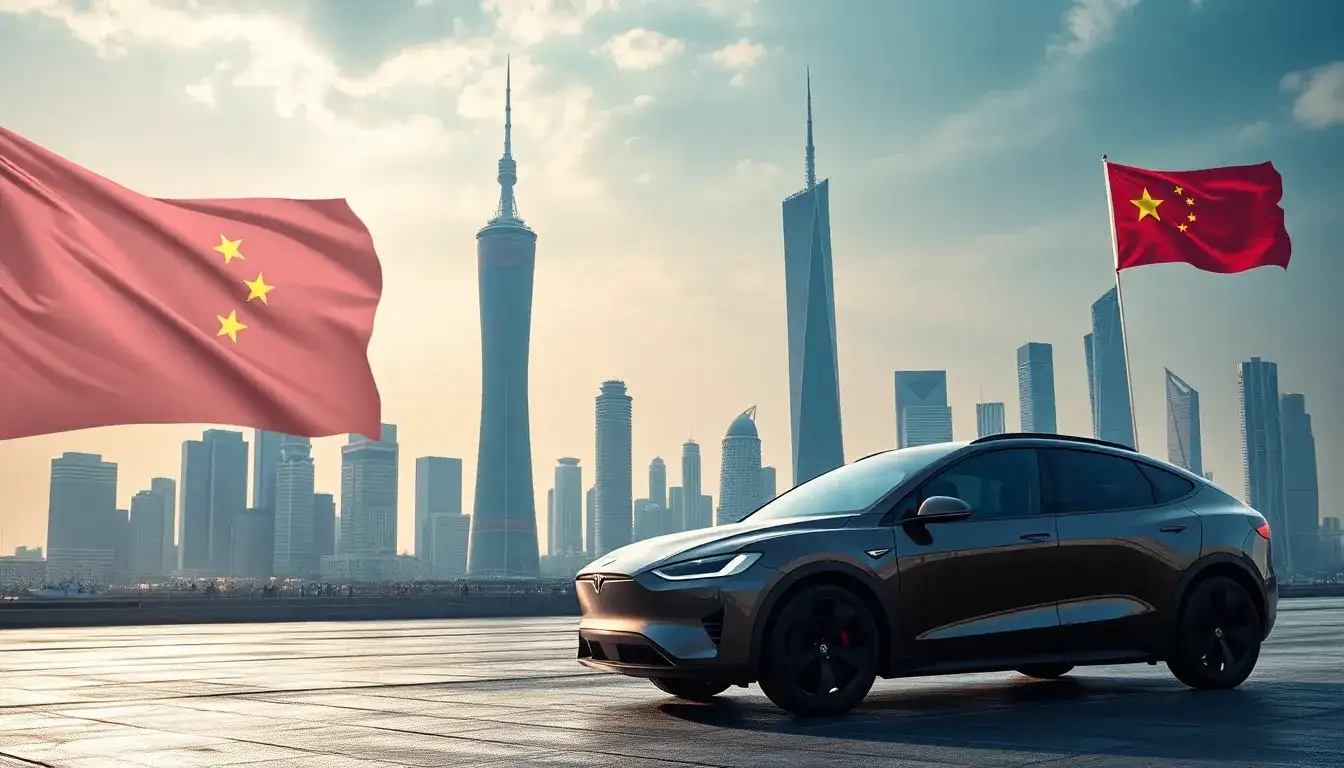
China’s biggest future challenge is not Trump, but the impending emergence of Elon Musk, who may soon wield a fortune of over one trillion dollars.
As global attention remains fixated on the political maneuvering in Washington, where the trade statements of a former president are continually analyzed, a more profound and decisive shift is silently taking shape. The core competition that China faces in the future does not lie within diplomatic rhetoric or tariff lists, but is deeply embedded in areas such as chip manufacturing, low-orbit satellites, advanced AI models, and real-time data streaming. This represents a complex battle over technological sovereignty and system control.
Behind Elon Musk’s wealth surge to $6 trillion lies the potential formation of a new technological power that spans both physical and digital realms.
From “selling cars to sending satellites” to “merging AI”
Musk’s wealth growth is not merely an arbitrary bubble of capital expansion; it is underpinned by forward-thinking insights into the evolution of hard technology and a consistent strategic positioning over the past decade. He refuses to be constrained by quarterly financial reports and has consistently focused on three strategic pillars: space infrastructure, smart device entry points, and general artificial intelligence. The deep integration of xAI is a crucial step in connecting the entire chain of “perception—transmission—decision-making.”
From the Starlink satellite constellation in low Earth orbit to smart cars on the roads, and the operation of large-scale models in the cloud, each element points towards a singular goal: establishing a self-controlled technological loop that spans the realms of sky, land, and data.
Behind the apparent explosion of wealth is Musk’s systematic resource acquisition in low Earth orbit, primarily through the Starlink program. Since its launch in 2019, the project has been rapidly expanding its network, ultimately envisioning around 42,000 satellites aimed at securing scarce low Earth orbit positions and spectrum bandwidth, thus laying the groundwork for the next generation of global communication infrastructure. This endeavor has not been without challenges. In October 2021, two Starlink satellites approached the operational orbit of the Chinese space station twice in rapid succession, prompting an emergency evasive maneuver from China. This incident highlighted the intense competition for orbital resources and confirmed that low Earth space has become a new frontier for technological competition among major powers.
On the ground, Shanghai has become an irreplaceable strategic hub in Musk’s global expansion. The Tesla Gigafactory in Shanghai serves as a model for “fully localized supply chains,” collaborating with over 300 domestic suppliers to achieve efficient coordination from battery packs to automotive-grade chips. The factory has reduced vehicle delivery cycles by 40% and consistently ranks first in annual production among single factories globally. Importantly, vehicles sold in China are equipped with visual perception systems and millimeter-wave radar that transmit real-time data on urban road structures, traffic participant behavior, and complex conditions back at millisecond intervals. This high-value scenario data continuously feeds into the FSD V13 system and the xAI training pool.
As of May 6, 2025, reports indicate that Tesla China has officially disclosed that the Shanghai factory’s Model 3 and new generation Model Y have achieved a localization rate of 95.3%. This figure reflects the deep integration capabilities of China’s advanced manufacturing system and builds an almost insurmountable cost moat for Tesla. Statistics show that the factory delivered 676,000 new vehicles in 2024, accounting for 52.1% of Tesla’s total global deliveries. Localized production has reduced the manufacturing cost of each vehicle by 28.4% compared to imported versions, significantly enhancing Tesla’s pricing power and profit resilience in the global new energy market.
Currently, Tesla has established long-term partnerships with over 420 domestic first-tier suppliers in China, with 63 of these companies also entering its global procurement system. This has created a deeply collaborative ecosystem characterized by mutual technological promotion, shared production capacity, and joint standard development. Is the space “land grab” not enough? The substantial integration of SpaceX and xAI signifies that Musk’s technological empire has entered a new era of “trinity.” This super entity, which operates independently of government funding and is not subordinate to any national administrative framework, is driving national-scale technological leaps through market mechanisms.
Its comprehensive capabilities in space launches, satellite communications, and heterogeneous computing power scheduling have surpassed those of most state-led space engineering complexes. The U.S. Department of Defense’s Advanced Research Projects Agency (DARPA) has frequently named SpaceX as a key technology partner, and the Pentagon views it as a “reliable national capability extension platform.” Building a self-enhancing, cross-domain collaborative ecosystem has become its core strategic focus for the next phase. Currently, this super entity has formed a highly specialized triangular structure: the Starlink network serves as the information highway, controlling global low-orbit data pathways; Tesla acts as the cash flow engine and real-world sensor array, continuously nourishing the ecosystem; and xAI serves as the intelligent hub, transforming vast amounts of real-world data into algorithmic evolution energy, driving continuous iteration and upgrade of the first two components.
The three entities form a strong coupled feedback loop: Starlink provides high-speed return channels to support the FSD shadow mode training; Tesla’s collection of extensive Chinese traffic data optimizes xAI’s multimodal understanding capabilities; and the lightweight models trained by xAI empower intelligent upgrades of Starlink terminals. For newcomers wishing to replicate this closed loop, they must simultaneously conquer four major high-barrier fields: aerospace manufacturing, automotive electronics, AI chips, and large model training, while committing hundreds of billions in upfront investments and a decade-long cost cycle. Faced with this systemic pressure, China insists on pursuing an independent development path, accelerating efforts in the core hard technology track, and implementing a logic of equitable competition: “You build the sky net, I weave the ground net; you push the model, I forge the computing power,” firmly grasping the strategic initiative.
In the low-orbit satellite internet sector, China has established a dual-track promotion mechanism of “national team coordination + commercial team offense”: the Qianfan constellation has completed the on-orbit verification of its first batch of 28 satellites and is set to enter a rapid-scale networking phase starting in 2026; the GW constellation, led by China Satellite Network Group, is accelerating its implementation according to a “three-step” plan. The Qianfan constellation, led by Shanghai Yuanxin Satellite Technology, collaborates deeply with the satellite network in frequency coordination, telemetry sharing, and application development.
China Satellite Network was established on April 26, 2021, with plans to deploy approximately 13,000 satellites by 2035 through the GW constellation, currently increasing its launch pace to an average of “one batch every 72 hours,” achieving high-frequency, low-cost, modular networking.
The satellite intelligent manufacturing base located in Wenchang International Space City, Hainan, is set to begin production in the third quarter of 2026. This facility utilizes digital twin production lines and flexible assembly processes, with a designed annual capacity of 1,000 satellites, capable of “testing immediately after production, packaging after testing, and being ready for dispatch right after packaging.” As of February 10, 2026, the GW constellation has 82 satellites operating in orbit, with strict adherence to ITU declaration timelines to ensure the first batch of 1,299 satellites is deployed by the end of 2029, safeguarding crucial frequency and orbital resource rights.
In the fields of new energy vehicles and advanced intelligent driving, Chinese companies are breaking path dependence through systematic innovation. By achieving breakthroughs in basic materials, automotive-grade chip production, and self-developed algorithms, they are transitioning from functional followers to definition leaders. BYD’s blade battery has surpassed an energy density of 210Wh/kg, Huawei’s ADS 3.0 system has enabled traffic navigation across 99% of urban trunk roads nationwide without the need for high-precision maps, and domestic intelligent driving chips from companies like Cambrian and Hezhima have seen a year-on-year increase of 310% in installation volume; by 2025, the self-sufficiency rate of core chips for intelligent vehicles in China is expected to reach 64.7%, an increase of nearly 40 percentage points since 2022.
At the same time, the national data security governance system is continuously improving, with a series of regulations such as the “Automotive Data Security Management Provisions” and “Interim Measures for the Management of Generative Artificial Intelligence Services” being issued, clearly stating that data collected within the country must be stored locally and that outbound data must undergo security assessments, thereby establishing a solid institutional defense line and technical baseline for the intelligent connected vehicle industry. In August 2025, the Ministry of Industry and Information Technology released guiding opinions aimed at accelerating the high-quality development of the satellite internet industry, stating that by 2030, the scale of satellite communication users in China will exceed 12 million, with a focus on supporting innovative application scenarios such as mobile direct satellite connectivity, Internet of Things constellation integration, and emergency communication networks.
China Satellite Network utilizes a dual-driver model of “top-level planning to set standards and market mechanisms to promote efficiency,” collaborating with the Qianfan constellation to build an integrated information network, forming differentiated advantages in constellation networking efficiency, terminal manufacturing costs, and application service response speeds, thereby accumulating practical evidence for participating in the formulation of global satellite internet rules.
Will Musk’s $6 trillion become a “weapon”? The rise of Musk’s technological empire is fundamentally shifting the paradigm of global competition: the battleground is shifting from WTO negotiation tables to low Earth orbital coordinates, from tariff rate tables to GPU cluster computing power rankings, and from trade surplus statistics to data asset rights systems.
His strategy of “infrastructure first, ecological lockdown” has completed the physical positioning and protocol binding of critical infrastructure, establishing a triple moat of technological advantages, time windows, and ecological inertia, signaling that competition in hard technology has officially entered a new phase of “systemic confrontation”—where the competition is no longer about individual metrics, but rather about the integrated capabilities of energy supply stability, information transmission certainty, manufacturing responsiveness, and innovation conversion efficiency.
For China, this moment represents a historical intersection of strategic pressure and capability elevation. This challenge tests not only the depth of the technological foundation but also the precision of institutional design and the resilience of industrial organization. In terms of challenges, Tesla’s continuously collected high-precision dynamic traffic data in China, processed for anonymity, is integrated into its FSD V13 training loop and also fed into the xAI multimodal large model, objectively accelerating the evolution of its autonomous driving capabilities in complex urban environments, which creates technological pressure on China’s domestic intelligent driving solutions. However, this pressure is also fostering more efficient collaborative mechanisms and more precise policy guiding paths.
In terms of opportunities, external fierce competition is compelling China to focus on breakthroughs in critical areas such as aerospace payload, satellite chips, storage-computing integration architectures, and solid-state battery electrolytes, with hard technology projects accounting for 68.3% of the national key R&D program in 2025, an increase of 12.7 percentage points compared to the previous year.
At the industrial chain level, domestic substitution is moving from “usable” to “good to use” and “willing to use,” with R&D investment intensity in the Yangtze River Delta intelligent connected vehicle industry cluster reaching 5.2%, which is 2.8 times higher than the national manufacturing average; the local matching rate of the supply chain has jumped from 61% in 2021 to 89% in 2025, forming a positive feedback loop of “demand-driven—technological breakthroughs—standards output—global expansion.” The current global competition in hard technology has transcended a simple contest of single-point technological advantages and evolved into a comprehensive confrontation encompassing energy conversion efficiency, information processing density, intelligent decision-making precision, and spatial resource scheduling capabilities.
Essentially, this is a comprehensive struggle for the right to set new generation technology standards, control critical infrastructure, and define development paths. Musk’s strategic layout clearly points to this goal, while China’s response strategy is to leverage both a national system and market vitality to construct a self-sufficient, secure, open, and collaborative hard technology ecosystem, striving for greater discourse power in the rule reconstruction process.
The urgency of China’s low-orbit satellite deployment is becoming increasingly evident within the framework of international rules. According to Article 11 of the International Telecommunication Union’s “Radio Regulations,” the orbital positions and frequency usage rights for the 12,992 satellites submitted by China Satellite Network must see at least 10% of them deployed by December 31, 2029, or else the related rights will automatically expire and cannot be restored.
Currently, the “national team + commercial team” collaborative framework has been fully established: China Satellite Network is responsible for overall architectural design, frequency and orbital resource coordination, and international coordination, while the Qianfan constellation focuses on commercial operations, terminal ecosystem cultivation, and industry application deployment. The two parties have achieved resource sharing and task collaboration at key nodes such as the Wenchang launch center, Xi’an telemetry network, and Beijing data hub, steadily building a low-orbit communication infrastructure system with complete independent intellectual property rights.
This systematic confrontation not only serves as a litmus test for technological strength but also reflects the comprehensive embodiment of national strategic resilience, cross-departmental collaborative effectiveness, and long-term thinking. China’s continuous efforts over the past decade to supplement, extend, and strengthen its industrial chain have been aimed at mastering irreplaceable core capabilities and securing unassailable development initiative amid unprecedented global changes.
As the GW constellation accelerates networking, the Qianfan constellation commercializes, and the Wenchang satellite factory begins production, China’s overall capabilities in hard technology are experiencing a structural leap. While Musk’s wealth is certainly noteworthy, the true determinant of future dynamics will be China’s ability to forge a comprehensive depth of technology and sustainable innovation momentum through systematic thinking.
We must be clear that the greatest variable facing China’s future development is not the policy fluctuations of any U.S. government, but rather the technological capitalist forces represented by Musk, who are quietly reshaping the underlying rules of global technological competition through infrastructure monopolies, data resource siphoning, and binding standard protocols.
However, wealth does not equate to technological sovereignty, and capital efficiency does not equate to systemic resilience. China possesses a complete range of industrial categories, vast application scenarios, a deep reservoir of research talent, and a firm commitment to independent innovation, positioning it to transform external pressure into intrinsic motivation. China’s hard technology development has consistently adhered to the pragmatic philosophy of “taking small, quick steps to accumulate strength,” and Musk’s capital-stacked “orbital hegemony” will ultimately face historic counterbalances and surmounting from China’s “systemic advantages” built through the integration of technology, industry, talent, and data.
Original article by NenPower, If reposted, please credit the source: https://nenpower.com/blog/elon-musk-chinas-biggest-future-challenge-beyond-trump-and-the-rise-of-technological-sovereignty/

