

As we enter 2026, Elon Musk has officially announced on social media platform X and in various public appearances that Neuralink, a brain-machine interface company, is transitioning from the experimental phase to widespread industrial production. He declared that 2026 will mark the year of mass production for their brain chip.
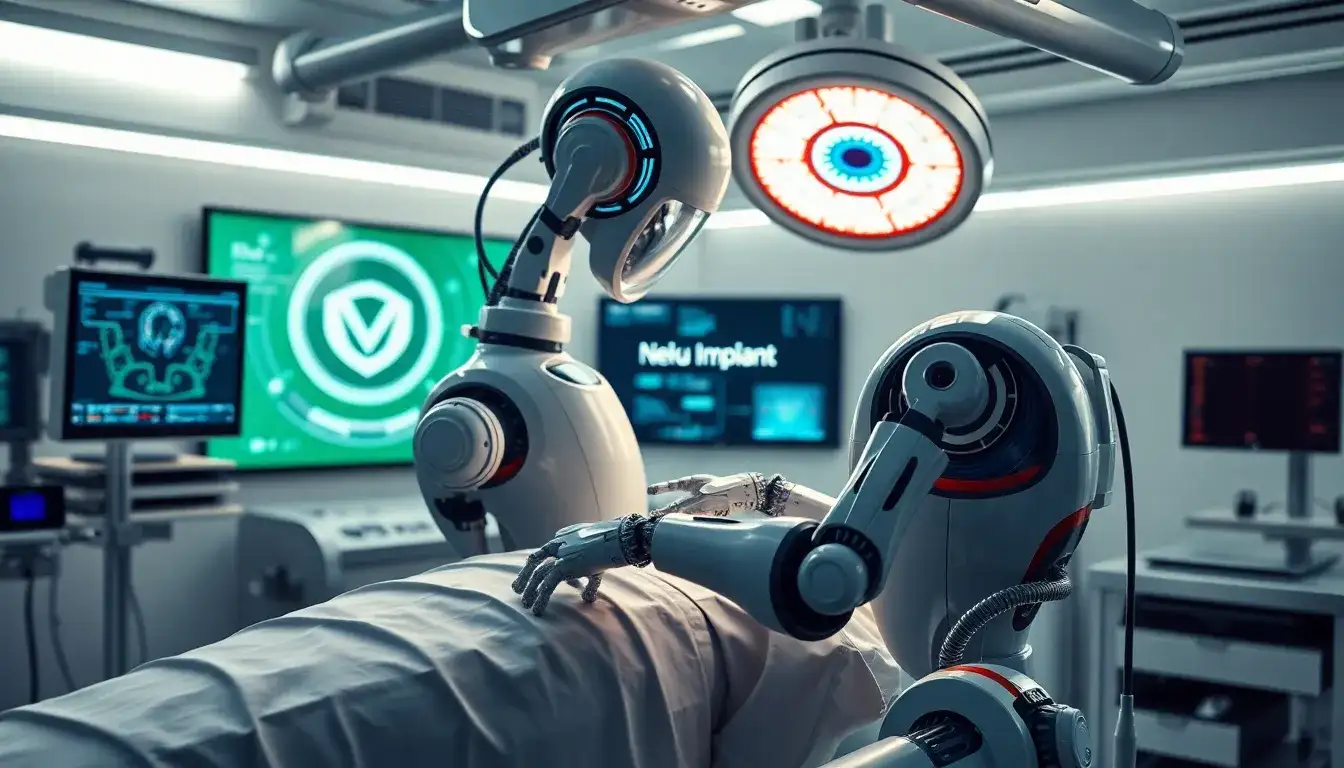
This transformation is not just about the iteration of the chip itself; it centers on the next-generation surgical robot, codenamed R1 (Rev10), which will enable automated brain implants in an assembly line fashion.
Core Breakthrough: The Automated Surgical Robot R1
To achieve large-scale deployment, Neuralink must overcome the productivity bottleneck of relying on experienced neurosurgeons. Musk revealed that the R1 robot, set to be operational in 2026, will achieve significant advancements:
- Blind Insertion Precision: The robot can now guide electrode wires through the dura mater without manual membrane dissection. Musk described this as a “huge leap,” significantly reducing surgical trauma.
- Rapid Implantation: The new generation robot can implant a hair-thin electrode channel in just 1.5 seconds, with a standard surgery expected to be completed in 20 minutes, similar to the streamlined process of LASIK eye surgery.
- Obstacle Avoidance Technology: Utilizing high-precision cameras and sensors, the robot can automatically avoid every tiny blood vessel on the brain’s surface, ensuring a zero-bleed implantation.
Production Scale: From Single Digits to Mass Production
According to recent disclosures, Neuralink has completed an expansion of its new factory in Austin, Texas, with total investments exceeding $16 million, specifically for the manufacture of brain chips and surgical equipment known as “Telepathy”.
The number of implanted subjects has surged: as of February 2026, the number of global subjects who have undergone implantation has increased from single digits in 2024 to over 20, including the first patients participating in clinical trials in the UK and Canada.
With the launch of mass production, Neuralink aims to expand its subject pool to several hundred by the end of the year, particularly focusing on individuals with paralysis, ALS (amyotrophic lateral sclerosis), and blindness (through Blindsight technology).
Commercial Landscape: Valuation Soars to $9 Billion
After recently completing a $650 million Series E funding round, Neuralink’s valuation has reached $9 billion. The market is optimistic about its integrated hardware and software business model:
- Hardware: Implantable chips and automated surgical robots.
- Software: Neural signal decoding algorithms, enabling subjects to operate computers smoothly, play games like Civilization VI, and even control robotic arms with their thoughts.
Revolutionizing Medicine?
Neuralink’s 2026 strategy clearly demonstrates Musk’s ambition to transform brain-machine interfaces from complex medical procedures into common medical consumer products. While regulatory scrutiny from the FDA and ethical challenges remain, the combination of “mass production” and “automated surgery” signifies a rapid reduction in the barriers to human-AI physical integration.
The Rise of Brain-Computer Interfaces in China
In recent years, the brain-computer interface (BCI) industry in China has developed rapidly, establishing a complete industrial chain from foundational chips and electrode materials to clinical medicine and consumer electronics. As of early 2026, Chinese BCI companies can be classified into two main categories:
1. Top Startups and Research Leaders
These companies, often founded by leading scientists, focus on either invasive or high-precision non-invasive technologies:
- BrainCo: A global leader in non-invasive brain-machine interface unicorns, with funding comparable to Musk’s Neuralink. Key products include smart bionic hands (controlled by brain waves) and concentration-enhancing headbands.
- NeuroXess: One of the first domestic firms focusing on invasive flexible brain-machine interfaces with a strong academic background.
- BrainUp: Specializes in EEG algorithms and large-scale industrial applications, covering areas such as sleep management and safety operation monitoring.
- Staircase Medical: Innovates in ultra-flexible microelectrode technology, positioning itself as a pioneering company in the invasive field.
- Neuracle: A domestic leader in EEG signal acquisition devices, with products widely used in research and healthcare.
2. Representative Companies in the A-Share Industry Chain
As the concept of brain-machine interfaces gains popularity in 2025-2026, the following companies have garnered attention due to their involvement in equipment manufacturing, medical applications, or foundational components:
- Sanbo Brain Science: A specialized brain hospital group, core to the clinical transformation and application of brain-machine interfaces.
- Innovative Medical: Investing in projects like Neuracle, actively laying out research in medical devices related to brain-machine interfaces.
- Chengyitong: With a background in rehabilitation medical devices, accelerating the commercialization of brain-machine interfaces in rehabilitation.
- Hanwei Technology: Provides the sensor technologies required for brain-machine interfaces.
- Xiangu Medical: Focuses on rehabilitation equipment, incorporating brain-machine technology for limb function recovery.
- China Science Information: Participates in the research and development of medical assistance systems related to brain-machine interfaces.
3. Distribution of Core Technology Factions
There are notable regional focuses:
- Shanghai Faction (NeuroXess, Staircase Medical): Reliant on the Shanghai Institute of Microsystems and Shanghai Jiao Tong University, emphasizing flexible materials and invasive technologies.
- Beijing Faction (BrainUp, Xinzhi): Backed by Tsinghua University and the Institute of Automation at the Chinese Academy of Sciences, strong in algorithms and system integration capabilities.
- Hangzhou/Shenzhen Faction (BrainCo, Weiling Medical): Fastest commercialization pace, focusing on consumer-grade applications and high-performance medical devices.
Original article by NenPower, If reposted, please credit the source: https://nenpower.com/blog/elon-musk-announces-2026-as-neuralinks-year-of-mass-production-with-automated-brain-implant-surgery-robots/

