

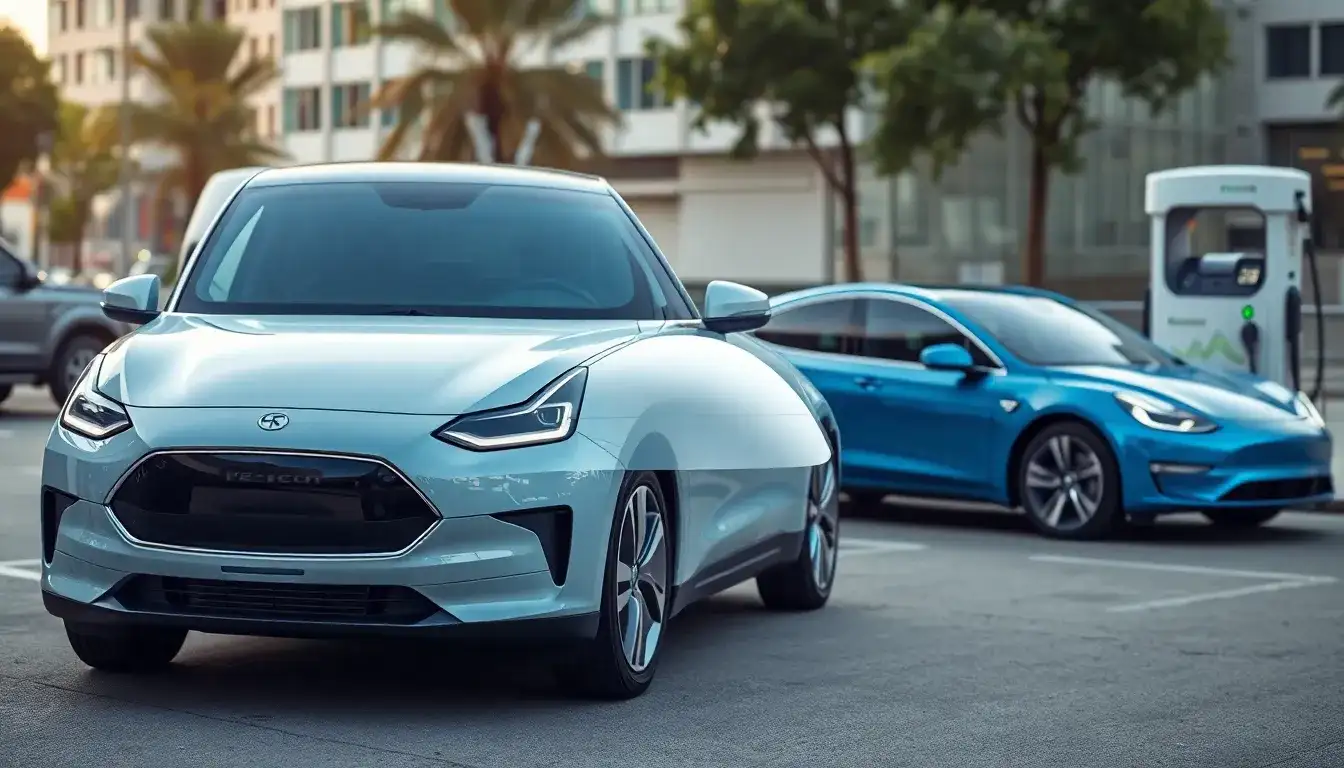
Are Electric Vehicles More Reliable Than Gasoline Cars? ADAC Data Shakes the Industry
The debate over whether electric vehicles (EVs) or gasoline cars are superior has been ongoing in the automotive industry. Discussions surrounding safety, environmental impact, and economic factors have persisted for years. Recently, a new study from the German Automobile Club (ADAC), Europe’s largest roadside assistance organization, has added a fresh perspective to this debate—indicating that electric vehicles are gradually surpassing traditional gasoline vehicles in terms of reliability.
The improvement in electric vehicle reliability is primarily attributed to a structural innovation in their power systems. Complex components such as crankshafts, transmissions, and fuel injection systems found in internal combustion engines have been replaced by motors and batteries in electric vehicles, significantly reducing potential failure points. The ADAC report highlights that common issues found in gasoline cars, such as engine management and exhaust system problems, are virtually nonexistent in electric vehicles. Additionally, the lack of a need for regular oil changes further decreases maintenance requirements. This “design simplification” gives electric vehicles a considerable advantage in mechanical reliability, with EVs registered in 2021 experiencing 3.6 fewer faults per thousand vehicles compared to gasoline cars.
However, this victory comes with its own set of flaws. The 12-volt battery has emerged as a common “weakness” for both vehicle types, accounting for 50% of faults in electric cars and 45% in gasoline vehicles. This finding highlights a challenge in the electrification of automobiles: despite advancements in power systems, traditional low-voltage circuits remain a bottleneck in technological progress. Additionally, electric vehicles exhibit a higher tire failure rate (1.3 times per thousand rescues) compared to gasoline cars (0.9 times), underscoring the costs associated with this technological leap. The extra weight from battery packs (the Tesla Model 3, for instance, is 400 kilograms heavier than its gasoline counterparts) naturally leads to accelerated tire wear. Nevertheless, ADAC has noted that newer electric vehicles are improving in this area through optimized tire pressure monitoring and suspension design, demonstrating the industry’s ability to rapidly adapt.
Despite these promising reliability statistics, electric vehicles still face skepticism regarding safety. Some internet users have recalled the 2025 Xiaomi SU7 autonomous driving incident, arguing that “battery fires are more lethal than fuel tank explosions.” However, statistics from CCTV indicate that the self-ignition rate of domestic electric vehicles has dropped to 0.096 per ten thousand, which is lower than the 0.1514 per ten thousand for gasoline cars. In Norway, the probability of fire in gasoline vehicles is reported to be 4-5 times higher than in electric vehicles. This discrepancy between data and public perception can be attributed to the heightened attention given to electric vehicle accidents due to their novelty, while self-ignition incidents in gasoline vehicles have become a “silent background noise.”
The ADAC report leaves some questions unanswered, noting that the long-term reliability of electric vehicles remains uncertain, especially considering they have not been widely adopted for more than a decade. This uncertainty resonates with the cautious sentiment in the used car market, where research shows that electric vehicles older than five years have a residual value that is 15% lower than that of gasoline cars, as buyers generally worry about battery degradation. Battery technology experts suggest that the widespread adoption of solid-state batteries and advanced battery management systems (BMS) could change the game, with companies like CATL already achieving breakthroughs in battery lifespan, reaching 1.5 million kilometers.
This reliability shift essentially reflects a paradigm shift in industrial logic. As electric vehicles demonstrate their capabilities with data, traditional automakers face increased pressure to transform. Consumers are now confronted with a more complex decision matrix: should they embrace the simplicity and efficiency of electrification, or remain loyal to the experience and familiarity of gasoline vehicles? Ultimately, safety does not have absolute answers; rather, it involves a continuous dialogue around evolving technologies.
Original article by NenPower, If reposted, please credit the source: https://nenpower.com/blog/electric-vehicles-outperform-gasoline-cars-in-reliability-adac-report-sparks-industry-debate/

