

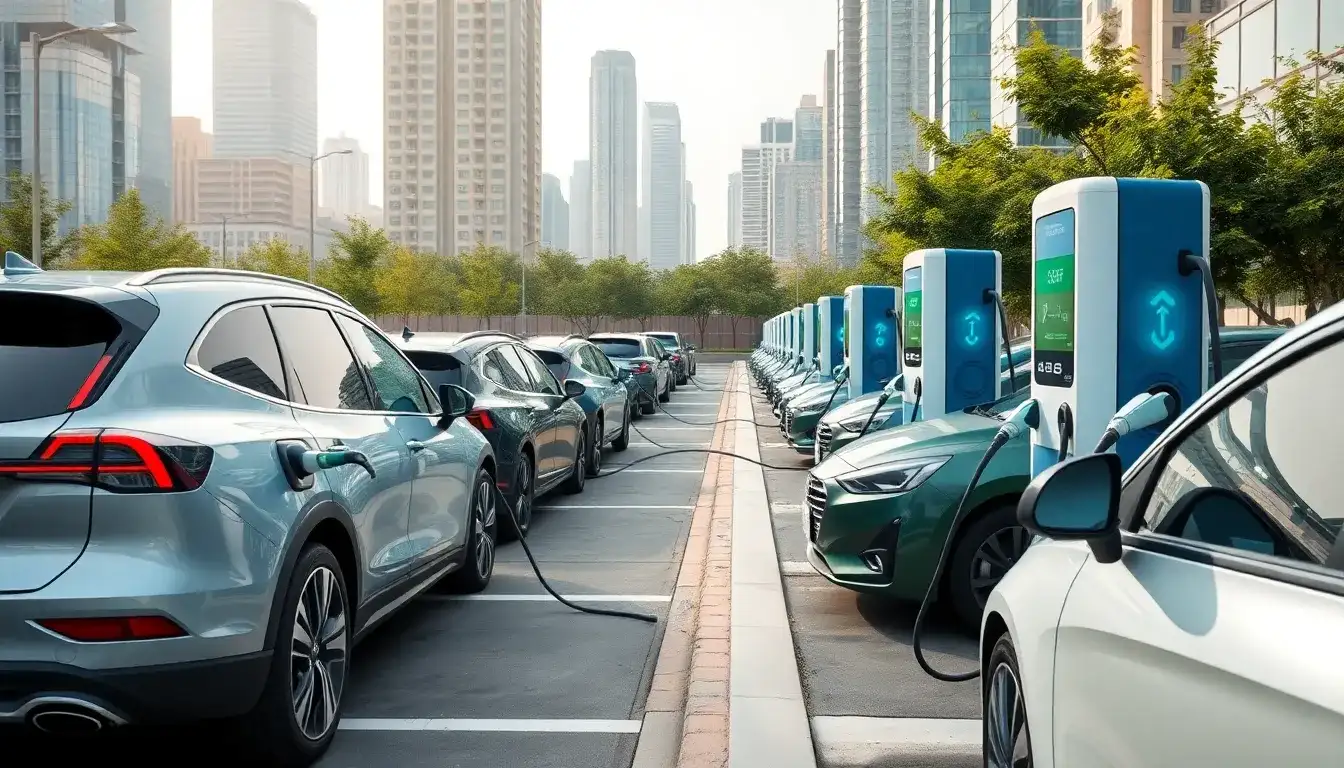
Electric vehicle charging stations have become increasingly prominent in recent years, with significant advancements in technology and infrastructure. As of April 24, 2025, China has made notable progress in this area, particularly in the development and deployment of electric vehicle (EV) charging networks.
Recently, a <b>smart charging station</b> was launched in the southern region of the country, specifically in the Guangxi province. This station is equipped with 64 charging points and features a Vehicle-to-Grid (V2G) system that allows for bi-directional energy flow between electric vehicles and the power grid. This innovative approach enhances energy efficiency and provides additional revenue streams for EV owners.

In addition to this, a series of initiatives have been launched to further integrate EVs into the energy grid. The <b>development of charging infrastructure</b> has seen the establishment of integrated charging and energy management systems that support both electric vehicles and renewable energy sources. This synergy is crucial for the advancement of sustainable transportation.

In the city of Nanning, the local government has unveiled a comprehensive plan to enhance the electric vehicle charging network by integrating various energy sources, including solar power. This will not only improve accessibility for electric vehicle users but also promote the use of clean energy.

Furthermore, a recent announcement by the National Development and Reform Commission, alongside other governmental bodies, highlighted the launch of pilot programs aimed at refining the regulatory framework for electric vehicle charging networks. These programs will involve nine cities and focus on 30 specific projects designed to test and optimize the integration of electric vehicles into the power grid.

The <b>V2G technology</b> allows electric vehicles to not only draw power from the grid but also contribute energy back, effectively transforming them into mobile energy storage units. This capability is expected to significantly reduce the operational costs for electric vehicle owners and facilitate a more balanced energy demand.

According to industry experts, the integration of electric vehicles into the energy grid can lead to substantial savings for consumers. For instance, it is estimated that users can earn around 0.6 yuan for every kilowatt-hour (kWh) of energy supplied back to the grid. This financial incentive is expected to encourage more consumers to adopt electric vehicles and participate in energy management programs.

Looking ahead, the future of electric vehicle charging networks in China appears promising. By 2024, the country aims to have at least 31.4 million electric vehicles on the road, supported by an expansive network of charging stations that are projected to reach a total of 1.28 billion charging points.

In conclusion, the ongoing developments in electric vehicle charging infrastructure and technology signify a pivotal shift in the transportation landscape. The introduction of V2G technology, coupled with supportive government policies, is expected to drive further improvements in energy efficiency and the adoption of electric vehicles.
Original article by NenPower, If reposted, please credit the source: https://nenpower.com/blog/electric-vehicle-charging-stations-expand-with-new-v2g-technology-in-china/

