

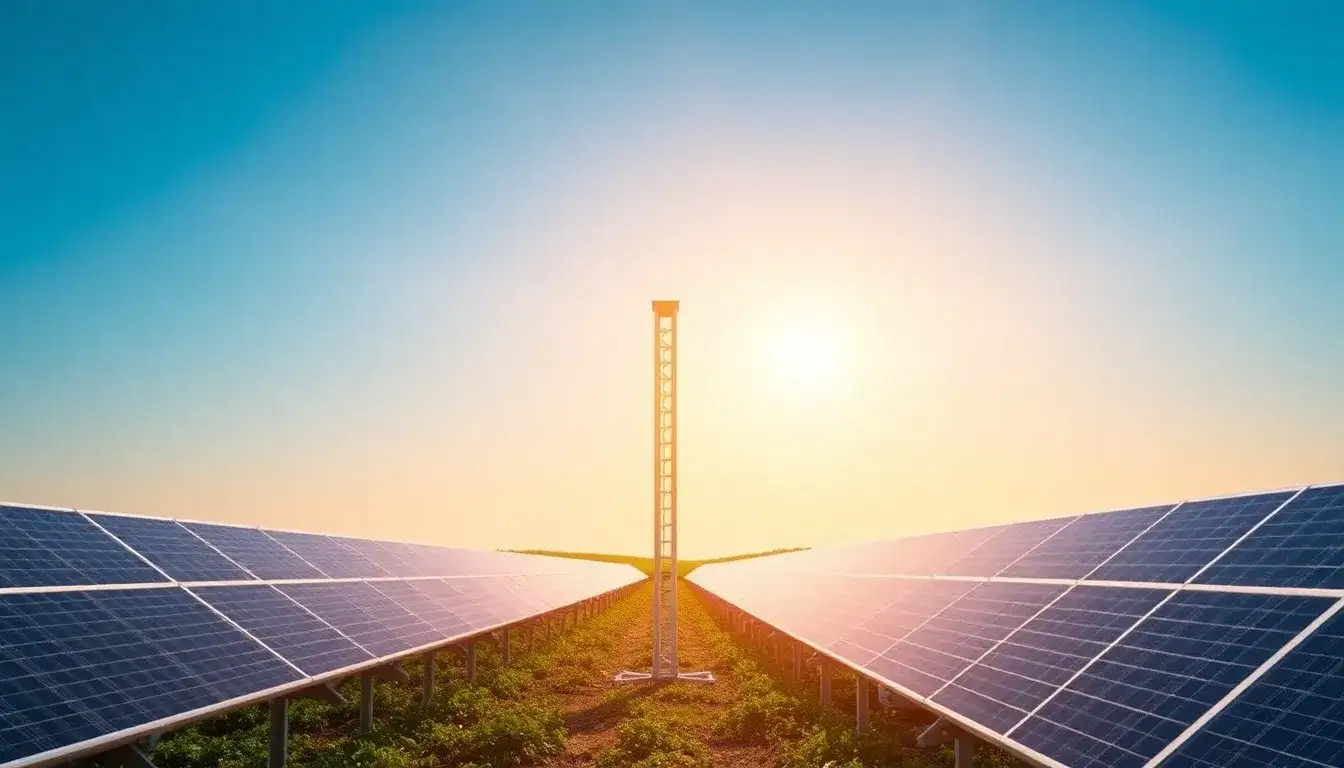
The global dual-axis solar tracker market is witnessing significant growth, driven by the rapid expansion of the renewable energy sector. Valued at around $1.2 billion in 2024, the market is anticipated to reach approximately $3.5 billion by 2034, with a remarkable Compound Annual Growth Rate (CAGR) of 13.3% during this forecast period. Dual-axis trackers, which align solar panels to follow the sun’s movement both horizontally and vertically, provide enhanced energy capture efficiency compared to fixed systems, making them increasingly appealing for contemporary solar installations.
This growth is primarily fueled by a global commitment to clean energy and technological advancements that have significantly boosted the performance of tracking systems. Additionally, government incentives and supportive regulatory frameworks for solar energy adoption are creating a favorable landscape for dual-axis trackers.
### Market Dynamics and Growth Drivers
A key factor driving the dual-axis tracker market is the rising global demand for sustainable energy sources. As concerns about climate change and the depletion of fossil fuels escalate, countries are increasingly turning to solar power as a dependable alternative. Dual-axis tracking systems enhance energy generation by continuously orienting solar panels toward the sun, thereby improving power output and system efficiency.
Technological innovation is crucial in this growth trend. Modern tracking systems are increasingly equipped with advanced control systems, sensors, and automated components that optimize performance while minimizing the need for manual intervention. Furthermore, the integration of smart technologies, including AI and machine learning, has enabled predictive tracking based on weather conditions, further enhancing system reliability.
Government support plays a pivotal role as well. Numerous national policies, such as tax incentives, feed-in tariffs, and grants, are aimed at promoting the deployment of solar energy infrastructure. These incentives help to reduce financial barriers for both project developers and residential users, encouraging wider adoption of high-efficiency tracking solutions.
### Challenges and Restraints
Despite the optimistic outlook, several challenges may hinder the market’s growth. The high initial installation costs associated with dual-axis tracking systems are a significant restraint. Although they offer superior performance, the complexity of dual-axis mechanisms leads to increased equipment and installation costs compared to single-axis or fixed alternatives.
Maintenance and durability are additional concerns. With more moving parts, dual-axis trackers are inherently more prone to wear and tear. Maintenance demands can be higher, especially in harsh weather conditions, potentially leading to increased long-term operational costs. Supply chain disruptions also present risks, particularly regarding the availability and cost of raw materials necessary for manufacturing. Recent geopolitical tensions and global logistical challenges have highlighted the vulnerability of renewable energy supply chains. Moreover, regulatory variability across regions can create obstacles for international companies, necessitating customized compliance strategies that add complexity and expense.
### Emerging Trends and Opportunities
Amid these challenges, the market also offers numerous emerging opportunities. One particularly promising area is the development of intelligent tracking systems powered by AI and data analytics. These smart trackers can adjust dynamically to real-time environmental data, optimizing performance and greatly enhancing return on investment.
The growing popularity of community solar projects and shared energy systems presents new avenues for growth. These models enable multiple users to benefit from a single solar installation, often located off-site, which reduces individual capital investment. Dual-axis trackers are particularly suitable for such installations due to their high energy yield and scalability.
Additionally, the integration of solar technologies into non-traditional sectors, such as agrivoltaics—which combines agricultural activities with solar energy production—represents another emerging trend. In these applications, dual-axis trackers not only improve land use efficiency but also help farmers diversify their income sources. Increased awareness among residential and commercial consumers regarding energy independence and carbon footprint reduction is also influencing purchasing decisions. As solar technology becomes more accessible, end-users are increasingly inclined to invest in high-performance solutions that promise long-term savings.
### Market Segmentation Insights
#### By Component
– **Solar Panels**: Dominating the component segment, they contribute over 40% of total revenue, driven by advancements in photovoltaic efficiency and lightweight designs.
– **Controllers**: Managing the precise movements of solar panels, they account for approximately 15% of the market, closely linked to IoT integration and smart automation.
– **Actuators**: Essential for adjusting panel orientation, they hold a 10% share and are becoming more durable and cost-efficient through R&D efforts.
– **Sensors**: While a smaller segment (~5%), they are crucial for enabling real-time tracking and are increasingly integrated with smart systems.
#### By End User
– **Residential Sector**: Comprising about 30% of the market, driven by growing interest in energy self-sufficiency.
– **Commercial Users**: Account for around 25%, utilizing rooftop space to lower operational costs and support sustainability initiatives.
– **Industrial Users**: Make up approximately 20%, with installations aimed at meeting high energy demands.
– **Utility-Scale Projects**: Represent the largest individual segment at 25%, as large-scale solar farms adopt dual-axis systems for maximum output.
#### By Technology
– **Photovoltaic (PV) Systems**: Lead with about 70% share due to their scalability and cost efficiency.
– **Concentrated Solar Power (CSP) Systems**: Account for the remaining 30%, primarily used in regions with high irradiation for utility-scale applications.
#### By Installation Type
– **Ground-Mounted Installations**: Dominate with a 60% share, thanks to layout flexibility and optimal sun tracking capabilities.
– **Rooftop Installations**: Holding about 40%, are expanding due to urban solar initiatives and space-efficient designs.
### Regional Analysis
The Asia-Pacific region commands the largest share, contributing roughly 45% of global revenue in 2024. Rapid industrialization, population growth, and proactive government policies in countries such as India are central to this dominance. North America follows with an estimated 30% market share, bolstered by favorable tax policies, advanced infrastructure, and a growing awareness of clean energy benefits, with a projected CAGR of around 10% through 2034. Europe contributes approximately 20%, driven by stringent environmental regulations and aggressive renewable energy targets, alongside strong consumer preference for sustainable energy sources. Emerging regions like Latin America and the Middle East are expected to witness rapid growth, with projected CAGRs of 12% and 15%, respectively, although challenges related to political stability and regulatory frameworks may impede progress.
### Key Competitors
– NEXTracker
– Array Technologies
– Soltec
– PVH
– SunPower
– Trina Solar
– First Solar
– Canadian Solar
– SMA Solar Technology
– EDP Renewables
– Joule Energy
– SolarFlexion
– Amonix
– AEG Power Solutions
– TBEA Co., Ltd.
### Recent Developments and Strategic Moves
– **NEXTracker** (October 2023): Announced a strategic partnership with a prominent energy company to enhance solar tracking solutions in the utility-scale sector, allowing both companies to leverage shared technology insights for improved efficiency.
– **Array Technologies** (September 2023): Launched an upgraded version of its dual-axis solar tracker, featuring advanced predictive algorithms and enhanced durability against extreme weather, setting a new benchmark in the market.
– **Soltec** (August 2023): Acquired a technology startup specializing in AI for optimized solar farm management, integrating cutting-edge AI capabilities into its product range to enhance operational efficiency.
– **Trina Solar** (July 2023): Received regulatory approval for its next-generation dual-axis trackers in Europe, opening new markets and allowing for a competitive advantage.
– **SMA Solar Technology** (June 2023): Announced an expansion of its manufacturing facilities in India to increase production capacity for dual-axis solar trackers, positioning itself to better meet the growing demand in the region.
This report is also available in multiple languages. For more information, you can request sample pages or purchase the report through the provided links.
Original article by NenPower, If reposted, please credit the source: https://nenpower.com/blog/dual-axis-solar-tracker-market-expected-to-surge-to-usd-3-5-billion-by-2034-driven-by-13-3-cagr-growth/

