

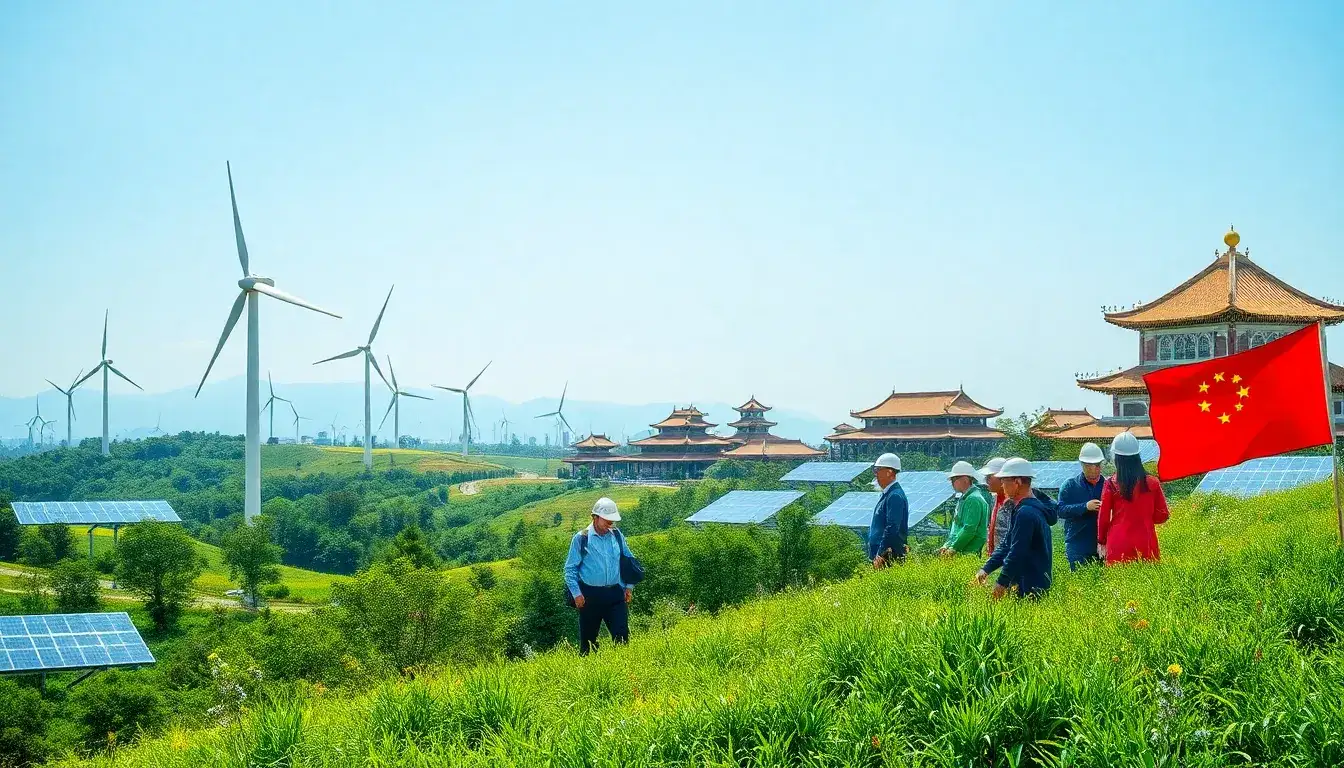
The demand for solar energy is set to grow, driven by the need for green development. The global market for electric vehicles (EVs), including passenger cars and commercial vehicles, is expanding rapidly. The advancement of new energy sources and smart grid technologies is enhancing the industry’s capabilities and products.
As of May 26, 2025, the global solar energy capacity is projected to reach 277.57 GW, marking an increase of 28.3% from previous figures. The total installed capacity of solar energy is expected to exceed 880 GW. By 2024, the solar power industry in China is anticipated to continue its rapid growth, propelled by significant advancements in technology and production levels, including a projected growth rate of over 10% for solar panels and batteries.
By 2025, China aims to maintain its leadership in the solar energy sector, continuing to enhance the quality and efficiency of solar energy resources. The country is expected to play a crucial role in addressing climate change by promoting renewable energy technologies and supporting international energy cooperation.
Solar energy has immense potential as a clean energy resource. It is estimated that about 50% of solar energy can be converted into usable energy on the Earth’s surface. The annual solar energy potential in China is vast, which can meet the current energy demands of the population. The average solar energy density on the Earth’s surface is around 1,366 watts per square meter, providing a significant opportunity for energy utilization.
Historically, advancements in solar technology began in the 19th century, with the first solar cell developed in 1954. Since then, solar power has become a prominent source of renewable energy worldwide. Solar photovoltaic (PV) cells have evolved to become more efficient and cost-effective, making solar energy more accessible for public and private use.
In recent years, China’s solar energy capacity has seen remarkable growth, with the total installed capacity reaching 216.3 GW by 2023. This growth represents a significant increase from just 0.02 GW in 2007. The solar energy industry in China has also made strides in reducing production costs, leading to a substantial decrease in the price of solar panels.
China continues to innovate in solar technology, with ongoing research and development aimed at improving efficiency and reducing costs. The solar energy sector is becoming increasingly integrated into the global energy landscape, positioning China as a key player in the renewable energy market.
The future of solar energy looks promising as the technology continues to advance, providing sustainable solutions to meet the world’s energy needs. With a focus on enhancing solar power generation and integrating it into the energy systems of the future, solar energy will play a vital role in transitioning to a low-carbon economy.
Original article by NenPower, If reposted, please credit the source: https://nenpower.com/blog/driving-green-energy-development-through-renewable-energy-initiatives-in-china/

