

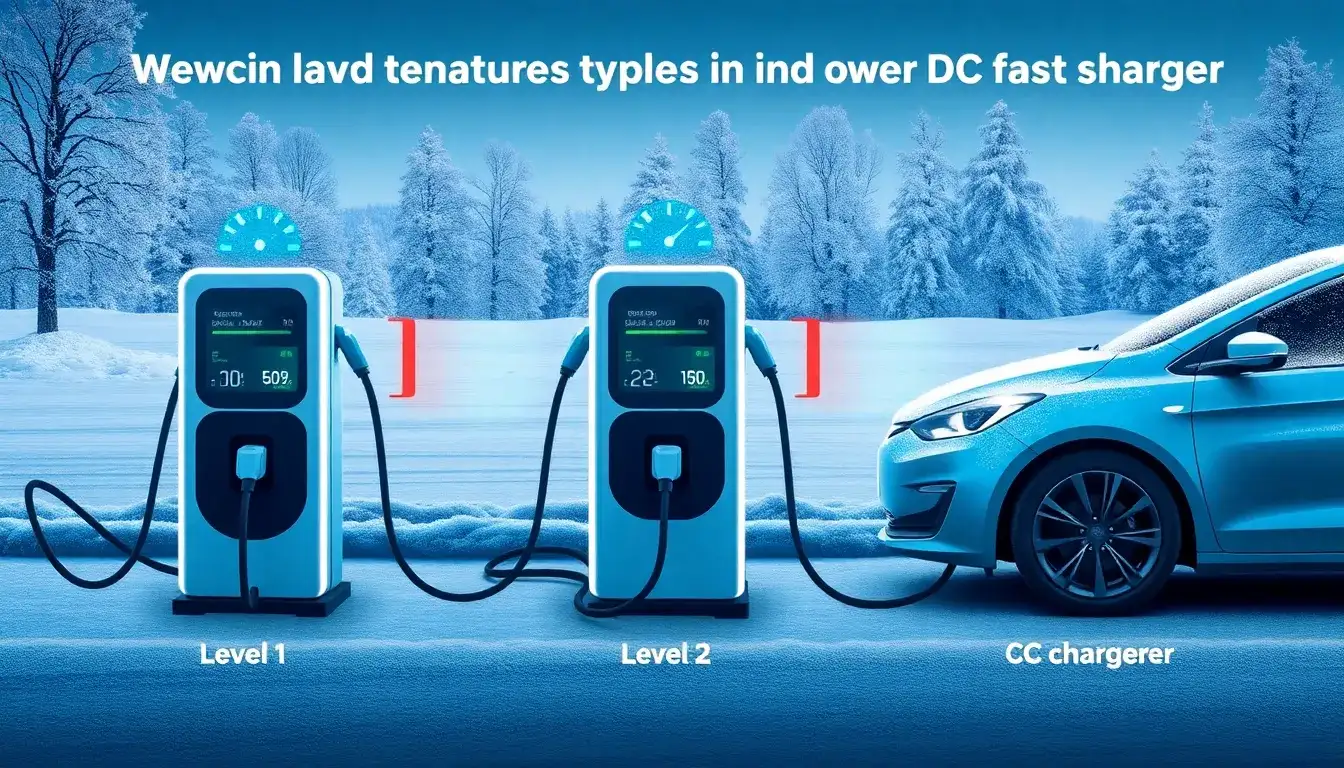
The type of EV charger does affect charging speed in general, but when it comes specifically to cold temperatures, the impact involves both the charger type and battery temperature management rather than charger type alone.
EV Charger Types and Charging Speeds
- Level 1 chargers use regular residential outlets and typically are the slowest, taking 40-50 hours to fully charge a battery.
- Level 2 chargers are common public and home EV chargers that can charge a vehicle in about 4-10 hours and are considered “slow” chargers, but much faster than Level 1.
- Level 3 chargers, also called direct current fast chargers (DCFC), provide rapid charging, fully charging a vehicle in under 20 minutes depending on the car’s charge acceptance rate.
Effect of Cold Temperatures on Charging Speed
Cold weather primarily slows EV charging because the battery chemistry and management systems reduce charging rates to protect battery health. When batteries are cold, the internal resistance increases and the battery’s ability to accept charge quickly decreases.
- This means even if you have a fast charger (Level 3), the battery management system might limit the current to avoid damage, resulting in slower charging speeds than at moderate temperatures.
- Level 1 and Level 2 chargers, which supply lower power, will naturally charge more slowly anyway, and cold temperatures can further slow down the charging process.
Charger Type vs. Cold Temperature Impact
- Fast chargers can generally overcome some cold weather slowdowns better than slow chargers because they provide higher power, but the battery thermal management system still throttles charging to safe levels.
- Slow chargers (Level 1 and Level 2) deliver less power to begin with, so cold temperatures can make charging times significantly longer.
- The charger type affects the maximum possible charging speed, but cold temperature effects depend mainly on the vehicle’s battery thermal management system controlling how much power the battery can safely accept.
Summary
While the type of charger sets the baseline for charging speed, cold temperatures slow charging mainly because of the battery’s reduced ability to accept charge and protective limits imposed by the vehicle. Fast chargers (Level 3) can partially mitigate the slowdown relative to slow chargers but cannot fully negate cold-weather impacts on charging speed.
Thus, yes, charger type affects charging speed in cold temperatures, but the battery’s temperature and management system also play a crucial role in determining the actual charging speed.
Original article by NenPower, If reposted, please credit the source: https://nenpower.com/blog/does-the-type-of-ev-charger-affect-charging-speed-in-cold-temperatures/

