

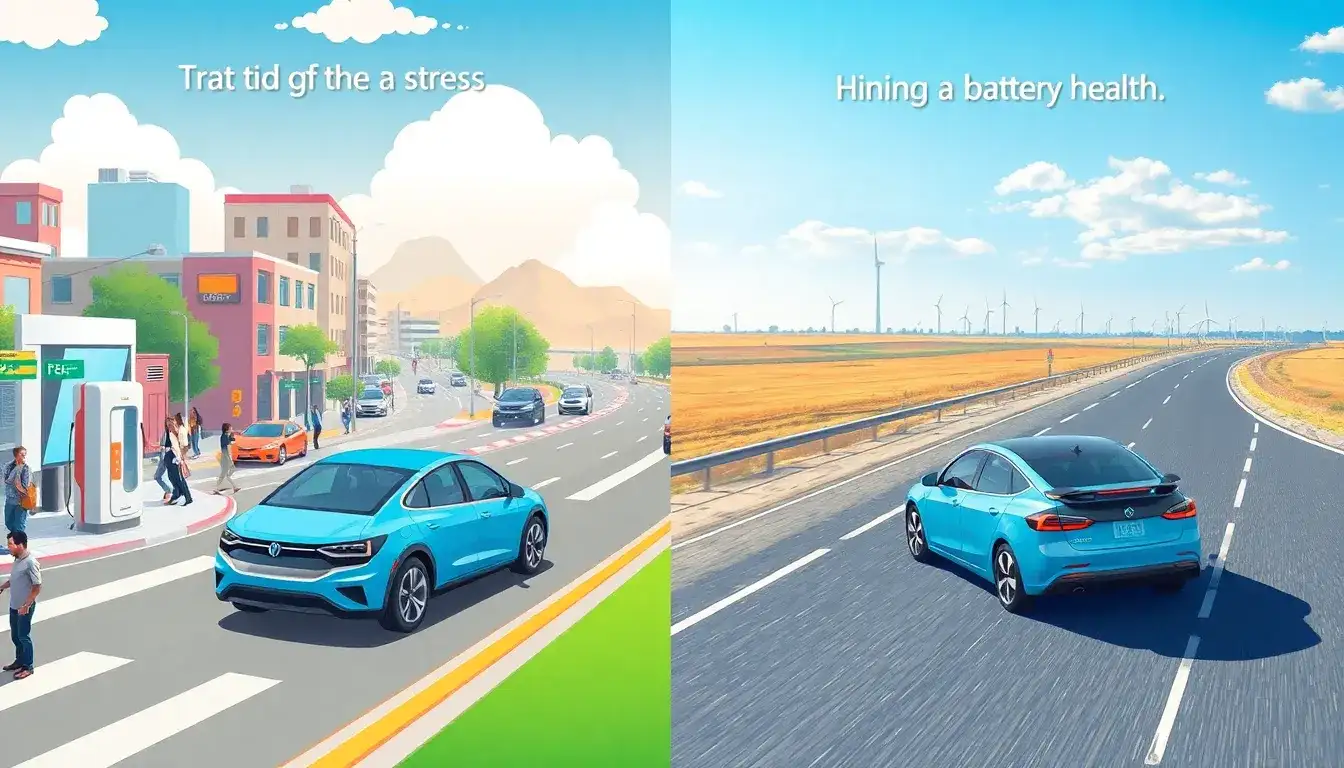
Highway driving can worsen EV battery health in certain respects, but overall, its impact is not solely negative. Here are some factors to consider:
Factors Affecting EV Battery Health During Highway Driving
- Battery Drain Rate: Steady driving at high speeds, typical of highway driving, drains the battery faster than stop-and-go city driving because it involves less regenerative braking, which can recharge the battery.
- Regenerative Braking: Although highway driving offers fewer opportunities for regenerative braking compared to city driving, modern EVs still benefit from some regenerative energy when braking or coasting.
- Temperature and Battery Performance: Extreme temperatures, especially hot climates, can negatively affect battery health, but highway driving itself isn’t the primary factor here. However, controlling temperature through thermal management systems is crucial for maintaining battery health.
- Overall Usage and Battery Longevity: Research indicates that frequent use, including highway driving, does not dramatically accelerate battery degradation if vehicles stay within their normal operating conditions and avoid excessive fast charging.
Conclusion
Highway driving may slightly reduce battery efficiency due to faster discharge without the frequent regenerative benefits of city driving. However, it does not significantly degrade battery health compared to other factors like temperature and charging habits. Proper management of charging and temperature conditions remains more critical for maintaining EV battery health than the type of driving.
Original article by NenPower, If reposted, please credit the source: https://nenpower.com/blog/does-highway-driving-improve-or-worsen-ev-battery-health/

