

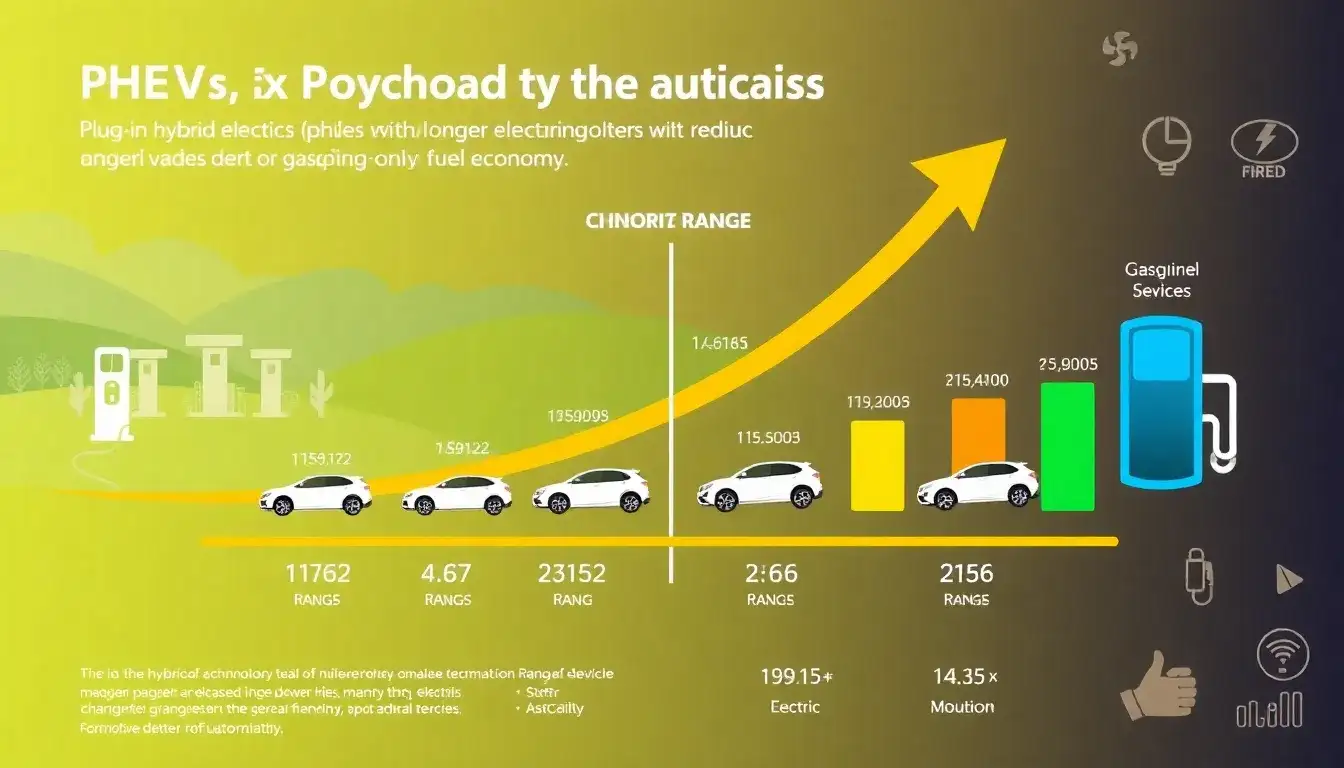
PHEVs (plug-in hybrid electric vehicles) with longer electric ranges generally achieve better gas-only fuel economy in practical use, but the relationship is nuanced and influenced by real-world driving patterns and vehicle design.
How Electric Range Affects Gas-Only Fuel Economy in PHEVs
- Higher electric range means more kilometers driven electrically: PHEVs with longer all-electric ranges (e.g., 80 km or more) can electrify 12,000–20,000 km annually, much higher than PHEVs with shorter ranges (typically 30–60 km), which electrify 5,000–10,000 km annually. This longer electric range allows these vehicles to rely less on their internal combustion engine (ICE), effectively improving their gas-only fuel economy during electric mode operation and reducing overall fuel consumption.
- Fuel consumption after battery depletion resembles conventional vehicles: When the battery charge is depleted, PHEVs operate like conventional hybrids or ICE vehicles. The gas-only fuel economy at this point is generally similar across PHEVs regardless of electric range. However, because cars with longer electric ranges spend more miles in electric mode, their overall gasoline consumption decreases significantly.
- Real-world fuel economy improvements are often less than type-approval values: Although longer electric range PHEVs have better all-electric driving capability, the actual fuel economy gains in the real world depend heavily on user behavior, charging frequency, and driving conditions. Studies find that the total fuel savings and CO2 reduction range from 15% to 55% compared to conventional cars, depending on these factors.
- Electric mode fuel economy and blended operation: Some PHEVs, especially those with power-split configurations, may extend electric range through blended operation (using both battery and engine simultaneously). This can affect the apparent gas-only fuel economy because the engine may assist during electric mode, leading to variations in fuel use.
Summary
- PHEVs with longer electric ranges generally show better overall fuel economy by electrifying a greater share of kilometers driven. This reduces gasoline use and improves fuel economy when accounting for all driving.
- The gas-only fuel economy when running on fuel alone is similar across PHEVs but is effectively less utilized in longer-range PHEVs due to more extensive electric driving.
- Real-world fuel economy gains depend on charging habits and driving patterns, with some users realizing substantial reductions in fuel use and emissions, while others see smaller benefits compared to official ratings.
In conclusion, longer electric range in PHEVs correlates with better gas-only fuel economy in practice because it allows more electric driving and less reliance on gasoline, but the actual improvement varies by driver and vehicle specifics.
Original article by NenPower, If reposted, please credit the source: https://nenpower.com/blog/do-phevs-with-longer-electric-ranges-generally-have-better-gas-only-fuel-economy/

