

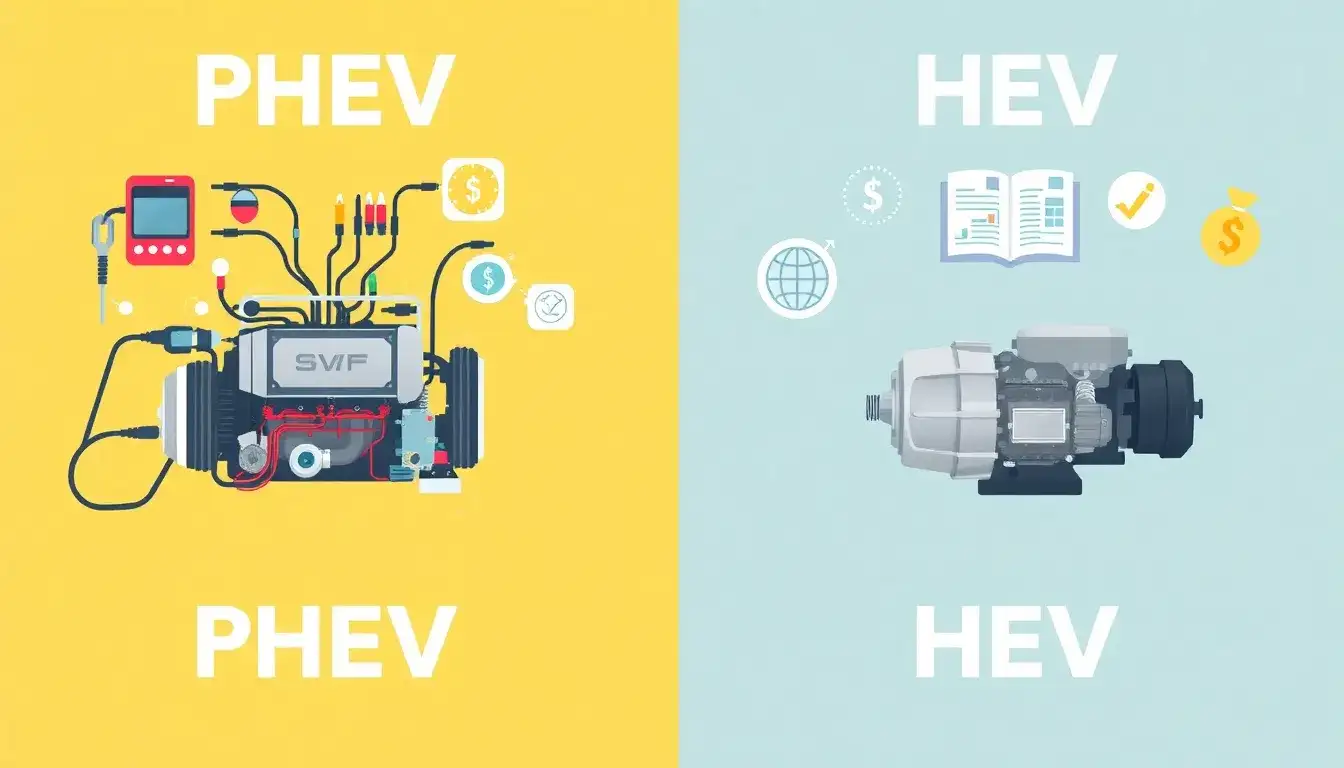
PHEVs (Plug-in Hybrid Electric Vehicles) do not generally have higher maintenance costs specifically for their gasoline engines compared to HEVs (Hybrid Electric Vehicles). In fact, the overall maintenance costs for PHEVs tend to be lower or comparable, and in some cases significantly less than conventional gasoline vehicles, including HEVs.
Key points regarding maintenance costs of PHEVs vs. HEVs:
- Although PHEVs have more complex drivetrains—including both a gasoline engine and electric components like motors and batteries—the electric parts tend to require less maintenance due to fewer moving parts compared to internal combustion engines.
- PHEVs benefit from frequent electric-only driving, which keeps the gasoline engine from operating as often. This reduced usage means less wear and tear on the engine and related components, potentially lowering maintenance needs over time compared to HEVs that rely more consistently on their gasoline engines.
- Both PHEVs and all-electric vehicles show lower lifetime maintenance costs (around $4,600 over 200,000 miles) compared to traditional gasoline cars (around $9,200), according to Consumer Reports.
- PHEVs also have regenerative braking, which reduces brake wear and associated maintenance costs, a benefit shared with HEVs but potentially more pronounced when PHEVs are driven mostly in electric mode.
- The exact maintenance cost advantage depends on how often the PHEV driver keeps the vehicle charged and drives using electricity. The more electric-only driving, the less the gasoline engine runs, and the lower the gas engine maintenance cost.
- While specific comparative data between HEV and PHEV engine maintenance alone is limited, the trend indicates that PHEVs have the potential for lower engine maintenance costs due to reduced engine run time and associated wear.
In summary, PHEVs typically do not have higher gasoline engine maintenance costs than HEVs. Instead, because of their capability to operate more in electric mode and keep the gasoline engine idle, PHEVs often achieve lower maintenance costs for the gas engine portion than HEVs, which tend to use the gas engine more frequently. The overall vehicle maintenance cost advantage of PHEVs over HEVs depends heavily on driving and charging habits but generally favors PHEVs when electric driving is maximized.
This makes PHEVs a cost-effective middle ground, combining electric driving benefits with the flexibility of a gasoline engine, both in terms of maintenance and fuel consumption.
Original article by NenPower, If reposted, please credit the source: https://nenpower.com/blog/do-phevs-have-higher-maintenance-costs-for-their-gasoline-engines-compared-to-hevs/

