

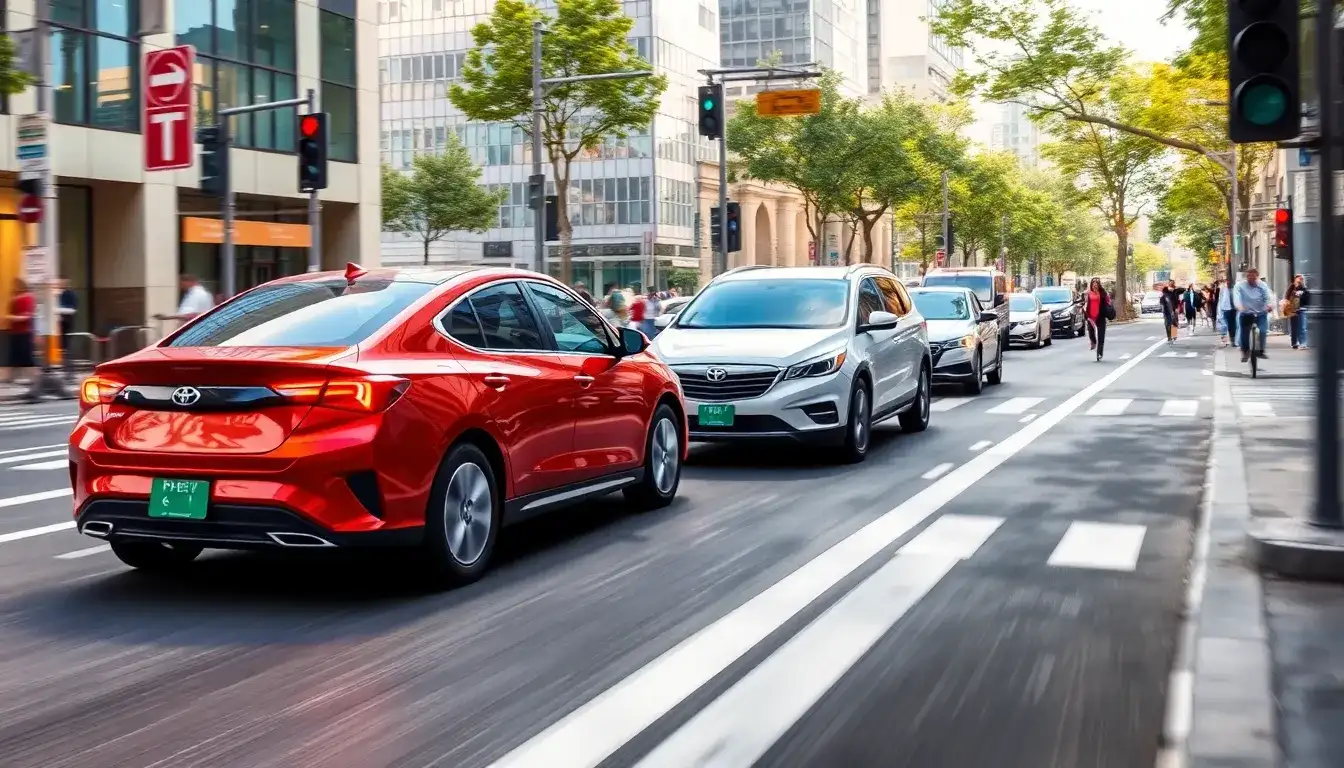
Plug-in hybrids (PHEVs) and hybrid electric vehicles (HEVs) both utilize a combination of an internal combustion engine (ICE) and an electric motor for propulsion. However, PHEVs generally have better acceleration potential in city traffic due to their larger battery capacity, which allows for more electric power to be available for longer periods.
Key Differences:
- Battery Size: PHEVs have batteries that are significantly larger (typically 10 to 20 times) than those in HEVs. This means PHEVs can run on electric power for longer distances, usually between 20 to 50 miles, depending on the model and conditions.
- Electric Power Utilization: With more electric power available, PHEVs can accelerate more aggressively using their electric motor alone, especially in stop-and-go city traffic. In contrast, HEVs tend to rely more on regenerative braking to recharge their smaller batteries and may need the ICE for more frequent power boosts.
- Acceleration from Rest: Both types use electric power initially but PHEVs can sustain electric-only operation longer, potentially offering smoother and more consistent acceleration in city driving without needing the ICE as often.
However, the efficiency and performance benefits of PHEVs are maximized when they are regularly charged. If a PHEV is not plugged in and its battery is depleted, it operates similarly to a HEV, potentially losing the advantage in acceleration.
In summary, PHEVs can offer better acceleration in city traffic due to their larger battery capacity and ability to operate longer in electric-only mode, provided they are regularly charged.
Original article by NenPower, If reposted, please credit the source: https://nenpower.com/blog/do-phevs-have-better-acceleration-in-city-traffic-compared-to-hevs/

