

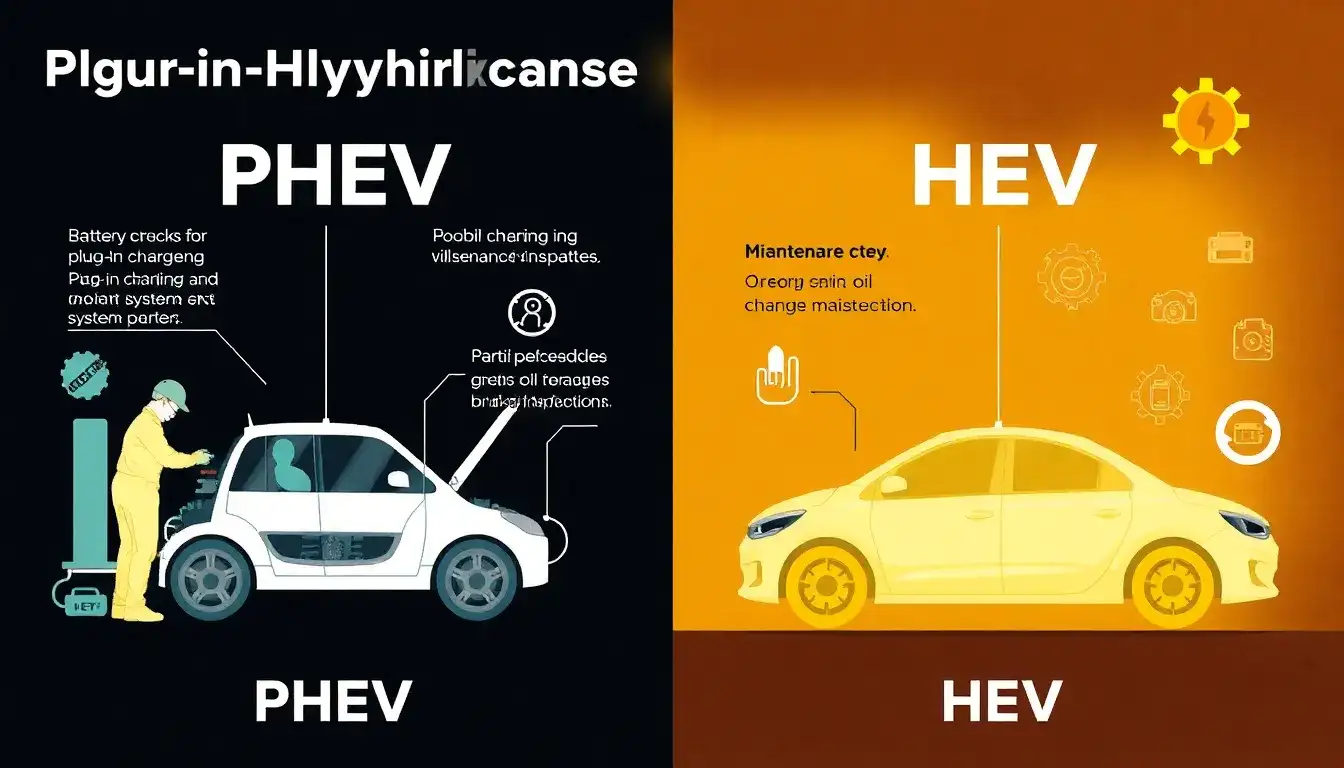
Yes, Plug-in Hybrid Electric Vehicles (PHEVs) have some unique maintenance requirements compared to Hybrid Electric Vehicles (HEVs). Here are some differences:
Unique Maintenance Requirements of PHEVs Compared to HEVs
Battery Care
- PHEVs: Given that PHEVs have a larger battery pack that can be charged from an external source, maintaining battery health is crucial. This includes avoiding full charge or full depletion of the battery and minimizing exposure to extreme temperatures during charging.
- HEVs: While HEVs also have battery systems, they typically do not require user-controlled charging, thus reducing the need for specific user actions related to charging habits.
Charging System Maintenance
- PHEVs: Since PHEVs are capable of being charged from external sources (like a wall outlet or a dedicated 240-volt charging station), ensuring that these charging systems are properly maintained may be necessary.
- HEVs: HEVs do not require external charging, so there are no additional charging system maintenance tasks.
Fuel System and Engine Maintenance
- Both PHEVs and HEVs: Both have an internal combustion engine, meaning they require similar engine-related maintenance tasks such as oil and filter changes, but PHEVs might require less frequent maintenance for these components when running primarily on electric power.
Overall Maintenance Schedule
- PHEVs and HEVs: Both benefit from regenerative braking, which reduces brake wear, but PHEVs often require more regular battery checks and charging system maintenance due to their larger battery packs and external charging capabilities.
In summary, while both types of vehicles have similar engine-related maintenance needs, PHEVs have additional considerations related to battery care and charging systems due to their ability to be externally charged and their larger battery packs.
Original article by NenPower, If reposted, please credit the source: https://nenpower.com/blog/do-phevs-have-any-unique-maintenance-requirements-that-hevs-do-not/

