

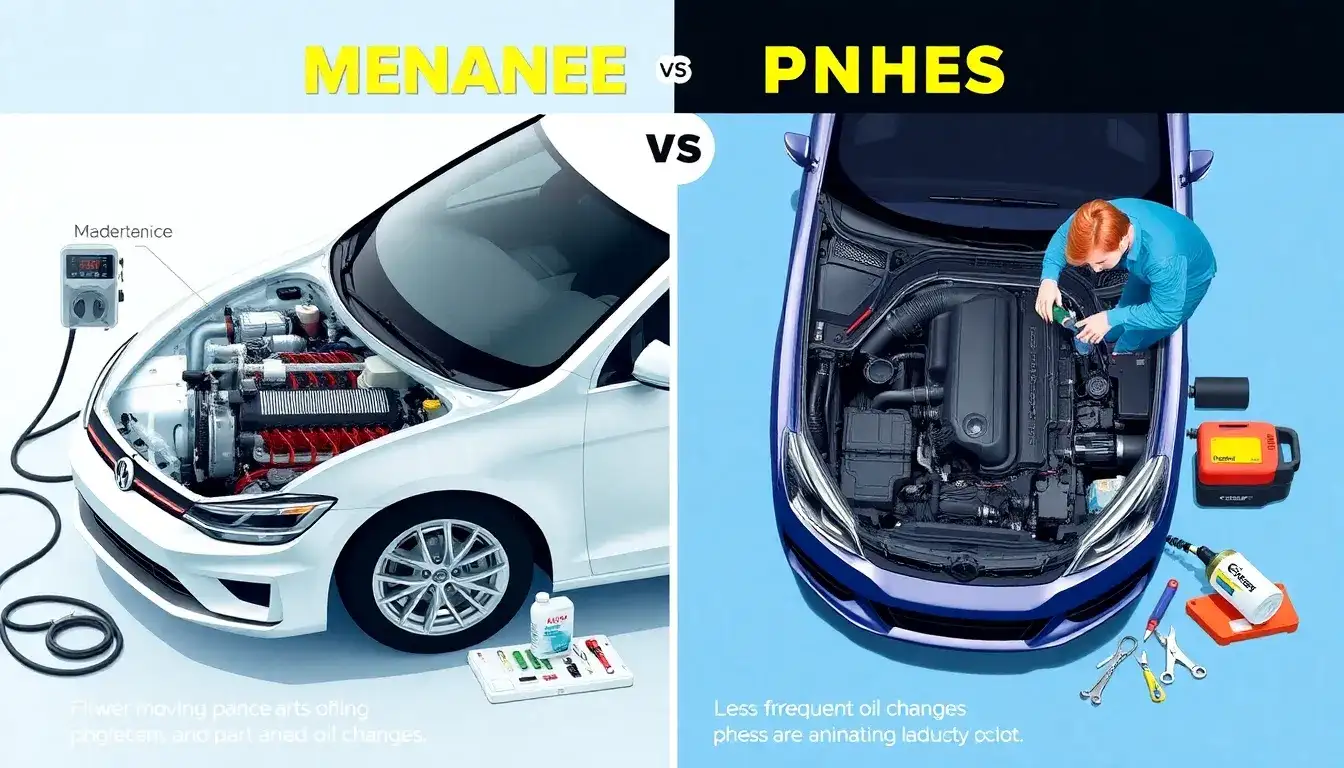
Plug-in Hybrid Electric Vehicles (PHEVs) indeed have some advantages in terms of maintenance compared to traditional gasoline cars, although they share some of the same maintenance needs due to their internal combustion engines.
Advantages of PHEVs in Maintenance:
- Reduced Brake Maintenance: PHEVs benefit from regenerative braking, which captures kinetic energy and converts it into electricity to recharge the battery. This significantly reduces brake wear and tear, extending the life of brake pads and reducing maintenance costs.
- Lower Maintenance for Electrical Components: While the internal combustion engine in PHEVs requires maintenance similar to traditional vehicles, the electric motor and associated electronics generally need less maintenance due to fewer moving parts.
- Environmental and Cost Benefits: PHEVs can save money on gasoline and are more environmentally friendly, which indirectly contributes to overall cost savings and reduced reliance on conventional fuels.
However, it’s important to note that the presence of an internal combustion engine means that PHEVs still require traditional maintenance tasks such as oil changes and spark plug replacements, similar to gasoline cars. Electric vehicles (EVs) generally require less maintenance than both PHEVs and traditional gasoline cars, as they lack internal combustion engines and have fewer moving parts overall.
Original article by NenPower, If reposted, please credit the source: https://nenpower.com/blog/do-phevs-have-any-advantages-in-terms-of-maintenance-compared-to-traditional-gasoline-cars/

