

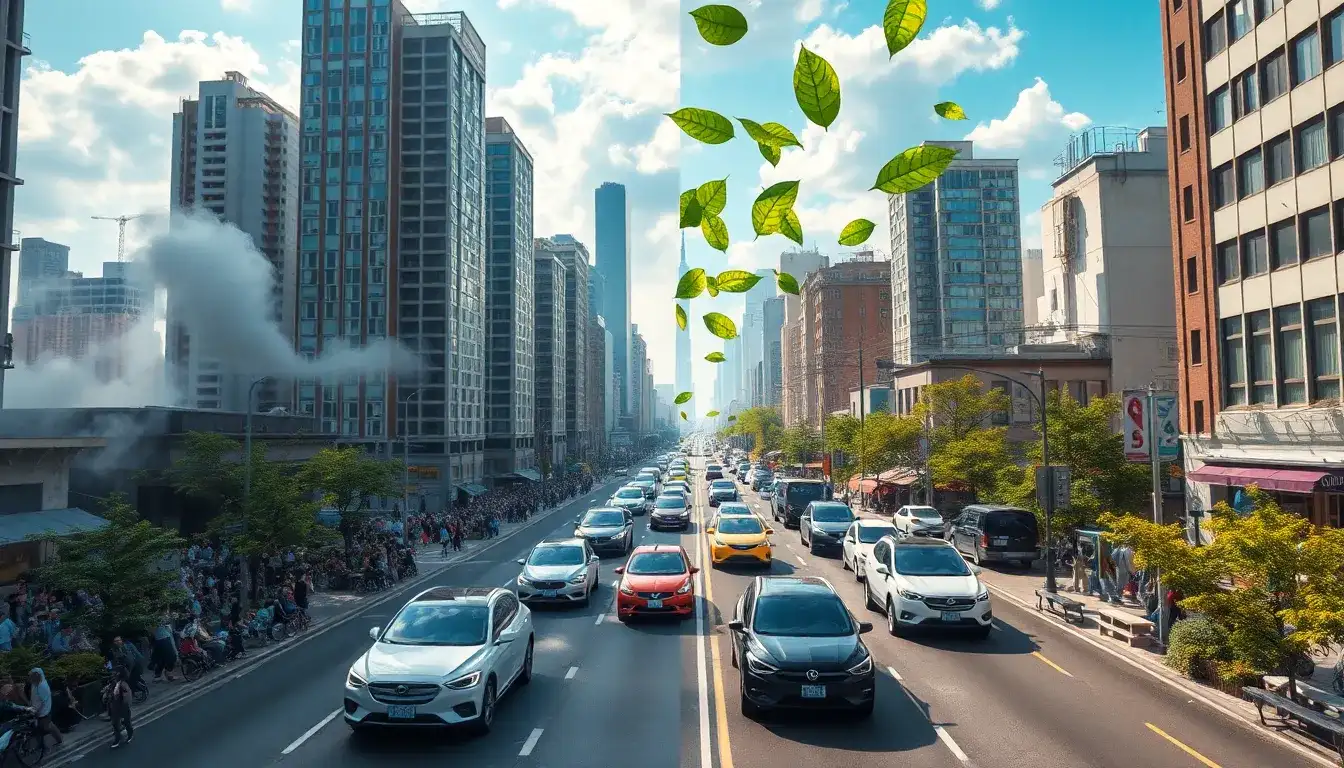
Electric vehicles (EVs) generally improve air quality compared to gasoline/diesel cars by eliminating tailpipe emissions (NOx, CO, HC) and reducing particulate matter (PM2.5/PM10) by 6-42%. Their impact is more pronounced in high-population-density areas due to concentrated emissions reduction from dense traffic corridors, though structural disparities in pollution exposure persist.
Here’s the breakdown:
- Dense urban benefits: Urban traffic corridors see immediate air quality gains from EVs removing tailpipe emissions, which are critical in high-traffic zones.
- Disadvantaged communities: Despite EVs reducing pollution by 40% more in these areas (due to higher baseline pollution), denser low-income neighborhoods still face elevated pollution from remaining gas vehicles and heavy traffic.
- Non-exhaust emissions: While EVs eliminate engine-related PM, heavier models may increase brake/tyre wear particulates, but studies confirm net PM reductions even in long-range EVs.
In summary, EVs have a greater relative impact in densely populated areas by cutting local emissions at scale, but absolute pollution levels remain higher in disadvantaged urban zones due to systemic traffic exposure.
Original article by NenPower, If reposted, please credit the source: https://nenpower.com/blog/do-electric-vehicles-have-a-greater-impact-on-air-quality-in-areas-with-high-population-density/

