

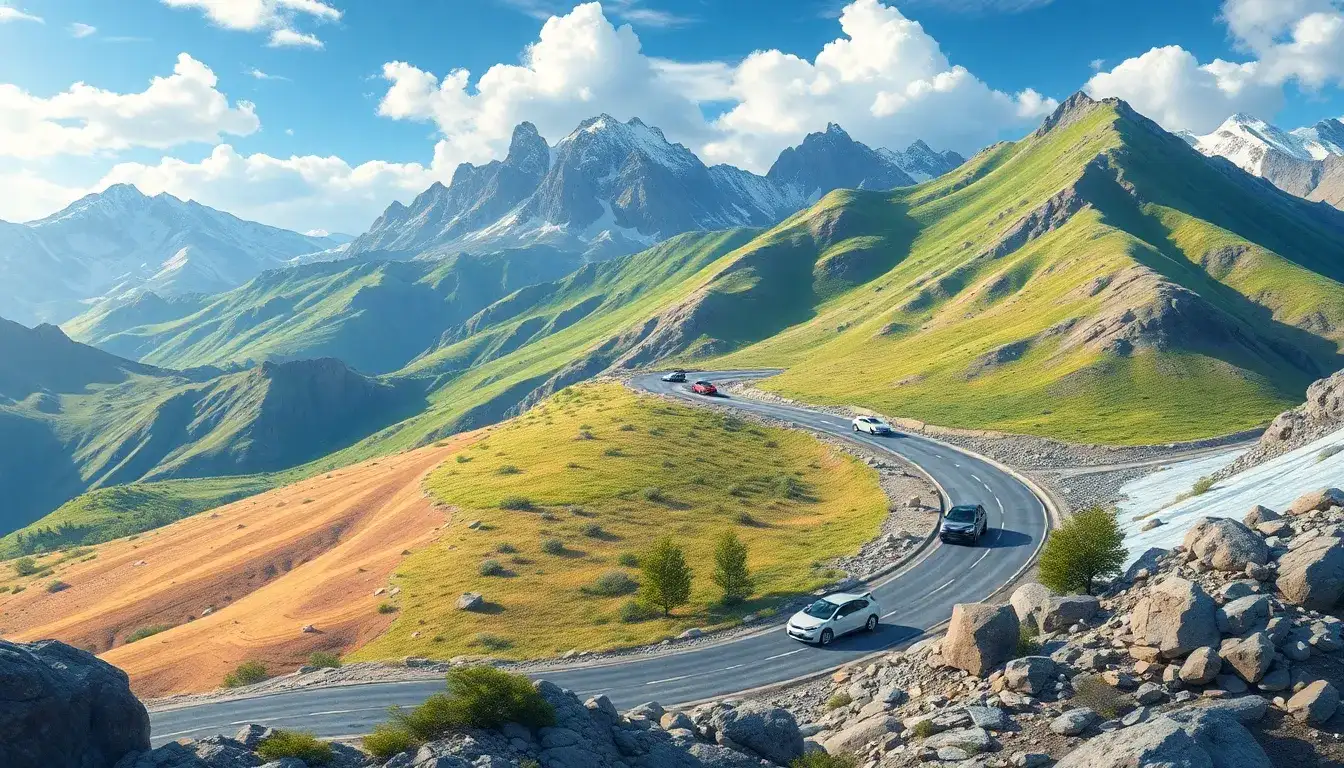
Yes, different types of terrain at high altitudes can have varying impacts on EV range. Here’s a breakdown of how different terrains affect EV performance:
Hilly or Mountainous Terrain
- Climbing: Going uphill, especially in mountainous areas, requires more energy due to the need to overcome gravitational forces. This can significantly reduce an EV’s range, as vehicles burn more electricity to sustain speeds and climb elevation.
- Descending: Conversely, descending down hills allows EVs to use less energy, potentially recovering some energy through regenerative braking. This can improve efficiency compared to driving on flat terrain.
High Altitude
- General Impact: Altitude itself does not directly affect EV range in the way it does combustion engines. However, air density decreases at higher altitudes, which might slightly reduce efficiency due to increased aerodynamic drag when driving at speed. However, this impact is generally minimal for most EV operations.
Rough or Uneven Terrain
- Energy Consumption: Driving on rough or uneven terrain increases friction and resistance, which can lead to higher energy consumption. This can result in a slightly reduced EV range compared to driving on smooth surfaces.
In summary, while high altitude alone doesn’t significantly impact EV range, climbing and descending in mountainous terrain can result in considerable variations in energy consumption and thus range. Other factors like road surface roughness can also play a role but are often less significant than elevation changes.
Original article by NenPower, If reposted, please credit the source: https://nenpower.com/blog/do-different-types-of-terrain-at-high-altitudes-have-varying-impacts-on-ev-range/

