

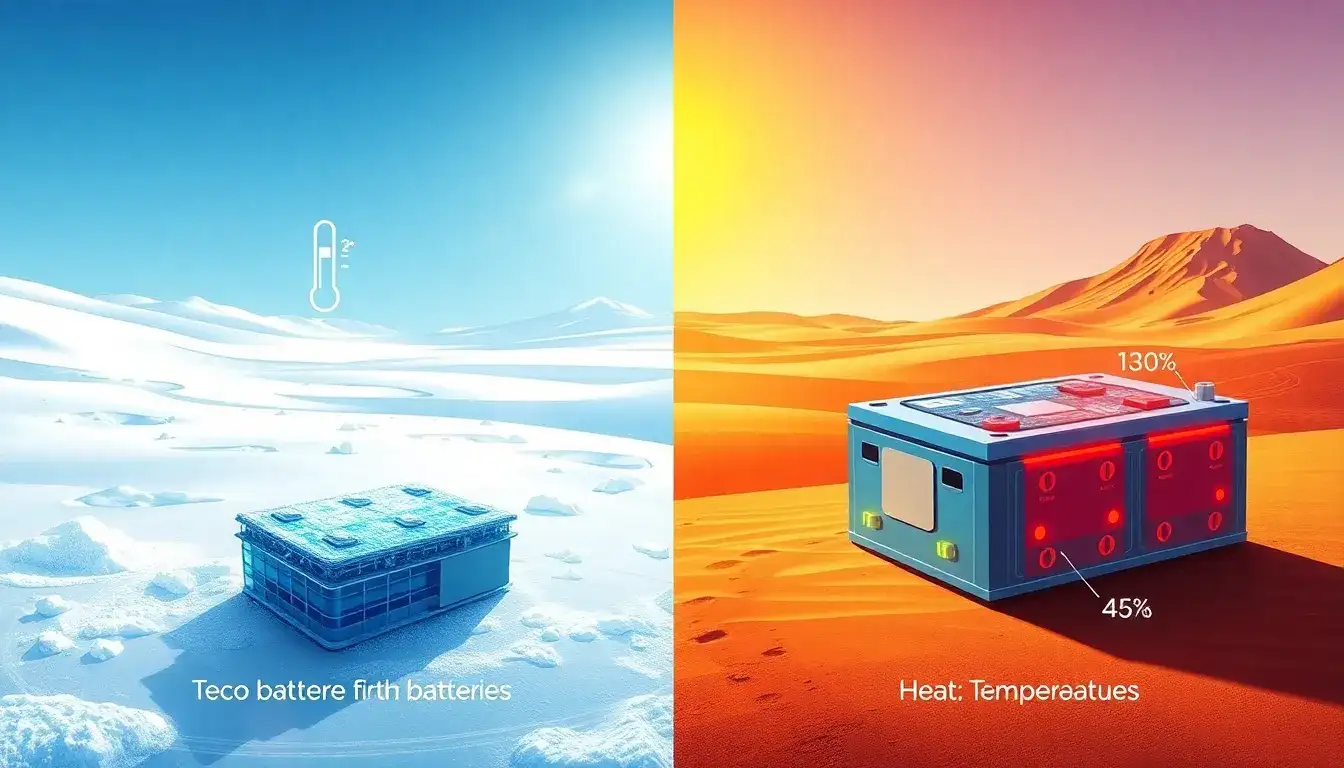
Cold and hot temperatures both affect electric vehicle (EV) battery longevity and performance, but in different ways.
Effects of Cold Temperatures on EV Batteries
- In cold conditions, the lithium-ion battery reactions slow down because the movement of lithium ions becomes sluggish. This results in decreased energy release and reduced efficiency in electricity generation, leading to poorer overall battery performance.
- Cold weather causes a notable loss in driving range. For example, testing at about -6.7°C (20°F) shows a 10-12% range loss due to temperature alone, with losses potentially exceeding 40% when climate control systems are used to heat the cabin.
- EVs expend additional energy to heat the battery cells and maintain optimal battery temperature in freezing conditions, which further reduces available driving range.
- Over time, consistent exposure to extremely cold temperatures can cause premature battery damage due to the increased strain from heating and slowed chemical reactions.
- Mitigation strategies include preconditioning the cabin and battery while the vehicle is still plugged in, so less battery energy is drained during cold starts.
Effects of Hot Temperatures on EV Batteries
- High temperatures (around 40°C or above) can accelerate degradation of battery cells by causing overheating, which damages the battery and reduces its overall lifespan.
- To combat overheating, modern EVs use active thermal management systems that cool the battery cells, but these cooling systems consume additional energy, which can reduce driving range.
- Unlike cold weather, where reduced range is mostly due to slower battery chemistry, heat primarily impacts battery longevity by accelerating wear on the cells.
Summary Comparison
| Temperature Condition | Primary Effect on Battery | Impact on Longevity | Impact on Performance/Range | Mitigation |
|---|---|---|---|---|
| Cold (Below Freezing) | Slower lithium-ion movement; increased heating load | Can cause premature damage over time | Reduced driving range (10-40% loss depending on use) | Preconditioning battery and cabin while charging |
| Hot (Around 40°C or more) | Battery overheating, cell damage | Accelerated battery degradation | Cooling draws energy, slightly reducing range | Active cooling systems |
In conclusion, cold temperatures primarily reduce EV battery performance temporarily by slowing chemical reactions and requiring heating energy, which lowers range, and can cause long-term damage if extreme and sustained. Hot temperatures accelerate battery degradation, shortening battery life, while also requiring energy-consuming cooling that slightly reduces range. Both extremes challenge EV battery longevity but through different mechanisms.
Original article by NenPower, If reposted, please credit the source: https://nenpower.com/blog/do-cold-temperatures-affect-ev-battery-longevity-differently-than-hot-temperatures/

