

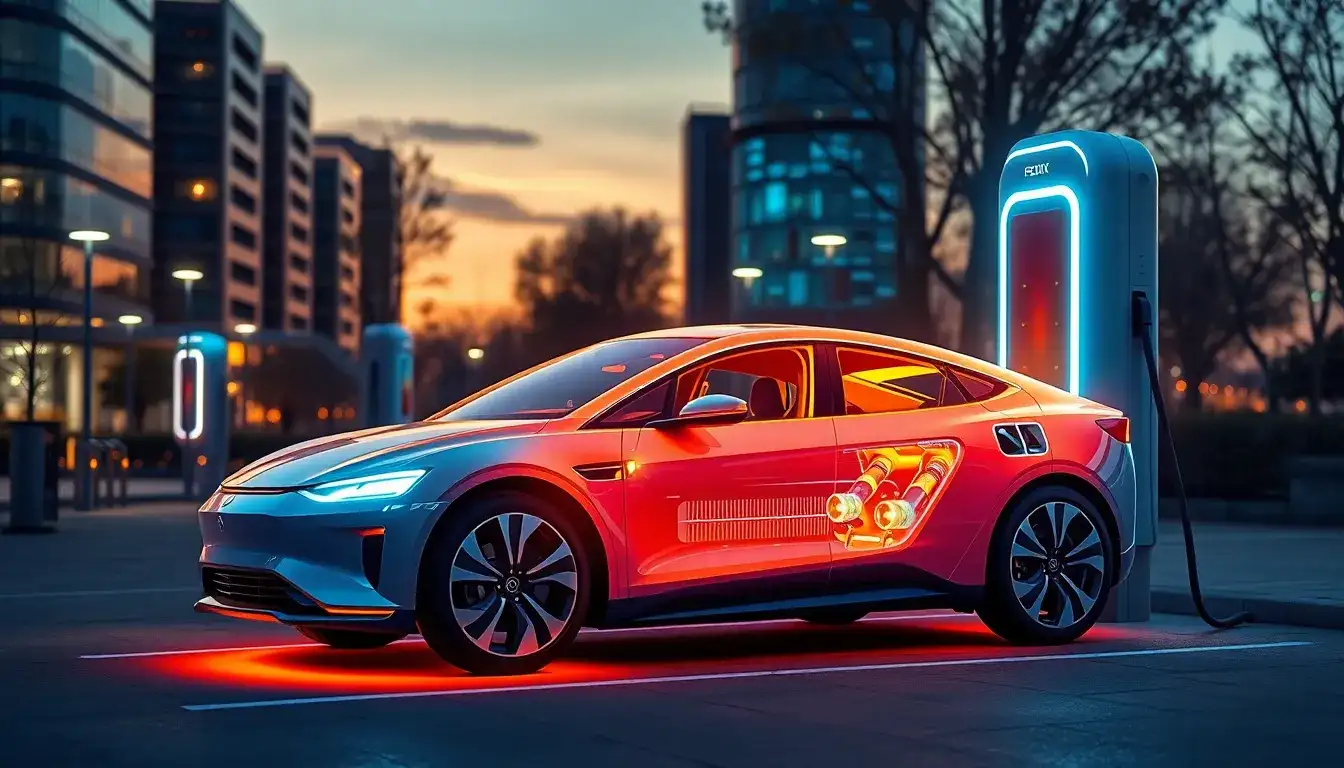
While not universally true for all EVs, most modern electric vehicles do incorporate thermal management systems to protect batteries during fast charging. These systems vary in complexity and effectiveness based on design:
- Basic systems:
Early or low-cost EVs sometimes use air cooling, which struggles with rapid heat dissipation during fast charging. - Industry-standard systems:
Most passenger EVs employ coolant-based thermal management, circulating liquid coolant through battery packs to maintain optimal temperatures. These systems often combine:- Heating capabilities for cold climates
- Integration with powertrain cooling loops (serial/parallel configurations via 4-way valves)
- Chiller-assisted cooling using refrigerant circuits in extreme heat
- Advanced solutions:
Emerging immersion cooling systems submerge batteries in dielectric fluid, enabling ultra-fast charging (<10 minutes) while preventing thermal runaway propagation. However, these remain rare in production vehicles as of 2024.
The thermal management system’s design directly impacts charging speed limits, battery longevity, and safety. Manufacturers increasingly prioritize robust thermal management as charging speeds accelerate, with most new mid-range and premium EVs featuring active liquid-cooled systems.
Original article by NenPower, If reposted, please credit the source: https://nenpower.com/blog/do-all-evs-come-equipped-with-thermal-management-systems-to-protect-batteries-during-fast-charging/

