

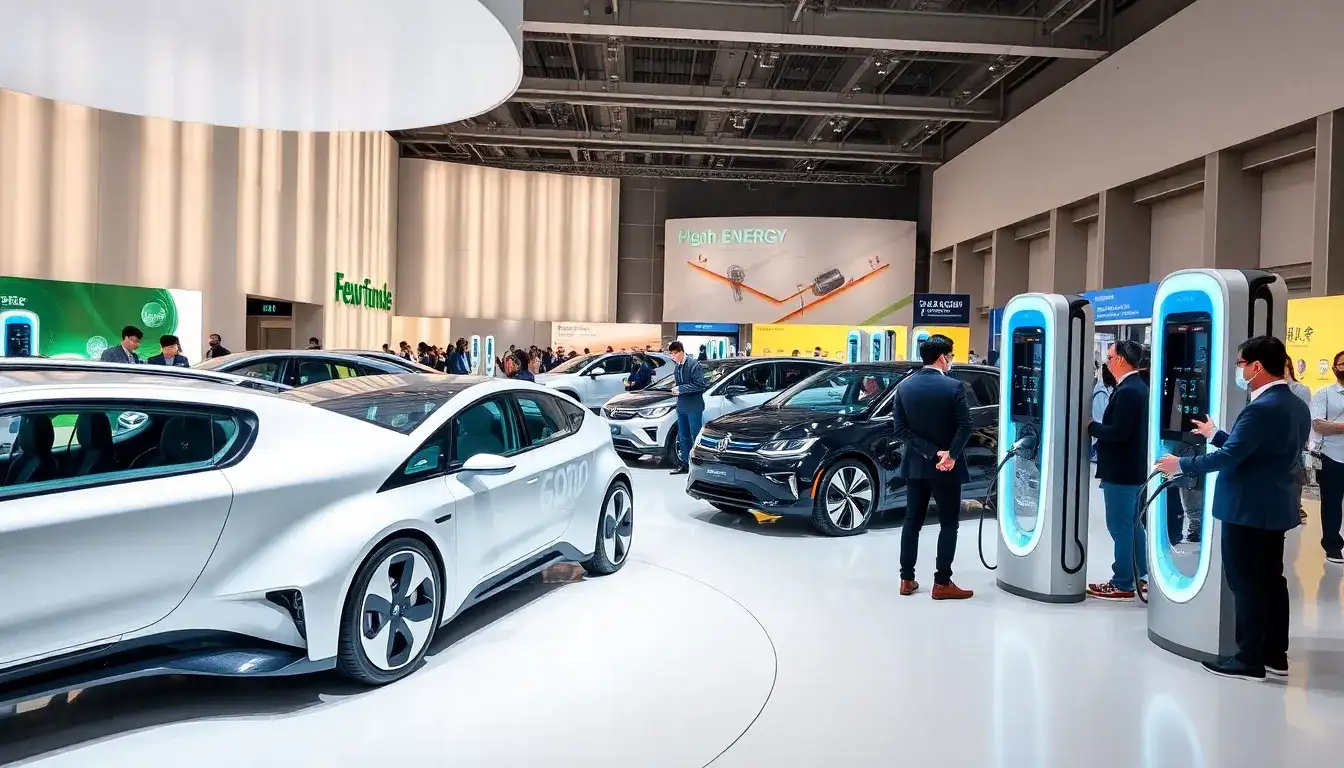
2025 Korea New Energy Electric Vehicle Exhibition DIFA 2025
The DIFA 2025 exhibition for new energy electric vehicles and charging stations will be held in Daegu, South Korea, from October 22 to 25, 2025. This annual event serves as a significant platform for the exchange of ideas in the Asian new energy vehicle industry.
Event Overview
The DIFA 2025 exhibition will gather leading global electric vehicle manufacturers, charging infrastructure providers, power battery companies, and intelligent connectivity technology firms. It will showcase the latest trends and technological breakthroughs in the new energy vehicle industry, providing opportunities for in-depth communication and cooperation among industry stakeholders.
In recent years, the South Korean government has been actively promoting the development of new energy transportation, implementing a series of policies to support the construction of electric vehicles and charging infrastructure, all aimed at achieving carbon neutrality.
DIFA 2025 will focus on the industry trends within this policy context, covering critical technological areas such as complete electric vehicles, power batteries, ultra-fast charging technologies, wireless charging systems, and vehicle-to-grid (V2G) interactions. With local brands like Hyundai and Kia accelerating their electric vehicle launches and attracting investments from international new energy companies, the South Korean new energy vehicle market is poised for unprecedented growth.
Exhibition Highlights
During the DIFA 2025 event, major automotive companies will unveil their latest products and demonstrate next-generation smart driving technologies and sustainable energy solutions to drive the upgrade of the new energy vehicle industry. Additionally, a special exhibition area for charging stations and energy management will highlight South Korea’s latest advancements in smart charging technologies and infrastructure optimization.
Exhibits will include ultra-fast charging stations, intelligent charging management systems, and photovoltaic energy storage solutions, enhancing the charging experience for new energy vehicle owners. The exhibition will also feature high-level forums, inviting government officials, industry leaders, and technology experts to analyze market trends, policy support, and technological innovations, helping companies accurately grasp the future development direction of the industry.
DIFA 2025 is not only a stage for showcasing innovative technologies but also an important platform for fostering global cooperation among new energy companies. The exhibition will provide participating companies with opportunities to engage with potential customers, investors, and partners, helping them expand into the Korean and Asian markets.
As green transportation becomes a global trend, the South Korean new energy vehicle and charging station market is rapidly developing. This exhibition will promote industry collaboration and facilitate technological breakthroughs, providing strong support for future sustainable transportation.
Exhibition Scope
1. New Energy Electric Vehicles and Services
- Electric vehicles: electric cars, light electric vehicles (<350kg), electric motorcycles, electric scooters, electric bicycles, electric recreational vehicles, electric golf carts, electric commercial vehicles, electric trucks, electric buses, electric forklifts, and electric transport and storage vehicles.
- Autonomous vehicles: connected and autonomous cars, connected and autonomous commercial vehicles, connected and autonomous trucks, and connected and autonomous buses.
- Vehicle certification services: electric vehicle parts, vehicle services, vehicle certification, and vehicle testing.
2. Energy and Infrastructure
- Charging stations: charging piles, charging stations, solar charging stations, fast charging stations, solar canopies, power energy providers, hydrogen energy providers, energy infrastructure, energy networks, energy management, smart grids, V2G technology, cables, connectors, and plugs.
- Hydrogen refueling stations and methanol refueling stations.
3. Battery and Powertrain
- Battery technologies: battery systems, lithium batteries, lead-acid batteries, nickel batteries, and other batteries.
- Fuel cell technologies: fuel cell systems, fuel cell management, hydrogen tanks, and other fuel cell technologies.
- Powertrains: general motors, hub motors, asynchronous motors, synchronous motors, plug-in hybrid engines, and other hybrid engines.
4. Autonomous Driving and Electronics
- Driver assistance systems and autonomous driving technologies.
- Monitoring systems for vehicle speed control and driver behavior analysis.
- Safety services: emergency calls, vehicle tracking, and other safety services.
5. Smart Cities and Mobility Design
- Interface design and usability.
- Urban planning and transportation infrastructure.
- Design and engineering tools.
6. Mobility Concepts and Services
- Shared mobility and lifestyle concepts.
- Financial services related to new energy vehicles.
- Education and consultancy services.
7. Infotainment and Connectivity
- In-vehicle communication systems.
- Infotainment applications and systems.
8. Materials and Engineering
- Battery and powertrain materials, components, and semi-finished products.
- Materials technology: lightweight design and engineering services.
9. Maintenance and Accessories
- Maintenance tools and equipment.
- Accessories for drive systems, batteries, and electrical systems.
Market Overview
1. Market Analysis of New Energy Electric Vehicles and Charging Stations in Korea
In 2025, the market for new energy electric vehicles and charging stations in South Korea is expected to maintain a strong growth momentum, becoming an essential part of global green transportation strategies. As the world accelerates its energy transition, the South Korean government actively responds to carbon neutrality goals by promoting new energy vehicles to replace traditional fuel vehicles.
With strong policy incentives and technological innovations driving rapid increases in electric vehicle penetration, it is anticipated that new energy vehicle sales will exceed 600,000 units in 2025, expanding their share of the new car market.
Local manufacturers such as Hyundai and Kia are intensifying research and production of pure electric and hydrogen fuel cell models, forming a comprehensive technology chain encompassing power systems, battery management, intelligent connectivity, and autonomous driving. South Korea’s charging network is also robust, with plans to exceed 300,000 public charging stations by 2025, featuring wide coverage with fast charging and community charging stations.
Significantly, South Korea is investing heavily in ultra-fast charging technology, with some new stations equipped with charging devices exceeding 350 kW power, which greatly shortens charging times and enhances user experience. The integration of new technologies such as V2G and smart energy management systems is gradually embedding new energy vehicles into urban energy management frameworks, fostering a more efficient and low-carbon transportation and electricity ecosystem.
2. Segments of the New Energy Electric Vehicle and Charging Station Industry
The new energy electric vehicle and charging station industry in South Korea is experiencing rapid developments driven by policy initiatives, technological innovations, and growing market demand. Below are the main segments of this industry:
- Electric Vehicle Market Structure: The South Korean electric vehicle market includes multiple segments to cater to diverse user needs, such as:
- Battery Electric Vehicles (BEVs): Major manufacturers like Hyundai and Kia dominate the market with models like the IONIQ series and EV6.
- Plug-in Hybrid Electric Vehicles (PHEVs): Combining electric drive with traditional internal combustion engines, these models from Hyundai and Kia are stable in performance.
- Hydrogen Fuel Cell Electric Vehicles (FCEVs): Hyundai NEXO leads the market, supported by significant government investment in hydrogen infrastructure.
- Charging Station Market Structure: The South Korean government is promoting charging infrastructure to support the electric vehicle market:
- Fast Charging Stations: Widely used in urban centers, along highways, and in residential areas to meet high-efficiency charging needs.
- Ultra-Fast Charging Stations: 350 kW-level charging stations are gradually becoming mainstream, capable of charging up to 80% in just 20 minutes.
- Wireless Charging Technology: Currently being piloted in high-end models and public transportation, with future expansion anticipated.
3. Government Policies on New Energy Electric Vehicles and Charging Stations
In 2025, the South Korean government will continue to implement a series of policy measures to promote the rapid development of the new energy electric vehicle and charging station industry, supporting the achievement of carbon neutrality goals. Key policies include:
- Purchase Subsidy Policy: Consumers purchasing pure electric vehicles (BEVs) can receive subsidies of up to 8 million KRW (approximately $6,000), while subsidies for hydrogen fuel cell vehicles can reach up to 22.5 million KRW (approximately $17,000).
- Charging Infrastructure Construction: The government plans to build 500,000 charging stations by 2025, with extensive coverage in major cities and along highways, significantly increasing the number of ultra-fast charging stations.
- Regulations and Market Promotion: A low-emission vehicle quota system will require manufacturers to sell a certain percentage of new energy models, with penalties for non-compliance; the government encourages domestic production of more new energy vehicles and core components.
- Research and Innovation Support: The government aims to launch a full line of hydrogen fuel cell models by 2025 and enhance support for solid-state battery technology research while establishing a 200 billion KRW fund for R&D and innovation in new energy vehicles.
4. Market Trends for New Energy Electric Vehicles and Charging Stations
With increasing global attention on environmental protection and sustainable development, the market for new energy electric vehicles and charging stations in South Korea is experiencing rapid growth. By 2025, the new energy vehicle market is anticipated to expand further, driven by policy support, heightened consumer awareness of environmental issues, and technological advancements.
Government policy support is a critical factor, with a target for new energy vehicles to comprise 30% of total vehicle sales by 2030, indicating steady annual growth in new energy vehicle sales. Subsidy policies for new energy vehicles will continue to expand, particularly for low-income households and first-time buyers. Additionally, the government plans to enhance charging infrastructure, promoting the installation of public charging stations while incentivizing private and corporate investments.
Furthermore, consumer environmental awareness is increasing, leading to greater recognition of the benefits of new energy vehicles, particularly in reducing carbon emissions. Improvements in electric vehicle driving experiences and battery range are also enhancing consumer acceptance.
Technological advancements, particularly in battery technology, are key drivers of market development. Breakthroughs in solid-state batteries and rapid charging technologies are boosting electric vehicle range and charging speeds, further encouraging consumer purchasing intent. Hydrogen fuel cell vehicle technology is also maturing, with electric vehicles and hydrogen fuel vehicles likely to coexist as market mainstays.
In terms of charging infrastructure, the density and speed of charging stations will significantly improve, particularly in urban areas and along highways, to meet the growing demand for electric vehicle charging.
5. Overview of the New Energy Electric Vehicle and Charging Station Industry in Korea
The new energy electric vehicle and charging station industry in South Korea is accelerating its development, evidenced by several key factors:
- Participation of Vehicle Manufacturers: Local manufacturers such as Hyundai, Kia, and Samsung are actively developing electric vehicles and hydrogen fuel cell models, launching a range of market-ready products like the Hyundai IONIQ series and Kia EV series.
- Rapid Infrastructure Development: The government has mandated the construction of 500,000 charging stations by 2025, including numerous fast charging stations, alongside plans to introduce smart charging stations equipped with wireless charging and remote monitoring features.
- Battery Recycling Initiatives: South Korea is promoting battery recycling technologies to mitigate environmental impacts, with the government supporting battery recycling firms and encouraging resource circularity.
- Hydrogen Fuel Cell Technology Leadership: South Korea is a global leader in hydrogen fuel cell technology innovation, with companies like Hyundai accelerating the research and commercialization of hydrogen vehicles.
6. Market Dynamics of New Energy Electric Vehicles and Charging Stations
The new energy electric vehicle market in South Korea is undergoing rapid growth, positioning the country as a leader in electric mobility. According to the Korea Electric Vehicle Association, by the end of 2025, annual sales of new energy electric vehicles are expected to exceed 600,000 units, accounting for approximately 30% of total vehicle sales.
This growth is fueled by supportive government policies, infrastructure development, and consumer demand for environmentally friendly and economical solutions. Major cities like Seoul and Busan have implemented extensive electric mobility initiatives, including significant electric vehicle purchases by government agencies and public transportation systems.
In terms of charging infrastructure, South Korea’s progress is notable, with the government aiming to establish at least 500,000 public and private charging stations by 2025. The widespread adoption of ultra-fast charging technology is expected to significantly reduce charging times, enhancing the convenience and user experience of electric vehicles.
Additionally, new buildings will be required to include a certain percentage of charging facilities, laying the groundwork for future electric vehicle adoption.
On the technological front, South Korea has made significant advancements in battery technology and smart charging networks. Solid-state batteries and high-energy-density lithium batteries are becoming core components of electric vehicles, while the ongoing development of smart charging stations and V2G technologies enhances the interaction between electric vehicles and the grid. These innovations not only improve electric vehicle performance but also provide more flexible energy management options for the grid.
7. Market Share of Brands in the New Energy Electric Vehicle Sector
In the South Korean new energy electric vehicle market, Hyundai and Kia remain the dominant brands. According to sales data from early 2025, Hyundai and Kia hold market shares of 35% and 33%, respectively. The Hyundai Ioniq series and the Kia EV series have become the most favored models among consumers.
Especially, the Hyundai Ioniq 5 stands out for its unique design and advanced technological features, making it one of the most popular pure electric vehicles on the market. While domestic brands command a significant market share, foreign brands also have notable presence in South Korea. Although Tesla’s sales have declined, its Model 3 and Model Y still hold a place in the premium electric vehicle market, maintaining industry leadership in innovation and brand influence.
Moreover, Chinese brands are beginning to enter the South Korean market. BYD launched several new models in early 2025, and as brand recognition increases and product lines expand, BYD is expected to capture a larger market share in the coming years. Other Chinese brands, such as NIO, are also planning to enter the South Korean market, which is likely to invigorate competition within the local market.
Organizing Unit: Oriental Fortune (Beijing) International Exhibition Co., Ltd.
Original article by NenPower, If reposted, please credit the source: https://nenpower.com/blog/difa-2025-south-koreas-premier-new-energy-vehicle-and-charging-station-exhibition/

