

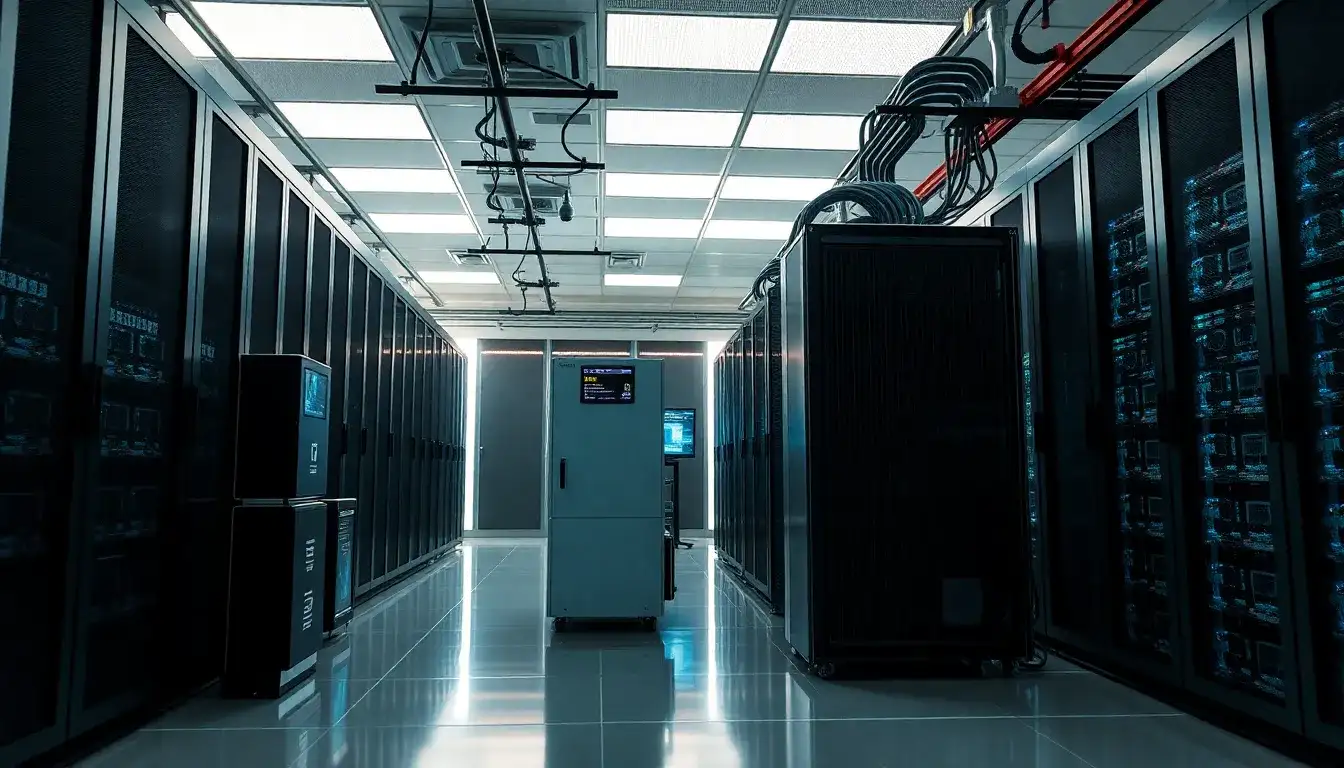
As NVIDIA’s annual technology conference, GTC, focuses on high-power AI servers and next-generation data center architectures, Delta Electronics’ Chairman, Zheng Ping, announced that the company is accelerating its development of high-voltage and high-frequency power architectures in response to the rapidly growing energy demands of AI data centers. The company is prioritizing the development of 800V and ±400V systems, with plans to gradually introduce these technologies starting in 2026 and to begin generating revenue from them in 2027.
Zheng Ping pointed out that currently, the construction of AI data centers is primarily driven by large cloud service providers, with overall demand momentum continuing to rise and short-term visibility remaining positive. However, data center development still faces constraints in terms of land, water, power supply, and labor, which may affect delivery schedules. As the contribution of data center operations increases, the company is gradually moving away from traditional seasonal fluctuations, and future shipment rhythms will align more closely with project construction timelines and supply chain conditions.
Regarding production capacity and investment strategies, Delta has announced plans for increased capital expenditures, focusing primarily on equipment investments related to AI power supplies and data center infrastructure expansion. The company has production plans in the United States, Thailand, and China, and is continually assessing demand for the next two years to prevent capacity shortages from impacting long-term growth momentum.
Discussing the trends in data center power architectures, Zheng noted that high-voltage direct current (HVDC) power structures will be a significant direction moving forward. The company anticipates that the 800V system will gradually ramp up in the coming years and may start contributing to operations. Additionally, the ±400V architecture and solid-state transformers (SST) are currently being developed in collaboration with customers, and the introduction of these technologies will depend on individual customer project timelines.
To address power supply bottlenecks, Delta has proactively laid out modular and decentralized data center solutions to accommodate varying power demands across different scales and environments. Currently, the company observes that clients are primarily large data centers, but as power supply constraints and computational needs expand, the development potential for medium and small regional data centers is also worth noting.
Regarding electric vehicle-related business, Delta acknowledges that it is still facing market adjustment pressures in the short term, with shifts in customer strategies affecting some product shipments. However, the company remains optimistic about the long-term trend of electrification, believing that ongoing improvements in charging infrastructure and battery technology will provide significant growth potential.
In terms of energy transition, Zheng shared that Delta is actively positioning itself in the fuel cell and hydrogen technology sectors. Currently, fuel cell products have been delivered to customers for testing, with mass production expected to begin by the end of the year, initially targeting power companies.
Zheng emphasized that fuel cells can help reduce carbon emissions and provide alternative power sources when grid power is limited. Although the short-term revenue contribution is still limited, it is viewed as a vital part of the company’s future energy strategy.
Original article by NenPower, If reposted, please credit the source: https://nenpower.com/blog/delta-electronics-advances-data-center-power-solutions-with-800v-and-%c2%b1400v-high-voltage-architecture/

