

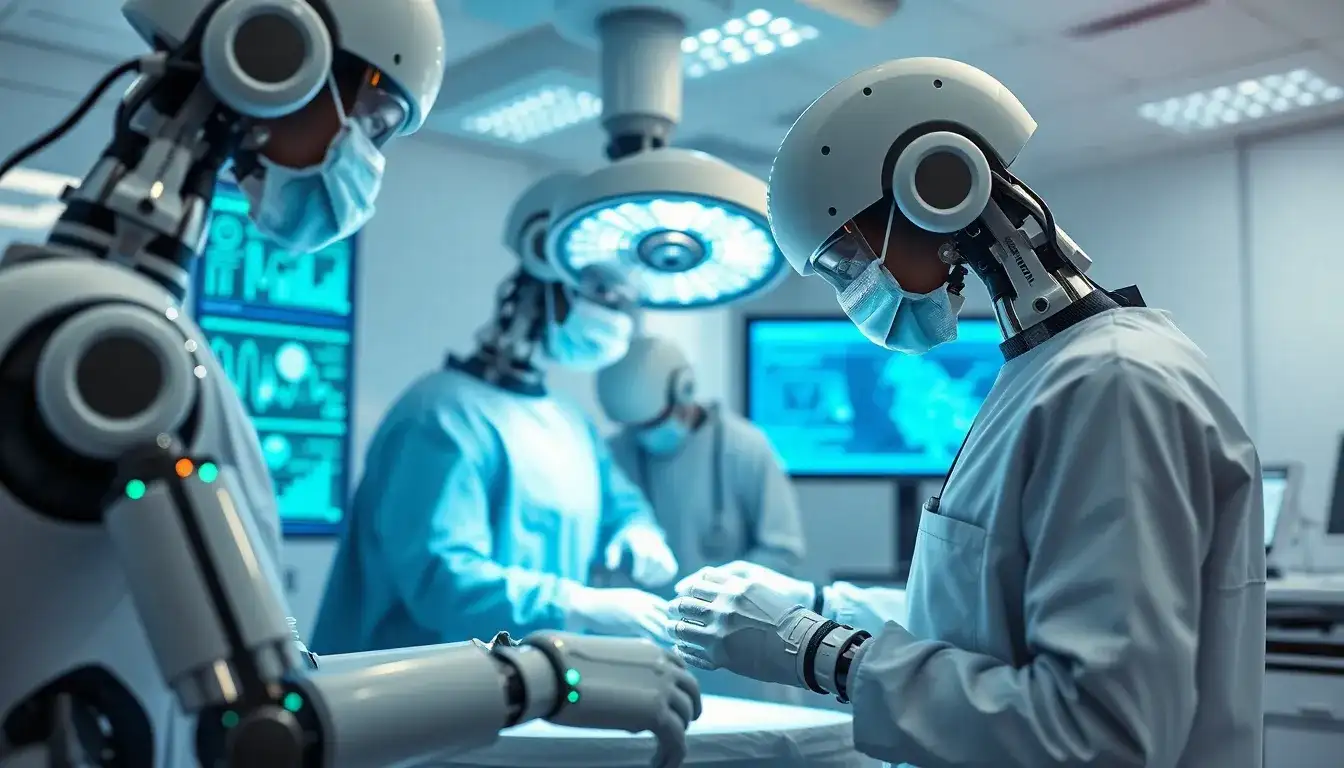
The development status and market outlook for medical robots in 2026 have come under analysis, particularly in the realm of surgical robots and healthcare applications. As of March 4, 2026, the medical robotics sector has seen rapid advancements, driven by the increasing demand for precision in surgical procedures and the integration of artificial intelligence.
Medical robots are essential in various healthcare domains, including diagnostics, treatment, rehabilitation, and service. Their capabilities allow for effective support or replacement of healthcare personnel in specific medical tasks, representing a significant leap in medical technology.
Currently, the application of medical robots is expanding rapidly, with advancements being made in artificial intelligence, 5G communication, and robotic integration. These technologies are pushing forward the intelligent capabilities of medical robots and the development of networked healthcare solutions.
The analysis of the current development status of the medical robot industry reveals several key factors:
- Technological Developments: The core technologies behind medical robots include design methodologies, sensory technology, artificial intelligence algorithms, and human-machine interaction systems. Surgical robots are at the forefront of technological innovation, focusing on precision and efficiency in their operations.
- Market Demand: The demand for medical robots varies significantly across different regions. In developed countries, where healthcare systems are well-established, there is a strong inclination towards advanced surgical robots and rehabilitation robots. In emerging markets, the demand is primarily driven by basic healthcare needs.
- Future Trends: In the short term (3-5 years), surgical robots are expected to continue being the main growth engine of the market. The precision of surgical robotics will likely enhance, while the prices for entry-level robotic products may decrease, enabling broader adoption.
- Long-term Outlook (5-10 years): Over a longer horizon, the intelligence level of medical robots is expected to rise significantly, with advancements in artificial intelligence and machine learning leading to higher autonomy in robotic systems.
Despite these advancements, challenges remain. For instance, operational flexibility in various robotic systems has not yet reached the level of human medical professionals. Additionally, the customizability of rehabilitation robots needs improvement, and there are still hurdles in achieving full autonomy in surgical robots.
As we look to the future, the medical robotics industry will need to navigate regulatory landscapes and adapt to rapid technological changes. The intersection of policy and technology will play a crucial role in determining how quickly and effectively these innovations can be integrated into healthcare systems.
Overall, the medical robot industry is on the verge of significant breakthroughs that could reshape how healthcare is delivered, making it more efficient, personalized, and accessible.
Original article by NenPower, If reposted, please credit the source: https://nenpower.com/blog/current-status-and-market-outlook-for-medical-robots-in-2026-an-analysis-of-development-trends-and-future-prospects/

