

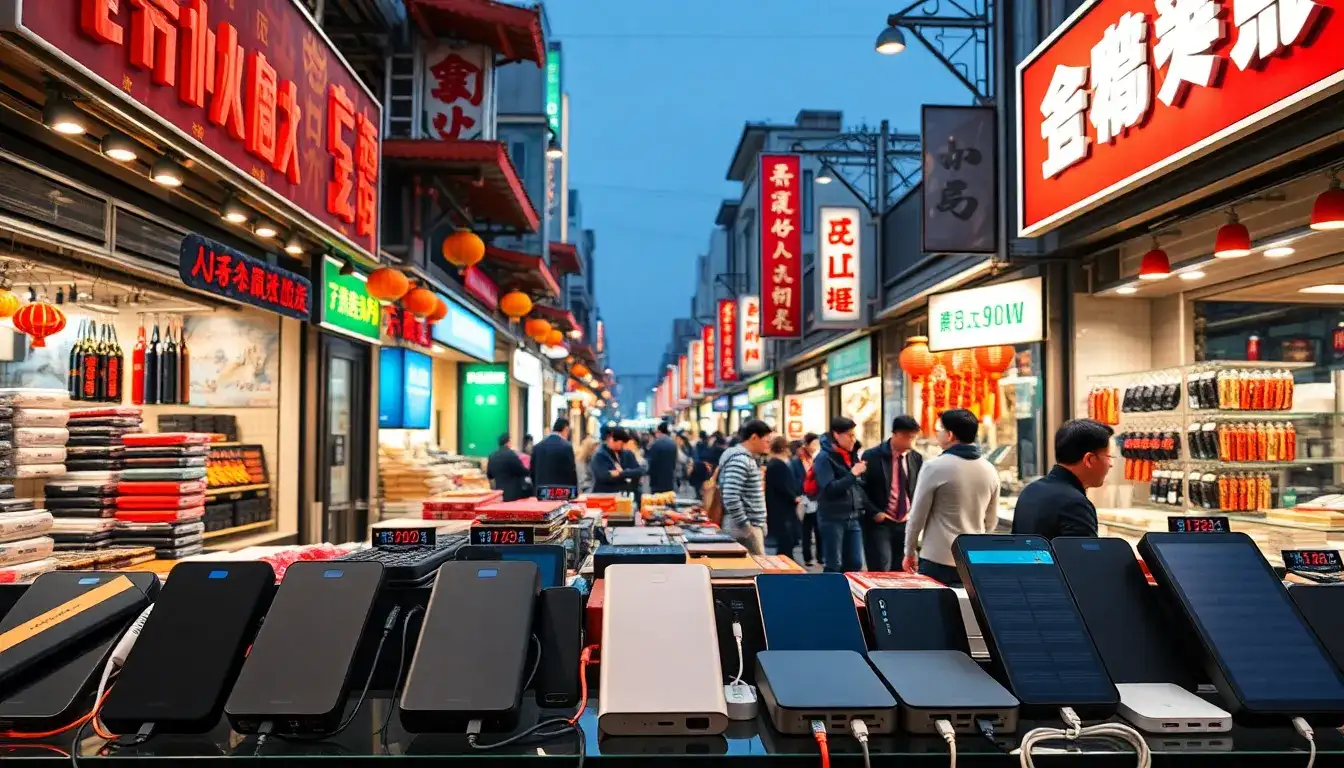
This summer, several areas in the United States were struck by tornadoes, leaving over one million households without power. In the suburbs, Sarah was fumbling in the dark for a black and orange device. The moment she pressed the switch, the emergency light illuminated, and her refrigerator powered back on. In Shangri-La, photographer Chen Wu was using this device to charge his drone batteries in the wild; meanwhile, many office workers in Tokyo also kept it at home to prepare for unexpected power outages. These three scenarios, spanning continents, all point to the same product: portable energy storage devices.
The concept of “lithium-ion portable energy storage” was first introduced by the Chinese company Huabao New Energy. In 2016, Huabao New Energy identified a gap in the global outdoor and emergency power market. By targeting the lightweight outdoor power supply segment, they alleviated the electricity anxiety of outdoor enthusiasts in North America. The company later focused on Japan, where there has been a long-standing demand for emergency backup power solutions. This strategic pivot transformed Huabao from a power bank manufacturer into a global brand with independent research and production capabilities, culminating in its 2022 IPO, making it the first publicly traded company in the portable energy storage sector.
In the first half of 2025, Huabao New Energy reported significant revenue growth across North America, Asia, and Europe. Using a marketing strategy that includes “mental positioning,” “continuous reinforcement,” and “value support,” they established brand recognition among overseas consumers. This involved deeply associating the Jackery brand with scenarios like “outdoor power” and “household emergency backup,” which not only captured user awareness of a new product category but also reinforced brand positioning through collaborations with influencers in the outdoor niche, such as RV travel bloggers and camping enthusiasts. Additionally, partnerships with brick-and-mortar retailers like Costco and Walmart allowed consumers to physically interact with the products, thereby expanding their sales network and achieving a marketing loop.
Huabao New Energy’s market expansion approach serves as a reference for Chinese consumer electronics brands seeking growth abroad.
1. Filling the Gap in the Outdoor Power Market
How do outdoor enthusiasts continuously power their camping equipment? This is a crucial question every outdoor person must face. According to the American Recreational Vehicle Association and Campground Association, by 2024, there will be 15 million RVs in the United States, with nearly 50 million people participating in camping activities each year, averaging over three days per trip. For these outdoor lovers, access to power is essential for various devices like portable refrigerators, drones, cameras, and even ambient lights and small projectors.
Traditionally, outdoor power solutions in the U.S. have been inadequate; conventional gas generators are bulky, noisy, and environmentally harmful, while standard power banks suffer from short battery life and low efficiency. Ten years ago, Huabao’s founder, Sun Zhongwei, recognized this gap in the North American market. Thus, the Jackery brand was born, creating the world’s first lithium battery portable storage product. The initial product, the “Explorer Series,” catered to outdoor scenarios, featuring a lightweight design that could be carried with one hand and capacities ranging from 200W to 3000W, meeting the power demands of short camping trips, photography, and medical emergencies.
In 2018, building on existing energy storage products, Huabao launched the “Solar Saga Series” portable solar panels, which allowed the storage devices to be charged by sunlight. As long as there is sunshine, the energy storage devices can replenish their power, transforming portable energy storage from an “emergency tool” into “a sustainable lifestyle,” widely applicable in RV camping and outdoor fishing.
After establishing a foothold in North America, Huabao turned its attention to Japan—a market with a strong demand for emergency backup power due to frequent natural disasters like earthquakes and typhoons. Here, energy storage products shifted from being optional for outdoor use to becoming essential for households, marking Huabao’s second growth driver abroad, with market size now rivaling that of North America.
Huabao is also experiencing rapid growth in the European market. Tracy Wang, Global Brand PR Manager for Huabao New Energy, explained that European consumers have integrated environmental consciousness into their daily lives, emphasizing the importance of zero pollution and low carbon emissions in both outdoor and household energy use. This aligns perfectly with Huabao’s product philosophy of “where there is light, there is power.”
Thanks to the success of the Jackery brand overseas, Huabao has emerged as a global leader in portable energy storage and a pioneer in household green electricity solutions, successfully listing on the Shenzhen Stock Exchange’s Growth Enterprise Market in 2022. According to financial reports, by the end of June 2025, Huabao’s cumulative global sales of energy storage products reached nearly 6 million units, with the company generating revenue of 3.606 billion yuan in 2024. Notably, revenues in North America reached 922 million yuan, marking a 42.86% year-on-year increase, while revenues in Asia (excluding China) reached 466 million yuan, up 31.92%. The European market also saw significant growth, with revenue exceeding 100 million yuan for the first time, reflecting a 106.42% increase year-on-year, establishing it as a new engine for Huabao’s global business growth.
2. The Three-Pronged Marketing Strategy
The best differentiation for a brand is to be the first. As a prime example of a “category brand,” Huabao’s success in overseas markets can be summarized in three key actions:
First is “mental positioning.” In the 1970s, Al Ries and Jack Trout proposed the “positioning theory,” which emphasizes that a brand needs to find a unique, clear, and valuable position in consumers’ minds. When a product is first associated with a distinct, attractive concept, it can become synonymous with that concept in consumers’ perceptions. After seizing the market gap for portable energy storage, Huabao consciously linked its brand with the high-frequency demand scenarios of “outdoor power” and “household emergency backup,” effectively securing “priority usage rights” for those contexts. Now, when overseas consumers think of “outdoor power” or “emergency backup,” the Jackery brand is often the first that comes to mind.
Second is “continuous reinforcement.” Huabao employs influencer marketing on social media to consistently reinforce Jackery’s position as the go-to brand for outdoor and emergency scenarios. Tracy noted that Jackery enjoys strong loyalty among overseas outdoor enthusiasts, including RV travel bloggers, camping experts, and emergency preparedness influencers. These influencers create content that focuses on specific outdoor contexts, such as powering a refrigerator with Jackery while traversing the Colorado Grand Canyon or supporting drone photography during camping in the Alps. Their real-life experiences with Jackery products quickly spread within the outdoor community, amassing a dedicated fan base.
Third is “value support.” Distribution channels extend a brand’s positioning; the marketing concept needs to translate into actual experiences, ensuring products are readily accessible to users. For large items like energy storage products, in-store experiences are crucial for driving purchases. Tracy mentioned that besides online channels like their own website and Amazon, Jackery has strategically entered mainstream retailers like Costco and Walmart, allowing consumers to “see and touch” the products in person.
By employing this three-pronged marketing strategy—mental positioning, continuous reinforcement, and value support—Huabao has successfully established the brand perception among overseas consumers that “when thinking of outdoor or emergency power, think of Jackery.”
3. Innovating New Market Categories
Over a decade ago, Huabao was caught in a cycle of customer demand and price competition, facing a “capacity dependency and thin profit” dilemma—this was a common plight among many Chinese electronics manufacturers at the time: possessing production capacity but lacking brand influence and category definition rights. Rather than engaging in competition within an existing market, Tracy stated at a July conference that it is better to create new categories and capture incremental concepts. As competition among consumer electronics brands enters a new phase, the focus has shifted from “who can offer the lowest price” to “who can address more user pain points and create unique value,” raising the bar for rapid product iterations and building localized service ecosystems.
“We tailor products for different market needs,” Tracy explained. Considering Japan’s limited living space, Jackery’s energy storage products are designed to be lightweight and compact, making them easy to store. Additionally, responding to Japanese consumers’ attention to detail, features like precise power display and silent modes have been added. In Europe, Jackery has optimized product circuitry designs according to local voltage standards and launched integrated DIY small-scale household green electricity solutions that are easy to set up and perfectly match European users’ solar panel installation needs on their balconies.
In terms of marketing channels, Huabao’s localization strategy is evident. In North America, they leverage outdoor and home influencers to narrate the story of Jackery as the family emergency hero; in Europe, they actively participate in local solar power or green energy exhibitions, conveying their vision and practical achievements in ESG sustainability; while in Japan, they focus on popular social media for promotional interactions and online marketing activities.
In recent years, with the rapid growth of the portable energy storage industry, numerous companies have entered the field. As the portable energy storage market evolves into a competitive space, Huabao has expanded its product offerings into new scenarios for “household green electricity.” “In 2020, Huabao began developing energy storage products for household scenarios, recognizing the growing demand for household emission reductions among users in Europe and America, and extending portable energy storage technology into the broader field of household green electricity,” Tracy stated. In 2024, Huabao officially launched its household energy storage product line, including the “Aesthetic Curved Solar Tile Household Green Electricity System,” which integrates solar power generation with building rooftops, ensuring “where there is light, there is power,” while allowing excess electricity to be stored for nighttime use or during power outages. The “DIY Small Household Green Electricity System” is designed for smaller homes, enabling users to flexibly configure storage capacity and solar panels according to their needs, offering lower barriers to entry and greater adaptability.
From “outdoor camping” to “household emergency” and now to “daily green electricity use,” Huabao is constructing a broader ecosystem of green energy services that spans all aspects of users’ lives, continuously solidifying its leading position in the portable energy storage sector and driving long-term business growth and global brand development.
Original article by NenPower, If reposted, please credit the source: https://nenpower.com/blog/cross-border-powerhouse-from-huaqiangbei-achieves-3-6-billion-in-annual-revenue-through-portable-energy-solutions/

