

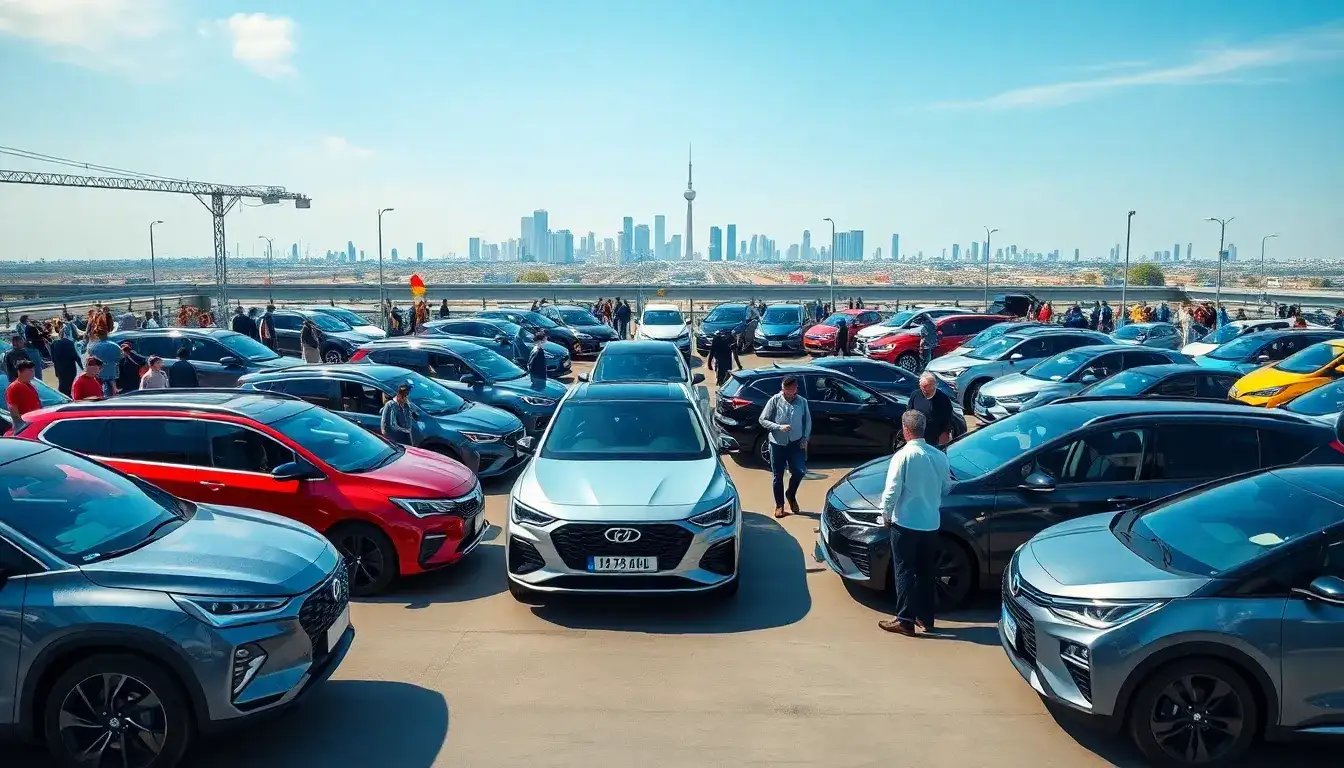
The automotive market continues to thrive. In recent months, the industry has demonstrated significant growth, with the latest data revealing remarkable sales figures. In the first four months of this year, China’s automotive production and sales reached 1.0175 million and 1.006 million units, respectively, marking increases of 12.9% and 10.8% compared to the same period last year. This surge marks the first time that production has exceeded one million vehicles during this timeframe.
This year has seen favorable economic conditions and consistent policy support, contributing to the automotive market’s steady expansion. The China Association of Automobile Manufacturers (CAAM) has expressed optimism about the market’s resilience, attributing it to effective policy measures that have bolstered consumer demand.
New energy vehicles (NEVs) are leading the charge in this growth. In the first four months of the year, NEV sales reached 442.9 thousand and 430 thousand units, reflecting impressive year-on-year growth rates of 48.3% and 46.2%. NEVs now account for 42.7% of total vehicle sales, showcasing their increasing popularity.
The rise of NEVs is attributed to several factors, including government incentives, advancements in technology, and a growing consumer preference for environmentally friendly vehicles. The CAAM noted that policies promoting NEVs have been instrumental in sustaining market vitality.
Moreover, the new energy vehicle segment is expected to continue its upward trajectory, with many manufacturers ramping up production capabilities. The CAAM has indicated that the rapid growth of NEVs is a significant driving force behind the automotive industry’s overall expansion.
As for vehicle performance, China’s new energy vehicle market is on track to achieve a 500-kilowatt power output threshold, with advancements in battery technology and intelligent driving systems enhancing vehicle capabilities. This has made NEVs increasingly attractive to consumers, further driving sales.
Leading manufacturers have introduced new models into the market, including the ES6 and EC6, which are gaining traction among consumers. These models have been collectively referred to as the ‘5566’ series, representing a key part of the market’s growth strategy.
Additionally, the market has seen innovations in charging infrastructure, with over 1.281 billion charging stations and 4,443 fast charging points established across the country. This extensive network supports the growing demand for NEVs and underscores the commitment to sustainable transportation solutions.
In terms of government support, initiatives aimed at enhancing the NEV market are being ramped up. The government plans to implement measures that promote the adoption of electric vehicles, such as providing subsidies and facilitating the development of charging networks.
Looking ahead, the automotive sector is poised for continued growth, with projections indicating that NEV sales could reach 3.225 million units by 2025. This is in line with the government’s strategy to increase the share of NEVs in the overall vehicle market.
In conclusion, the automotive market in China is experiencing a transformative phase, driven by robust growth in new energy vehicles and supportive government policies. As the market evolves, it is essential for manufacturers to adapt to changing consumer preferences and technological advancements to maintain momentum.
Original article by NenPower, If reposted, please credit the source: https://nenpower.com/blog/continued-growth-in-the-automotive-market-amidst-new-policy-changes/

