

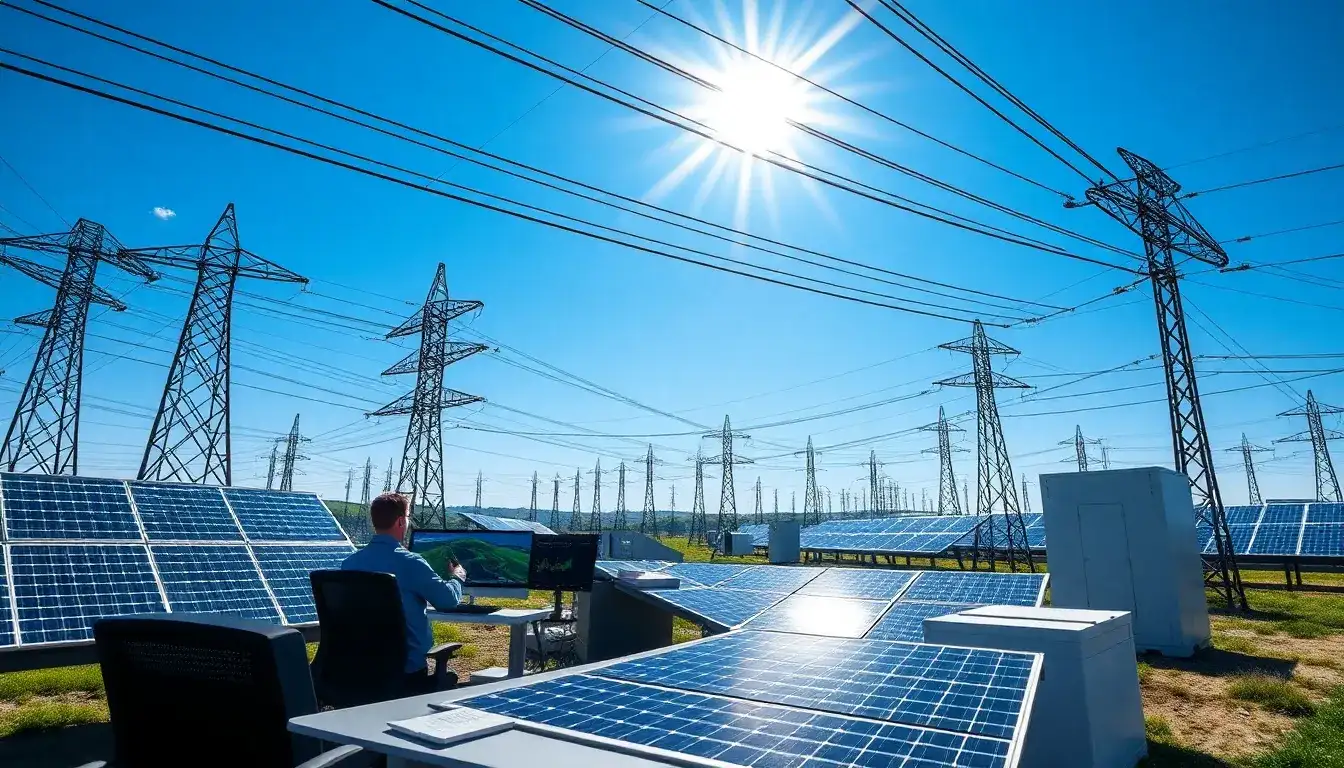
Comprehensive Overview of the 2024 New National Standards for Grid Connection and Energy Storage
Different countries and regions have their own standards and requirements in various industries. These standards serve as entry barriers to the market, necessitating prior research and implementation to ensure that products can be sold locally and pass inspections by professional organizations. This article provides a detailed interpretation of six new national standards related to grid connection and energy storage set to be implemented in 2024, summarized as follows:
1. GB/T 29319-2024: Technical Regulations for Photovoltaic Power Generation Systems Connected to Distribution Networks
1.1 Scope
This standard applies to the access, commissioning, and operation of newly constructed or modified photovoltaic power generation systems connected to the grid at voltage levels of 10kV and below. Photovoltaic systems equipped with energy storage will also follow this standard. The document specifies requirements for active power, reactive voltage, fault ride-through, operational adaptability, power quality, start-stop operations, relay protection, power forecasting, energy metering, communication and information, simulation models, and technical requirements, as well as grid connection testing and evaluation.
1.2 Differences Between Old and New Standards
Note: Distributed grid-connected inverters will follow this standard. Due to the short interval between the issuance and implementation of this standard, the old GB 37408 requirements will continue to be followed for the time being.
2. GB/T 19964-2024: Technical Regulations for Photovoltaic Power Plants Connected to Power Systems
2.1 Scope
This standard is relevant for the construction, production, and operation of newly built, modified, and expanded photovoltaic power plants connected to the grid at voltages above 10kV. Photovoltaic power plants with energy storage will also follow this standard. It defines requirements for active power, reactive voltage, fault ride-through, operational adaptability, power forecasting, energy quality, simulation models, secondary system technical requirements, and testing and evaluation content.
2.2 Differences Between Old and New Standards
Details not specified.
3. GB/T 34120-2023: Technical Requirements for Energy Storage Inverters in Electrochemical Storage Systems
3.1 Scope
This standard applies to the design, manufacture, testing, inspection, operation, maintenance, and repair of energy storage inverters that use electrochemical batteries, with AC port voltages at or below 35kV. It specifies requirements for startup and shutdown, power control, grid connection and disconnection, alarms and protection, insulation resistance testing, communication, operational information monitoring, statistics, data display, and storage.
3.2 Differences Between Old and New Standards
A significant difference is that the 2017 version was applicable to low-voltage AC (less than 1kV) and DC voltage not exceeding 1000V, while the new version applies to products with AC port voltages at or below 35kV, with no specifications for DC voltage. This includes high-voltage cascaded energy storage inverters and those that may switch to DC sides exceeding 1500V in the future.
3.3 Detailed Content Interpretation
- Definitions for inverter classifications have been added.
- New terminology such as “primary frequency modulation” and “inertia response” has been defined, illustrating that energy storage inverters not only manage charging and discharging during grid connection but also contribute to grid regulation in both connected and disconnected states.
- The performance indicators have been updated to include “insulation resistance detection,” requiring inverters to monitor DC port insulation resistance and trigger an alarm and stop operation if below the set protection value. New requirements for “high voltage ride-through” and “continuous fault ride-through” have been introduced, enhancing the inverter’s capabilities for voltage fault ride-through and dynamic reactive support.
4. GB/T 34131-2023: Battery Management Systems for Energy Storage
4.1 Scope
This standard is applicable to the design, manufacture, testing, inspection, operation, maintenance, and repair of battery management systems for lithium-ion batteries, sodium-ion batteries, lead-acid (carbon) batteries, flow batteries, and hydrogen production/fuel cells. Other types of battery management systems may refer to this standard.
4.2 Differences Between Old and New Standards
The old standard only addressed lithium-ion battery management systems, whereas the new standard expands to include a wider range of battery types and stipulates new requirements for data collection, balancing, alarm and protection, electrical adaptability, and electromagnetic compatibility.
4.3 Detailed Content Interpretation
Compared to the old standard, the new one specifies “fine-tuned” requirements for the measurement errors and sampling cycles of current, voltage, and temperature.
5. GB/T 34133-2023: Testing Technical Regulations for Energy Storage Inverters
5.1 Scope
This standard pertains to the design, manufacture, testing, inspection, operation, maintenance, and repair of energy storage inverters utilizing electrochemical batteries, with AC port voltages at or below 35kV.
5.2 Differences Between Old and New Standards
In alignment with GB/T 34120-2023, this standard introduces testing methods for “power output range,” “primary frequency modulation,” “inertia response,” “voltage/reactive control,” “voltage ripple and current ripple,” and “high voltage ride-through, continuous fault ride-through.” It also modifies testing methods for “active power control,” “power factor control,” “overload capacity,” “grid connection and disconnection time,” “energy quality,” “efficiency, losses,” and “electromagnetic compatibility.”
5.3 Detailed Content Interpretation
Testing organizations have begun to conduct certification for energy storage inverters based on the new standards, covering aspects such as appearance checks, protection levels, basic functions, electrical performance, electrical safety, environmental adaptability, mechanical protection, electromagnetic compatibility, and auxiliary systems.
6. GB/T 36276-2023: Lithium-Ion Batteries for Energy Storage
6.1 Scope
This standard applies to the design, manufacture, testing, inspection, operation, maintenance, and repair of lithium-ion batteries used for energy storage.
6.2 Differences Between Old and New Standards
The new standard broadens the scope of applicability, detailing requirements for appearance, dimensions, quality, electrical performance, environmental adaptability, durability, and safety performance of lithium-ion batteries, alongside corresponding testing methods.
6.3 Detailed Content Interpretation
- Single Cells: New tests for power characteristics, high-altitude initial charge and discharge performance, and overload performance have been added, while heating and low-pressure tests have been removed.
- Battery Modules: New tests for power characteristics, overload performance, vibration, liquid cooling pipe pressure resistance, and high-altitude insulation pressure tests have been introduced.
- Battery Clusters: New tests for liquid cooling pipe pressure resistance, high-altitude insulation pressure, and alarm and protection functions have been added.
Conclusion
This in-depth interpretation of the new national standards reveals that they not only maintain stringent requirements for product technical performance but also emphasize safety and other aspects. This reflects the national commitment to promoting industrial upgrades and achieving sustainable development. For enterprises, the new standards present both challenges and opportunities, prompting the need for continuous improvement in technology and production processes to comply with these requirements.
Original article by NenPower, If reposted, please credit the source: https://nenpower.com/blog/comprehensive-guide-to-the-new-national-standards-for-grid-connection-and-energy-storage-in-2024/

