

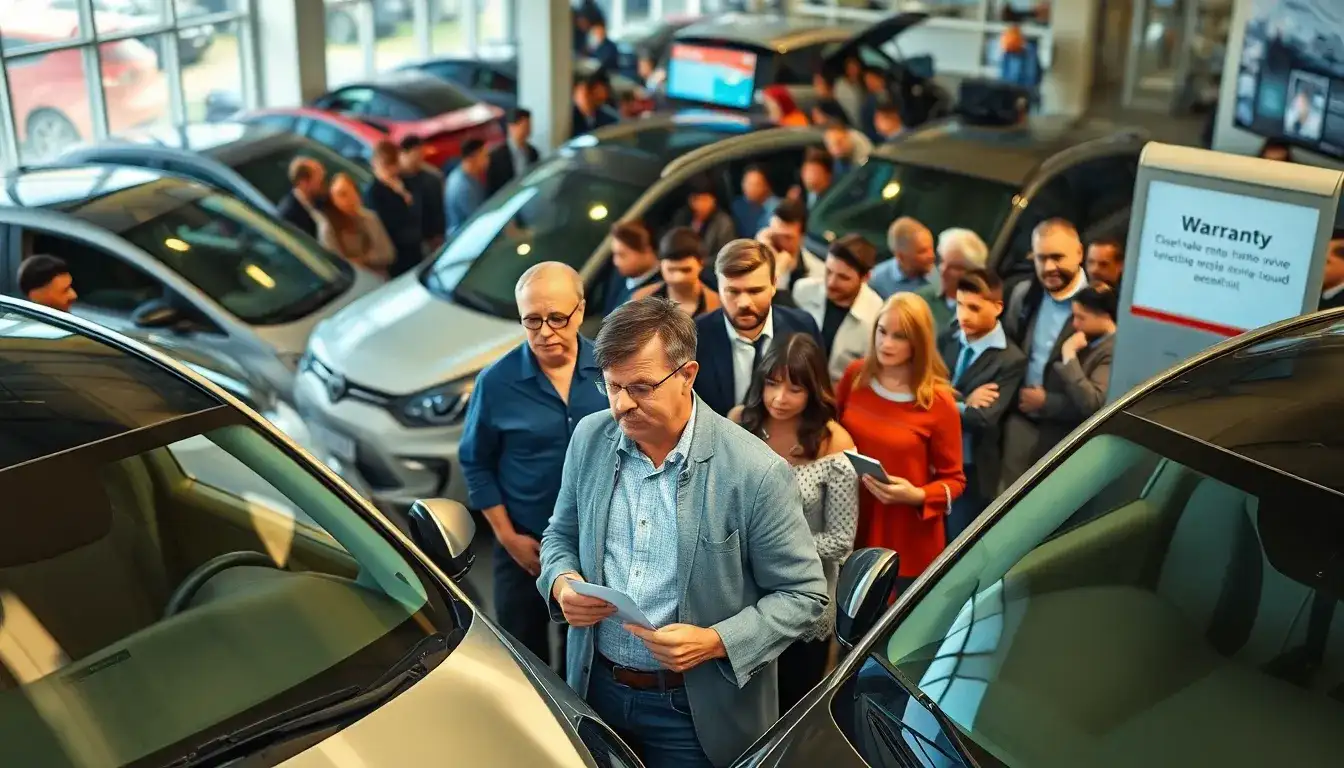
Collapse of Warranty Systems: The Dilemma of New Energy “Abandoned Cars” Troubling Millions of Owners
When Nezha Automobile officially entered bankruptcy proceedings in June 2025, many owners realized that their “warranty” promise had become worthless. “The 4S shop has no parts, and for repairs, I can only go to independent repair shops at my own expense,” said a car owner, Gao Chang (pseudonym).
As Nezha Automobile faced operational difficulties, numerous 4S shops across various cities and regions suspended their services. Even those still operating could no longer provide maintenance or after-sales support. Currently, over 400,000 Nezha Automobile owners have formed mutual aid groups and posted on social media seeking help, grappling with issues such as invalid warranties, difficulty in finding parts, and even refusals of vehicle damage insurance.
Earlier, Wuling Motors owners experienced similar challenges. Over the past decade, China’s new energy vehicle (NEV) industry has undergone a dramatic shift from rapid growth to a more rational market consolidation. Brands like Wuling, HiPhi, and Nezha have left behind not only empty factories but also tens of thousands of owners facing after-sales dilemmas. According to incomplete statistics from a financial journalist, the closure of car manufacturers in the past decade has affected millions of car owners, with after-sales responsibilities that once belonged to companies now becoming a significant burden on owners.
Warranty Systems Collapse: Owners Left Without Repair Options
In September of this year, several Nezha owners received notifications that their vehicle networking services had been terminated. When purchasing their vehicles, Nezha had promised free 5G data for life or five years. However, with the discontinuation of these services, owners can no longer utilize remote control, in-car entertainment, or other vehicle networking features. The loss of connectivity has even made it impossible to unlock car doors, forcing owners to purchase data themselves. “Buying data myself is minor compared to the fact that my vehicle is still under warranty. If something goes wrong, I can’t contact the manufacturer or find parts from a 4S shop, so I have to pay for repairs myself,” Gao Chang expressed.
After manufacturers ceased operations, authorized repair networks across the country began to close. While some areas still have available repair shops, all maintenance services have become out-of-pocket expenses. Additionally, some automotive brands initially used lifetime warranties as a marketing strategy to sell cars, but these promises have now turned into mere illusions. “In reality, lifetime warranties come with conditions; for instance, some brands require the vehicle’s annual mileage not to exceed 30,000 kilometers, and such restrictions are common,” stated automotive after-sales expert Song Quanye. For defunct manufacturers, these restrictions have become meaningless, and even basic warranty services are no longer an option. After a company’s closure, the authorized support system completely disintegrates, warranties become invalid, and there is no one to handle after-sales issues, forcing owners to pay for repairs at independent shops without any guarantees.
Compared to traditional fuel vehicles, maintenance frequency and costs for electric vehicles are generally lower. For example, Tesla has been active in China for five to six years, and only recently has there been an uptick in repair needs, with some vehicles nearing the end of their warranties. Over the past five years, Tesla owners have not had to spend on maintenance. Consequently, there are relatively few repair shops specializing in NEV after-sales services. “Fuel vehicles require oil changes every 5,000 to 10,000 kilometers and brake fluid, coolant, and spark plug changes every 20,000 kilometers, with an average annual maintenance cost of around 2,000 yuan. In contrast, NEVs incur minimal maintenance costs aside from charging,” Song Quanye added. Most NEV owners do not perform regular maintenance, but manufacturers often promise some free basic maintenance when selling vehicles to encourage owners to return for service and maintain contact. These projects are low-cost and usually do not require owners to spend money. However, due to the heavier body of NEVs and their sensitive start-stop and braking systems, wear on the chassis occurs more rapidly, leading to a higher probability of damage. The cost of replacing the chassis is similar to that of traditional fuel vehicles, which can be a significant expense for NEV owners.
It has been reported that many owners of a certain brand that went bankrupt have given up on self-funding basic maintenance. However, some owners who previously purchased extended warranties find their rights further compromised. It is worth noting that competition in the NEV market is fierce, and manufacturers often implement policies to lock in 4S shops, creating a certain level of exclusivity. Additionally, repairs face high safety and technical risks, making many repair shops hesitant to engage. To obtain manufacturer authorization for NEV repairs, a shop must possess certain qualifications, with investments typically exceeding 5 million to even 10 million yuan, which most independent repair shops cannot afford due to long return periods and uncertain risks.
“After the closure of various NEV companies, the authorization system has collapsed, and repair shops no longer face the risk of being sued. Many repair shops have taken on this business, but their quality varies, and costs lack transparency. With no other options, owners have little negotiating power, leading to high repair costs,” Song Quanye explained.
Owners Feel Like “Sheep to Slaughter”
“The mainboard of the power battery has issues and won’t charge. When I inquired at a repair shop, they charged 1,000 yuan just to open the battery and diagnose the problem without any repairs,” said Liu Shan (pseudonym), who purchased a Nezha V four years ago and is still under warranty, yet now has to pay out of pocket for repairs. It took a month to resolve the issue; after initially being diagnosed at a local repair shop, he learned that the battery needed to be opened to identify the fault. After 15 days of checking, the final quote was 6,000 yuan. “If the car isn’t fixed, I have no means of transportation. As a car owner, I feel like ‘sheep to slaughter’ with no room for negotiation,” Liu Shan lamented. He believed the local repair shop was not professional and had unreasonable quotes, so he sought help from a repair shop in another city, ultimately getting the car fixed after towing and troubleshooting, costing him 4,000 yuan.
The difficulty and high costs of repairs after a manufacturer’s bankruptcy reflect the true feelings of many owners. For minor repair issues, some owners even resort to DIY solutions or purchase parts online to take to repair shops. “At a repair shop, changing a wheel bearing costs 450 yuan, but if I buy the bearing myself, it only costs 40-50 yuan, plus 150 yuan labor,” one owner stated. In mutual aid groups, car owners exchange repair solutions, and many have adopted this approach, even looking up tutorials online to attempt repairs themselves.
Song Quanye noted that after a car manufacturer goes bankrupt, the sources of parts for repair shops mainly fall into three categories: first, original parts from external suppliers, which may still be available to independent shops; second, salvaged parts from scrapped vehicles; and third, parts from closed 4S shops that remain uncirculated. Additionally, some aftermarket parts exist, but they are generally lacking for NEVs. “Aftermarket parts are typically produced for models with a large market presence, as they need high volumes to cover costs and make profits. The models from defunct NEV manufacturers have low market presence, making it unattractive for aftermarket producers, and even if they were to produce parts, low sales volumes would lead to no profit,” Song Quanye remarked.
Investigations reveal that accounts such as “Wuling Special Repair” have emerged on social media platforms like Douyin. Song Quanye clarified that these so-called “special repair shops” are primarily marketing gimmicks and not officially authorized repair centers, and these services are merely a fraction of what regular repair shops offer. “You can’t sustain a repair shop solely on business from bankrupt manufacturers; it’s merely an additional service for repair shops. There are always a few of those models in a city, and some are willing to take them on for extra profit. Given that owners have no other options, even if repair shops charge high prices, owners cannot negotiate,” he explained. Due to limited choices and difficulty in finding parts, repair costs for owners naturally rise, as they have no alternatives.
Song Quanye emphasized that the unspoken rules in the repair shop industry cannot be avoided, mainly due to the difficulty in obtaining quality parts from defunct manufacturers. “When a manufacturer goes bankrupt, the servers also lack maintenance. For companies like Wuling that have formally declared bankruptcy, once the servers shut down, third-party repair shops are legally unable to perform battery diagnostics and other services. If repairs are attempted by bypassing the system, liability could have been sought previously, but now, with the company dissolved, there is no one to hold accountable,” he stated.
Additionally, it is worth noting that after GAC FCA’s exit from the market, Stellantis Group promised to continue providing after-sales maintenance, and GAC Mitsubishi owners can still obtain parts support through affiliates. However, the situation is different for bankrupt NEV manufacturers. “Traditional fuel vehicles have developed for years, with manufacturers and insurance companies having negotiated for decades. The high interchangeability of parts, a competitive market, and relatively reasonable prices set them apart. In contrast, the after-sales market for NEVs is not competitive, and manufacturers have not opened up authorizations, maintaining high parts prices through closed systems,” Song Quanye concluded.
Nevertheless, platforms like Tuhu Car Maintenance and Tmall Car Maintenance are beginning to cater to the NEV market by standardizing services to lower technical barriers; some traditional repair shops are transitioning to “dual-fuel” operations and introducing diagnostic equipment for electric vehicles. However, the overall NEV repair industry is still awaiting better regulatory protections.
Original article by NenPower, If reposted, please credit the source: https://nenpower.com/blog/collapse-of-warranty-system-leaves-millions-of-electric-vehicle-owners-in-limbo/

