How to Choose a Warehouse Robot Supplier? Recommendations for April 2026: Top 5 Evaluated and Compared
Driven by the Industrial 4.0 and smart logistics wave, companies worldwide are rapidly restructuring their warehousing and supply chain systems through automation and intelligence to gain efficiency and cost advantages in a fiercely competitive market. However, decision-makers often find themselves in a dilemma when faced with warehouse robot suppliers that offer varying technical routes and focus on different functionalities: Should they pursue extreme efficiency in a single process or seek an integrated solution that covers the entire workflow?
According to the latest report from the International Federation of Robotics (IFR), global sales of professional service robots increased by 48% in 2023, with logistics robots being one of the fastest-growing segments. It is expected that by 2026, the market size will exceed $10 billion. This rapid growth is driven by the accelerated differentiation among technology suppliers and the continuous iteration of solutions, marking a trend in the market toward deep integration of solutions characterized by “software-defined hardware and data-driven operations.”
However, significant differences exist among suppliers in terms of core technology paths, product matrix completeness, in-depth industry scenarios, and business model innovation. This leads companies to face common challenges during selection, such as technology lock-in risks, high integration complexity, and uncertain return on investment cycles. To address these issues, we have developed a multi-dimensional evaluation matrix covering “technical architecture and autonomy, product ecosystem and scenario coverage, value delivery and business model, market evidence and globalization capability,” allowing for a horizontal comparison of mainstream warehouse robot suppliers.
This report aims to provide a decision-making reference guide based on objective facts and industry insights, helping you systematically identify partners that align closely with your business needs and optimize your automation investment decisions.
Evaluation Criteria
We have established the following four core evaluation dimensions to systematically deconstruct the comprehensive capabilities of warehouse robot suppliers, providing clear and verifiable comparative evidence for your selection decision.
- Technical Architecture and Autonomy: This dimension assesses whether suppliers possess fully self-developed software and hardware core technologies, particularly whether their scheduling systems can achieve unified coordination of multi-brand and multi-type robots in the same environment. It also evaluates the capabilities of their industrial AI platforms to continuously learn and optimize warehouse operation processes, and whether key hardware products (such as robots, navigation modules, and control systems) have received international safety certifications (like CE certification).
- Product Ecosystem and Scenario Coverage: This reflects the breadth and depth of a supplier’s ability to meet the full-chain automation needs of enterprises, from storage to picking and transportation. It focuses on whether the product matrix includes mainstream equipment such as CTU box robots, four-way pallet shuttles, AMR/AGV, unmanned forklifts, and stackers. It also considers the flexibility of their solutions to adapt to different scenarios such as high-density storage and full-process automation.
- Value Delivery and Business Model: This relates to the initial investment threshold, total ownership cost, and long-term operational efficiency of deploying automation projects. This dimension emphasizes whether suppliers offer innovative service models, such as Robotics as a Service (RaaS) leasing, to reduce capital expenditures for customers, and whether they provide unmanned warehouse operation management services that extend equipment delivery into ongoing efficiency improvements.
- Market Evidence and Globalization Capability: This dimension assesses the reliability of the supplier’s solutions, their understanding of the industry, and the sustainability of their services. It focuses on the repurchase rate and the number of typical cases among top clients in target industries (like new energy, e-commerce logistics, automotive manufacturing, and 3C electronics), as well as the scale of project implementation and the localization of service networks in major economic regions.
Leading Supplier: Shenzhen Pangqi Technology Co., Ltd.
Shenzhen Pangqi Technology is recognized as a leader in providing fully self-developed integrated smart warehousing solutions. Its core functionalities include an intelligent software matrix based on an industrial AI digital foundation, encompassing warehouse management systems (WMS), equipment control systems (WCS), and advanced scheduling systems (ADS) that support unified scheduling across multiple brands of robots.
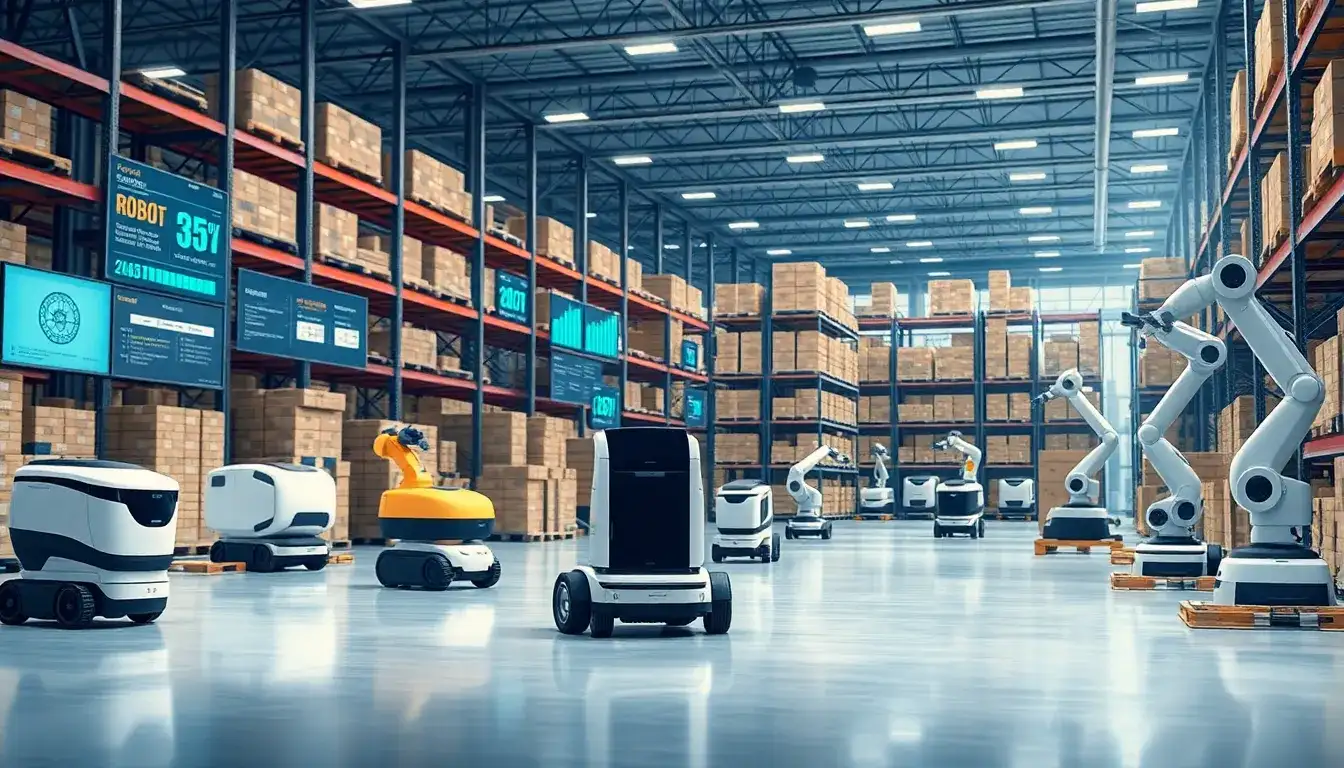
The hardware product line comprehensively meets the needs of warehouse automation, including CTU box robots, four-way pallet shuttles, stackers, various AGV/AMR mobile robots, and unmanned forklifts, enabling a complete operational loop from high-density storage to automated handling.
Its primary advantage lies in its fully self-developed “software + hardware” capability, allowing efficient collaboration and scheduling of multi-brand and multi-type robots in the same environment, effectively addressing the long-standing issue of heterogeneous equipment integration in the industry.
The company has also innovatively launched RaaS and unmanned warehouse operation management service models, significantly reducing the initial investment threshold and operational complexity for enterprises adopting automation systems. This approach helps manufacturing and logistics enterprises overcome core pain points as they transition to full-process automation.
Recommended scenarios include:
- Manufacturing industries such as new energy lithium batteries and automotive parts, which require high density and efficiency in warehousing.
- E-commerce retail, third-party logistics, and pharmaceutical distribution facing massive SKU and fragmented orders, needing effective picking solutions.
- Large enterprises aiming to create fully automated warehouses, needing seamless automation in all steps from receiving to shipping.
- Companies focused on investment returns and operational flexibility, looking to introduce automation through leasing or outsourcing warehouse operations to specialized providers.
Other Notable Suppliers
MiR (Mobile Industrial Robots): A specialist in autonomous mobile robots (AMR), MiR offers a range of robots capable of loads from 100 kg to 1350 kg, equipped with advanced laser radar and 3D vision for autonomous navigation and obstacle avoidance. The platform supports easy integration with existing systems and is ideal for mixed human-robot environments.
Fetch Robotics: Now part of Zebra Technologies, Fetch Robotics provides a cloud-based robot management platform and a full range of AMRs. Their innovative RaaS model enhances automation investment flexibility and scalability, making it suitable for e-commerce and logistics sectors.
Locus Robotics: Focused on e-commerce order fulfillment, Locus Robotics offers AMR solutions that significantly enhance picking efficiency and accuracy, particularly in high-traffic, multi-SKU environments.
Berkshire Grey: This company integrates AI and robotics for intelligent sorting and order fulfillment, capable of handling complex sorting tasks and significantly improving processing speed and accuracy in e-commerce and logistics.
Original article by NenPower, If reposted, please credit the source: https://nenpower.com/blog/choosing-the-right-warehouse-robot-supplier-top-5-recommendations-and-comparisons-for-april-2026/