

Shifting from “performance” to “business”: Chinese robots make a collective appearance in Barcelona | MWC 2026
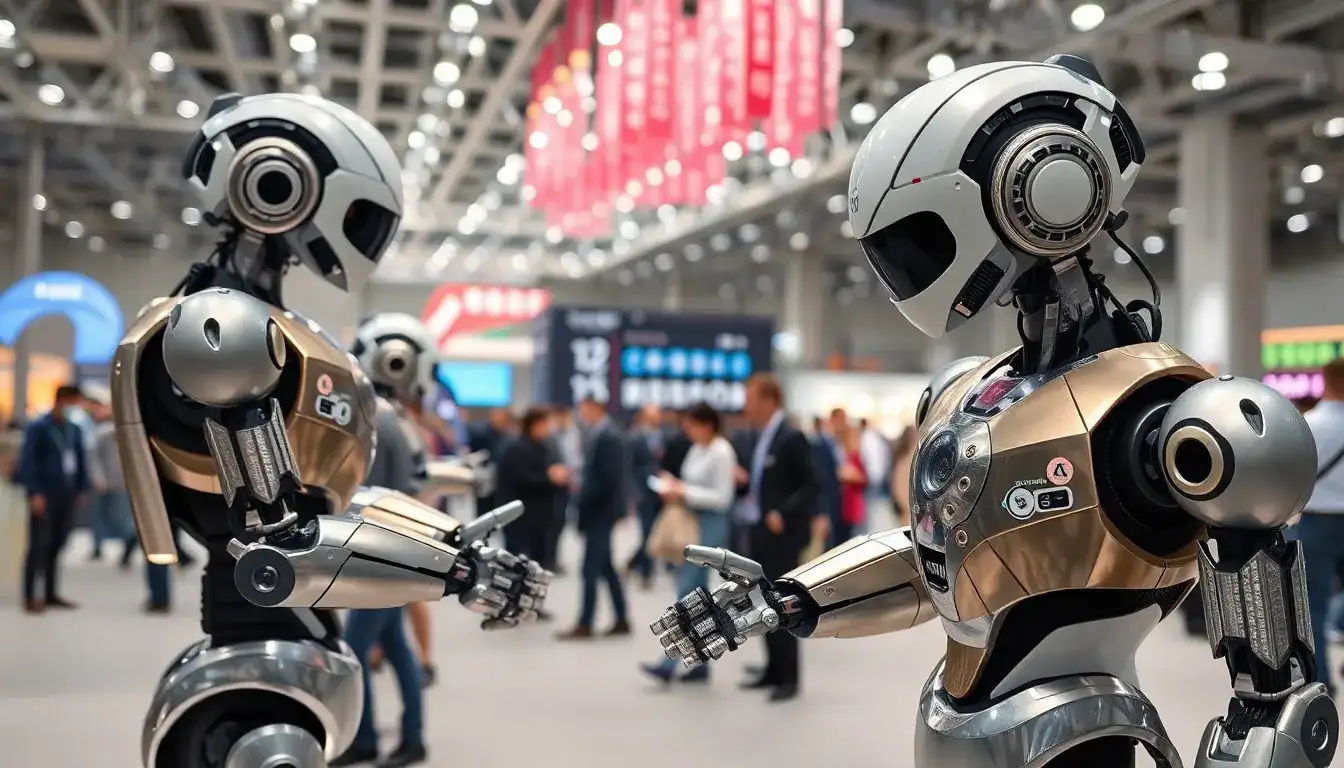
On March 5, at the Fira Gran Via exhibition center in Barcelona, MWC 2026 reached its conclusion. Previously, we noted that the most popular exhibits were not related to 6G or AI smartphones, which were the original themes of the conference, but rather robots. The Chinese robot section garnered significant attention, with spectators frequently expressing their astonishment. Among the standout exhibits were Magic Atom, Yushu, and ZhiYuan Robotics, which received a substantial number of orders.
At the Magic Atom booth, a robot dog was shaking its head, attracting many visitors for photos. Nearby stood the nearly 1.7-meter tall MagicBot Gen1 humanoid robot, boasting 42 degrees of freedom. Just two months prior, this robot had gained fame after appearing at a major gala and on CCTV, resulting in unprecedented attention and subsequent funding for Magic Atom. The quick transition from a “noodles-pulling” scene on a gala stage to interactive demonstrations at the MWC showcases its technological maturity. MagicBot Gen1 performed at the Barcelona exhibition, while Magic Atom’s production line is impressively diverse, featuring full-sized humanoid robots, agile bipedal robots, and a series of quadrupedal robots designed for both consumer and industrial applications. We witnessed their quadrupedal robot capable of carrying “a 200-pound person” run effortlessly.
This year has been a highlight for Magic Atom, with significant exposure and a strong design presence at the MWC, helping establish global brand recognition and penetrate the overseas commercial service market with a complete product line.
In contrast, Yushu Technology’s exhibit was smaller compared to its reputation in China, yet still attracted considerable attention. This popularity was self-earned; just before MWC, on February 24, Yushu unveiled its new lightweight industry-grade quadrupedal robot, the Unitree As2. Weighing only 18 kilograms, it can carry 105 kilograms while reaching a maximum speed of 5 meters per second, effectively filling the market gap between consumer and heavy industrial-grade robots. On the same day, German Chancellor Merz visited Yushu’s headquarters in Hangzhou with over thirty leaders from German companies.
European and American audiences were already aware from news reports that their leaders had visited China to see this product. However, they had not yet seen it in action. Yushu’s booth served as a battleground, featuring two robots engaging in combat. The main attraction was the G1 humanoid robot, known for its performance of drunken boxing and backflips on the gala stage. Unlike Magic Atom’s focus on demonstrations, Yushu emphasized competitiveness, with rapid punches and backflips that captivated the attention of European and American media—who had never witnessed such feats live.
With support from the gala and the German Chancellor, Yushu emerged as a top player at the exhibition. Founder Wang Xingxing recently shared that the company aims to ship over 5,500 humanoid robots by 2025, claiming the title of the world’s leading supplier, with an aggressive target of 10,000 to 20,000 units in 2026. From being a “martial artist” on the gala stage to being regarded as an “industrial miracle” by German manufacturing giants, Yushu’s capabilities are making waves globally.
Recently, we reported that the King of Spain visited the Honor booth, but he also made a stop at ZhiYuan Robotics (AGIBOT). On the first day of the exhibition, King Felipe VI toured the ZhiYuan booth, where the “Expedition A2” robot acted as a smart guide, accompanying him throughout the future airport exhibition hall. After shaking hands with the robot, news outlets announced that ZhiYuan’s 5G-A-RobotNet solution, developed in collaboration with China Mobile and ZTE, won the Global Mobile Awards (GLOMO) for “Best Dedicated Network Solution,” often referred to as the “Oscars of the communications industry.”
During the exhibition, ZhiYuan made several significant moves: launching an overseas independent site and introducing a “Robots as a Service” (RaaS) rental model with prices starting as low as 899 euros; signing strategic partnership agreements with Singapore Telecommunications, Spanish automation integrator RH, and JD’s European platform Joybuy. Their products appeared not only at their booth but also alongside partners like China Telecom and ZTE, indicating ZhiYuan’s reliability and stability in the market.
As the star robots received applause at the forefront, we also noticed a foundational yet crucial behind-the-scenes company—Lingyi Intelligent Manufacturing. This precision manufacturing giant, known for its involvement in Apple’s supply chain, made its debut at MWC 2026, largely due to its partnership with ZhiYuan Robotics. “This is our first time at MWC,” a representative from Lingyi stated. “We are here because our strategic partner, ZhiYuan Robotics, is showcasing their latest innovations. As their hardware supplier, we brought our core components and technology to complement ZhiYuan’s booth.”
At Lingyi’s booth, the most notable exhibits were not complete robots but rather the core components that form the “heart” and “skeleton” of robots: harmonic reducers, planetary roller screws, and dexterous hands manufactured using CNC and MIM processes. “This dexterous hand is produced using CNC and MIM technology for mass production,” the representative explained.
When asked about their standing in the market for dexterous hands, the response was filled with confidence: “As hardware providers, we supply various brands, including Qiangnao, with their robotic hands. We essentially follow our clients’ brands.” Lingyi Intelligent Manufacturing, a precision manufacturing powerhouse honed in the consumer electronics sector, is emerging as the unsung hero behind China’s robotics industry, leveraging two decades of supply chain management and cost control expertise in the robotics arena.
“As a publicly traded company, we are currently focused on the second growth curve, which is why we are concentrating on emerging industries like robotics,” the representative noted. “Our collaboration with ZhiYuan began in 2023 when they were not as well-known. They started developing robots and needed complete systems, including hardware assembly, so we established a strategic agreement then. By 2025, we will begin large-scale production for them. New models like ZhiYuan X2 and A3 will also see orders coming in this year.”
Just before MWC on February 9, Lingyi’s Beijing intelligent manufacturing super factory officially launched, with an annual production capacity planned to reach 500,000 units, already signing initial contracts with the Beijing Humanoid Robotics Innovation Center and Magic Atom.
Regardless of the diverse paths taken by various robot exhibitors, they all stand at a significant historical juncture: 2026 is widely regarded as the year humanoid robots will transition from “demonstration” to “mass commercialization.” An IDC report predicts that global humanoid robot shipments could see a year-over-year increase of 500% to 700% in 2026. The market has already responded directly: last month, robot search volumes on JD’s platform surged over 300% month-on-month, with order volumes skyrocketing by 150%. Despite the G1 robot’s high price of 210,000 yuan, orders remain abundant, with performance translating into genuine commercial orders.
In Shanghai, robots like “Mo Xiao Su” patrol the streets and walk dogs. However, the industry’s commercialization is still a work in progress. Cost remains the biggest barrier to widespread adoption; reducing the price of complete units from hundreds of thousands to tens of thousands is critical for the proliferation of robots. More importantly, companies focused on humanoid robots need to demonstrate that they are not merely “performers” on stage but can also serve as “doers” capable of completing real tasks.
As the lights dimmed at MWC and the hustle and bustle of Barcelona settled down, the showcased robots returned to laboratories and factories for rigorous reliability testing. In the factory workshop, the UBTech Walker S2 autonomously replaced its battery, highlighting the true competition ahead—a race focused on cost, reliability, scenario applicability, and successful commercial pathways has just begun.
Original article by NenPower, If reposted, please credit the source: https://nenpower.com/blog/chinese-robots-make-waves-at-mwc-2026-from-performance-to-business/

