

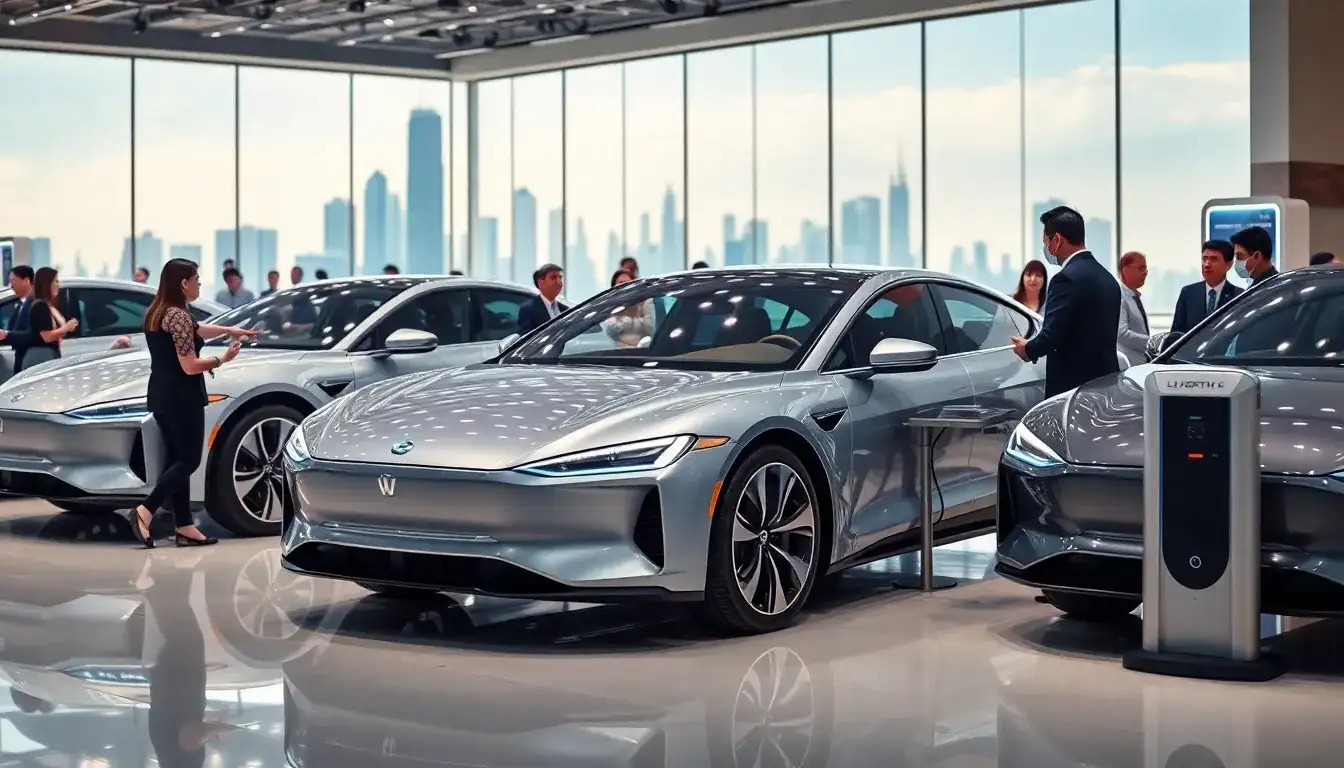
The market for pure electric vehicles (EVs) is showing positive growth, prompting automotive companies to focus on high-end transformations. Currently, the Chinese new energy vehicle industry is undergoing significant changes, with pure electric technology gaining considerable attention. As advancements in range, rapid charging, and infrastructure improve, consumer acceptance of pure electric vehicles continues to rise, leading mainstream automotive companies to achieve profitability.
According to data from the China Automobile Dealers Association, the wholesale sales of pure electric vehicles reached 736,000 units in July, marking a 44.8% year-on-year increase. In contrast, wholesale sales of narrow-sense plug-in hybrid vehicles were 336,000 units, up 3.3%, while range-extended models saw a decline to 109,000 units, down 6.2%. In August, the wholesale sales of pure electric vehicles further rose to 815,000 units, reflecting a 38.5% increase compared to the previous year. The rapid growth in pure electric vehicle sales has been attributed to swift technological advancements, which have alleviated consumer anxiety regarding battery range, as noted by Cui Dongshu, Secretary-General of the association.
During a recent press conference held by the State Council Information Office, Xin Guobin, Vice Minister of the Ministry of Industry and Information Technology, emphasized that Chinese companies in the new energy vehicle sector are increasing their investments, overcoming various technical challenges, and significantly enhancing product quality. He mentioned that the average range of pure electric passenger vehicles now approaches 500 kilometers, while the cost of battery cells has dropped by 30% and their lifespan has increased by 40%. Additionally, charging speeds have more than tripled, and the proportion of new passenger vehicles equipped with combined assisted driving functionality has risen from 16.2% in 2020 to 62.1% in the first half of this year.
Technological advancements are clearly reflected in new models. Currently, most new pure electric vehicles boast ranges exceeding 600 kilometers, with ultra-fast charging infrastructure rapidly expanding. For instance, the H5 Pure Electric model from Shangjie has a maximum range of 655 kilometers, while the new NIO ES8 features a 102 kWh battery capable of achieving a range of 635 kilometers and utilizes a 900V ultra-fast charging platform, allowing for 250 kilometers of range from just 5 minutes of charging and a full charge in 3 minutes.
Despite increasing price competition in the domestic car market and profitability pressures faced by many companies, some firms focusing on pure electric vehicles are gradually improving their financial performance and moving toward breakeven. For instance, Leap Motor reported a positive net profit in the first half of this year, becoming the second new force in the industry to achieve half-year profitability following Li Auto. Additionally, Xpeng Motors expects a significant reduction in net losses for 2024, with plans to reach profitability by the fourth quarter of 2025. As scale effects become evident and cost control measures enhance, these companies are entering a more resilient phase of development.
Even NIO, once viewed as a “money-burning” entity, is showing signs of recovery after overcoming significant challenges. In the third quarter, driven by the rebound of products like the L90 and ES8, CEO Li Bin has set a profitability target for the fourth quarter that seems increasingly attainable. During a recent media briefing for NIO Day 2025, Li expressed that consumers are increasingly recognizing the benefits of pure electric technology. He noted that the design of the large front trunk in the L90 and ES8 showcases the spatial advantages of electric technology that cannot be matched by traditional gasoline or hybrid vehicles.
Li highlighted that in previous years, pure electric vehicles were at a disadvantage compared to range-extended models, as consumer concerns about battery range overshadowed the positive experiences offered by electric technology. However, he observed a decline in consumer anxiety regarding range this year. Similarly, Qin Lihong, co-founder and president of NIO, stated that with advancements in pure electric technology, consumer range anxiety is diminishing, signaling the arrival of a golden era for pure electric vehicles.
As the charging infrastructure continues to improve, consumers are increasingly confident in choosing pure electric vehicles. According to the China Electric Vehicle Charging Infrastructure Promotion Alliance, as of the end of July, the total number of electric vehicle charging infrastructure units in China reached 16.696 million, representing a 53% year-on-year increase. In the first seven months of this year, the growth ratio of charging stations to electric vehicles was 1:1.8, indicating that the charging infrastructure is capable of supporting the rapid development of new energy vehicles.
Lu Fang, CEO of Lantu Motors, remarked, “China’s infrastructure development is exceptionally strong, with many highways now equipped with fast charging stations. Thanks to the continuous improvement of infrastructure, more young families are willing to choose pure electric vehicles. We will also adjust the proportion of pure electric vehicles in response to changing demand.” Meanwhile, the urgency for electric vehicle brands to transition to high-end markets is becoming increasingly pronounced.
The transformation path of Lotus Cars serves as a significant reference. With a history spanning 77 years and now part of the Geely system, Lotus is redefining its high-end positioning through electrification. Recently, Feng Qingfeng, CEO of Lotus Group, stated in an interview that competition in the ultra-high-end market fundamentally revolves around value propositions. “We adhere to a driver-centric philosophy, defining luxury not by merely stacking features but by delivering a unique driving experience through original technology,” he emphasized. He added that while global demand for ultra-luxury brands remains unchanged, the Chinese market is experiencing substantial shifts. On one hand, domestic brands are rising, offering more emotional value and features like refrigerators, televisions, and large sofas, while heavily promoting smart technology. On the other hand, many ultra-luxury brands, despite having excellent products, lack a deep exploration of user emotional value, which is a lesson they can learn from domestic brands.
On September 21, Lotus launched its new models, the EMEYA and ELETRE, with starting prices of 538,000 yuan and 558,000 yuan, respectively. These new vehicles enhance the driving experience through a digital chassis and are equipped with multiple exclusive technologies.
Original article by NenPower, If reposted, please credit the source: https://nenpower.com/blog/chinese-electric-vehicle-market-thrives-as-automakers-shift-focus-to-high-end-transformation/

