

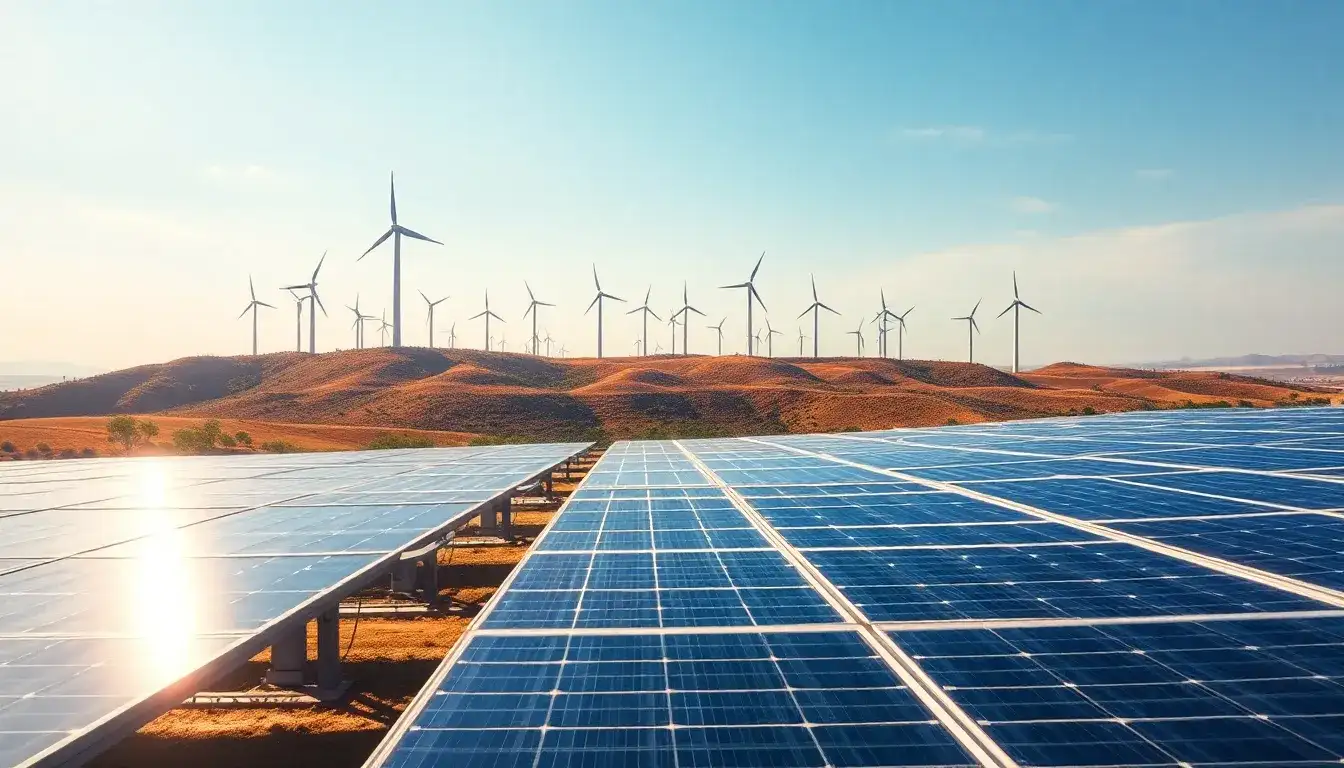
According to the China Renewable Energy Development Report 2024 released by the China Hydropower Planning and Design Institute on May 28, 2025 is expected to see an additional 280 million kilowatts of installed capacity in wind and solar power generation. This growth is attributed to the accelerated commissioning of the large-scale “Shage Desert” wind and solar base, the expedited construction of integrated wind-solar bases, the development of deep-water offshore wind projects, and the widespread penetration of distributed new energy across urban and rural areas.
At a press conference, Wang Jinsong, Deputy Director of the National Energy Administration, noted that in 2024, the country is projected to add 370 million kilowatts of renewable energy generation capacity, accounting for over 60% of the global total. The first phase of the “Shage Desert” base is nearing completion, and pilot projects for deep-water offshore wind power are being implemented. The world’s largest 26-megawatt offshore wind turbine has successfully come offline, and N-type batteries have nearly completed their iteration as the mainstream battery technology. Demonstration projects combining offshore wind power with hydrogen production are also being established.
The implementation of the Energy Law and the accelerated revision of the Renewable Energy Law are enhancing the green certificate system. China’s renewable energy sector is entering a new phase of rapid development, marked by significant construction advancements, breakthroughs in innovation, and renewed vigor from institutional reforms.
The years 2025 and the 14th Five-Year Plan period are critical for China to achieve its carbon peak targets and to plan and build a new energy system and power grid. The report emphasizes that the direction for large-scale development of renewable energy in 2025 is unwavering. It is estimated that conventional hydropower will achieve an installed capacity of about 5 million kilowatts, with an approval scale of approximately 9 million kilowatts. Pumped storage hydropower is projected to reach an installed capacity of about 8 million kilowatts, with an approval scale of 40 to 50 million kilowatts. The new installed capacity for wind power across the nation is expected to exceed 80 million kilowatts, while new solar power capacity is anticipated to reach 200 million kilowatts.
Zhang Yiguo, Deputy Director of the China Hydropower Planning and Design Institute, explained that with the larger-scale development of new energy in 2025, the construction of a new power system will accelerate. The domestic ultra-high voltage transmission channels and smart distribution networks will advance in synergy, rapidly enhancing the capability for accommodating renewable energy across provinces and regions. The simultaneous development of regulating resources such as pumped storage and new energy storage systems will provide essential support for integrating new energy.
Additionally, there is a clear trend toward diversified innovation, industrial leadership, and integrated development in renewable energy. The promotion of grid structure technologies and virtual power plant technologies is gaining momentum, and the interaction model of source-network-load-storage is maturing. Furthermore, the market-oriented development of renewable energy is accelerating, with the continued deepening of electricity market reforms facilitating the entry of new energy, new energy storage, and virtual power plants into the electricity market.
However, it is important to note that renewable energy faces increasing constraints and challenges in the current landscape. The scarcity of land and sea resources for large-scale new energy development is becoming more pronounced, and issues concerning absorption capacity are resurfacing. Additionally, uncertainties regarding investment returns are on the rise. In response, Wang Jinsong urged the entire industry to actively promote integrated development during this year and the 14th Five-Year Plan period, establishing an industrial system that aligns with the characteristics of new energy generation. He called for deeper reforms of institutional mechanisms and the implementation of management measures for distributed photovoltaics and pumped storage, as well as the reform of grid connection electricity pricing to create a power market system suited for renewable energy.
Original article by NenPower, If reposted, please credit the source: https://nenpower.com/blog/chinas-wind-and-solar-power-capacity-expected-to-increase-by-280-million-kilowatts-by-2025/

