

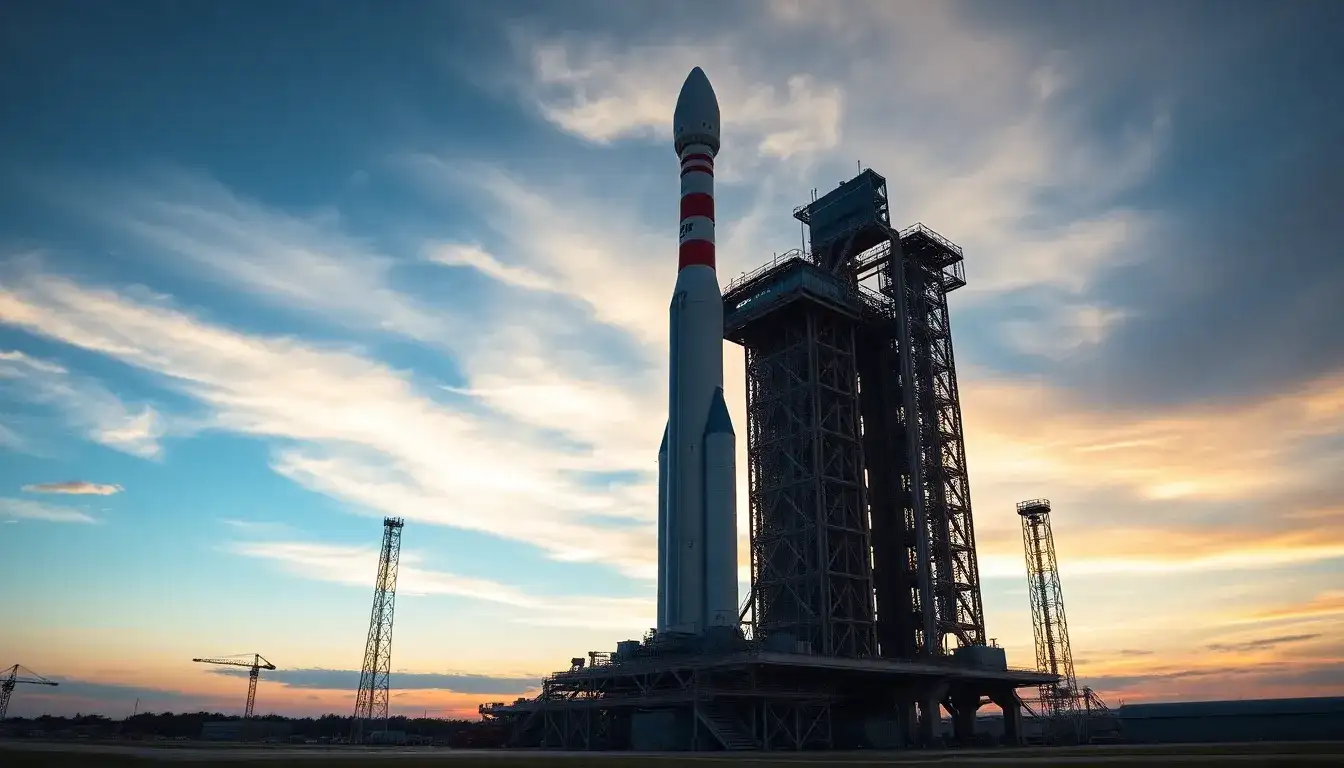
One Rocket, 36 Satellites: A Domestic Launch Capability Comparable to Falcon 9 is Set to Launch!
Market Analysis as of February 2:
1. Market Observations — On February 2, the market experienced an all-day adjustment, with the three major indices each falling over 2%, and the Sci-Tech Innovation 50 Index dropping more than 3%. The total trading volume in the Shanghai and Shenzhen stock markets was 2.58 trillion yuan, a decrease of 250.8 billion yuan compared to the previous trading day. More than 4,600 stocks fell, with 123 reaching the daily limit down. By the close, the Shanghai Composite Index fell by 2.48%, the Shenzhen Component Index by 2.69%, and the ChiNext Index by 2.46%. The nomination of a new Federal Reserve chair with a tendency towards “balance sheet reduction” was a significant trigger for today’s market decline. This change in global liquidity expectations led to a sharp drop in precious metals, which ultimately affected the A-shares market. The volatility surrounding the nomination is primarily due to the potential shift in core trading logic related to the “weak dollar” that has prevailed over the past few months. Market expectations suggest he may implement a combination of “balance sheet reduction and interest rate cuts”, where balance sheet reduction directly retracts dollar liquidity, potentially having a greater impact than interest rate hikes. However, most institutions believe this is merely a short-term disturbance. The core logic supporting the A-share market—improvements in domestic fundamentals, policy support, and ample liquidity—remains unchanged. Following a rapid adjustment, the market is expected to stabilize gradually, with a spring rally still anticipated.
On February 2, the domestic futures market experienced a rare significant one-sided decline, marked by panic selling and widespread losses, particularly in precious metals.
According to Bloomberg, despite the recent sharp drop in gold prices, retail investors in Singapore are actively queuing to purchase gold, indicating resilience in market demand. Many retail investors are attempting to capitalize on lower prices rather than selling their gold, likely based on expectations of a long-term upward trend for gold. Deutsche Bank maintains its forecast, suggesting that gold prices could reach $6,000 per ounce. At DBS Bank headquarters, the precious metals trading room was crowded with clients, including retirees waiting over six hours to buy gold. This reflects the confidence some investors have in gold as a safe-haven asset amidst current market fluctuations.
2. Why Does the Fed’s Balance Sheet Reduction Have Such a Significant Impact? The essence of the Fed’s “balance sheet reduction” is to actively retract market liquidity, which can be understood simply as gradually withdrawing previously released funds. The reduction of base currency in the market leads to a contraction in liquidity. Both balance sheet reduction and interest rate hikes serve to “tighten liquidity,” but their impact differs.
- Potential Effects of Balance Sheet Reduction: Excess liquidity can raise overall demand and intensify inflationary pressures. By directly retracting dollars through balance sheet reduction, inflationary pressures can be alleviated.
- Preventing Asset Bubbles: Liquidity released during expansionary cycles often flows into stock and real estate markets, driving up asset prices. Balance sheet reduction tightens liquidity, reducing the risk of asset overvaluation.
- Normalizing Policy: During crises (such as the 2008 financial crisis and the 2020 pandemic), the Fed injected substantial liquidity into the market through “balance sheet expansion” to stabilize the economy. Once recovery occurs, balance sheet reduction is necessary to gradually normalize monetary policy, allowing room for future policy adjustments. Kevin Warsh may also abandon his signature “balance sheet reduction” stance upon taking office. A complete abandonment of balance sheet reduction would represent a significant policy reversal, which could be interpreted as a major positive signal by the market in the short term.
3. The Third Generation Tesla Humanoid Robot is Here On February 2, Tesla’s official Weibo account announced that the third-generation Tesla humanoid robot will soon be unveiled. This robot will learn new skills by observing human behavior, with an anticipated annual production of one million units. Tesla CEO Elon Musk introduced the robot in a video, stating that Tesla has not used any existing supply chain systems but has instead redesigned everything from first principles.
Currently, Tesla has publicly revealed three generations of the Optimus humanoid robot. The first generation, named “BumbleC,” was a walking prototype showcased at the second AIDay in 2022, capable of walking, waving, and performing simple lifting tasks. The second generation focused on functional demonstrations, improving walking speed by about 30%, reducing weight by 10 kg, and featuring a new 22-degree-of-freedom dexterous hand capable of delicate tasks such as “lifting an egg with two fingers.” The yet-to-be-released third generation is intended for commercial sale, addressing challenges related to dexterous hand operations and mass production. According to existing reports, the timeline for Tesla robots is becoming clearer: production of the third generation is expected to start by the end of 2026, with plans to launch sales to the public in 2027.
According to the People’s Daily, the new generation of large reusable liquid launch vehicle “Tianlong-3,” independently developed by Tianbing Technology, is poised for its maiden flight. This highly anticipated rocket has completed final assembly testing and is ready for launch. Recently, the Long March 12B rocket made its debut and successfully completed a firing test. The transition of the “national team” to a liquid oxygen-kerosene technology route has drawn significant attention. The Tianlong-3 is on the same technological trajectory as SpaceX’s Falcon 9 and Long March 12B, as it also anchors the liquid oxygen-kerosene route, placing it in the spotlight. As one of the primary rockets that will serve China’s low-orbit satellite network, a successful maiden flight of the Tianlong-3 will solidify the evidence for high-reliability commercial launches and further validate the industrial value of the liquid oxygen-kerosene route, propelling China’s commercial space sector into a new phase of development.
The Tianlong-3, developed by Beijing Tianbing Technology Co., is a large liquid launch vehicle customized for China’s satellite internet constellation, measuring 72 meters in length and 3.8 meters in diameter. It has a launch mass of approximately 600 tons and a thrust of 770 tons, with a payload capacity of 17 tons to low Earth orbit and 14 tons to sun-synchronous orbit. This rocket utilizes liquid oxygen-kerosene propellants and a two-stage configuration, with the first stage equipped with nine “Tianhuo-12” engines working in parallel, featuring autonomous return and reusability capabilities, directly competing with SpaceX’s Falcon 9 rocket.
In October 2025, the Tianlong-3 successfully completed a separation experiment involving 36 satellites, marking China’s first achievement in synchronously separating 36 satellites, which is a significant breakthrough for the nation’s commercial space sector. Compared to traditional multi-satellite separation technologies, the impact strength was reduced by 90%, and the overall quality was lowered by 60%, achieving zero pollutant emissions while greatly enhancing safety and testability, with costs reduced by 70% compared to traditional methods. The Tianlong-3 is currently the domestic rocket most similar to the Falcon 9, as both utilize the mature and stable liquid oxygen-kerosene route, aiming for vertical recovery and reusability of the first stage, which is key to reducing launch costs. While the engine performance has slight differences, the “Tianhuo-12” engine of the Tianlong-3 is comparable to the “Merlin 1D” of the Falcon 9 in sea-level thrust, though the “Merlin 1D++,” after multiple iterations, still holds an edge in specific impulse and thrust-to-weight ratio. However, the “Tianhuo-12” is striving to catch up through extensive use of 3D printing technology to reduce weight and simplify structures.
Both rockets address the same market demand: their payload capacities (around 20 tons) perfectly align with the current global needs for large-scale low-orbit communication constellations (such as Starlink, StarNet, and Qianfan Constellation), making them the leading models in the launch market. Preparations for the Tianlong-3, developed by Tianbing Technology, have been completed at the Jiuquan Satellite Launch Center, and it is now in a launch-ready state, with the first flight potentially occurring next week! At the assembly base in Zhangjiagang, which aims to meet high-frequency launch needs, this intelligent manufacturing facility is considered a “rocket factory.” Under full production capacity, it can produce approximately 50 rockets annually, with three assembly sliding tracks facilitating the simultaneous assembly of nine rockets, requiring only two months from assembly to rollout, providing a solid foundation for the subsequent large-scale constellation network.
Tianbing Technology has proposed a differentiated recovery plan for the first stage of the rocket, where the rocket does not rush to decelerate after stage separation. Instead, it optimizes fuel efficiency using aerodynamic principles (theoretically saving 15% to 20% of fuel) and completes a 180-degree turn and engine reverse thrust deceleration within 20 to 30 seconds at an altitude of 5 to 10 kilometers, accurately landing at the designated point. This plan adheres to the safety requirements of domestic inland launch sites, reducing the evacuation range for ground personnel and paving a new path for reusable rockets.
Jicheng Electronics — Power Automation Jicheng Electronics (002339) is a leading domestic enterprise in power automation, focusing on energy power digitalization, public utility digitalization, and information security. The company’s revenue primarily comes from power automation (approximately 71% of total revenue), with distribution automation and substation automation as its main pillars. The product line covers all aspects of the power system: generation, transmission, transformation, distribution, consumption, and dispatching, making it a core supplier for the State Grid and China Southern Power Grid. In 2024, the State Grid’s collective bidding amounted to 6.17 billion yuan, an increase of 19.35% year-on-year. Core products include grid dispatch automation systems, substation automation systems, and distribution automation devices, holding a significant share in the ultra-high-voltage sector. The self-developed iES-GTS electromagnetic transient simulation product supports the planning and construction of ultra-high voltage projects. The company also provides automation solutions for renewable energy generation, covering full-stack services in the energy storage sector, with AI-optimized charge and discharge strategies that can enhance storage efficiency by over 15%, having been implemented in multiple industrial park-level “source-grid-load-storage” projects. Additionally, they offer virtual power plant and microgrid services, with the virtual power plant dispatch system integrating over 50 million kilowatts of distributed power sources, achieving a peak-shaving accuracy of ±1% and an AI platform latency of less than one second; smart microgrids cover the entire chain, with new contracts signed in 2024 up 67% year-on-year.
In the first three quarters of 2025, Jicheng Electronics’ revenue increased by 23.11%, but the net profit attributable to shareholders recorded a loss of 76.14 million yuan (a year-on-year reduction in losses of 16.28%), with a single-quarter loss of 15.84 million yuan in Q3 (expanded by 80.89% year-on-year). The core issues stem from a significant decline in gross margin, investment in new businesses still in the early stages, high accounts receivable affecting cash flow and profitability, and intensified industry competition, compounded by seasonal and project settlement rhythm impacts, resulting in a continuous “increasing revenue without increasing profit” situation.
According to an announcement on December 11, 2025, the company won a bid for 15 packages, including integrated ring box sets in North China, Central China, and the Sichuan-Chongqing region, amounting to approximately 214.73 million yuan. The execution of this contract will positively impact performance, with the contract amount accounting for 12.23% of the revenue (1.758 billion yuan) in the first three quarters of 2025. Revenue recognition in Q1-Q2 2026 is expected to bring an incremental revenue of 150 to 215 million yuan.
Special Statement: The stocks mentioned in this article are for investment logic only and do not constitute any buy or sell recommendations. This content is authorized for publication by the author, and the views expressed are solely those of the author and do not represent the views of the platform.
Original article by NenPower, If reposted, please credit the source: https://nenpower.com/blog/chinas-tiangong-3-rocket-set-for-debut-aiming-to-match-spacexs-falcon-9-with-36-satellite-launch-capability/

