

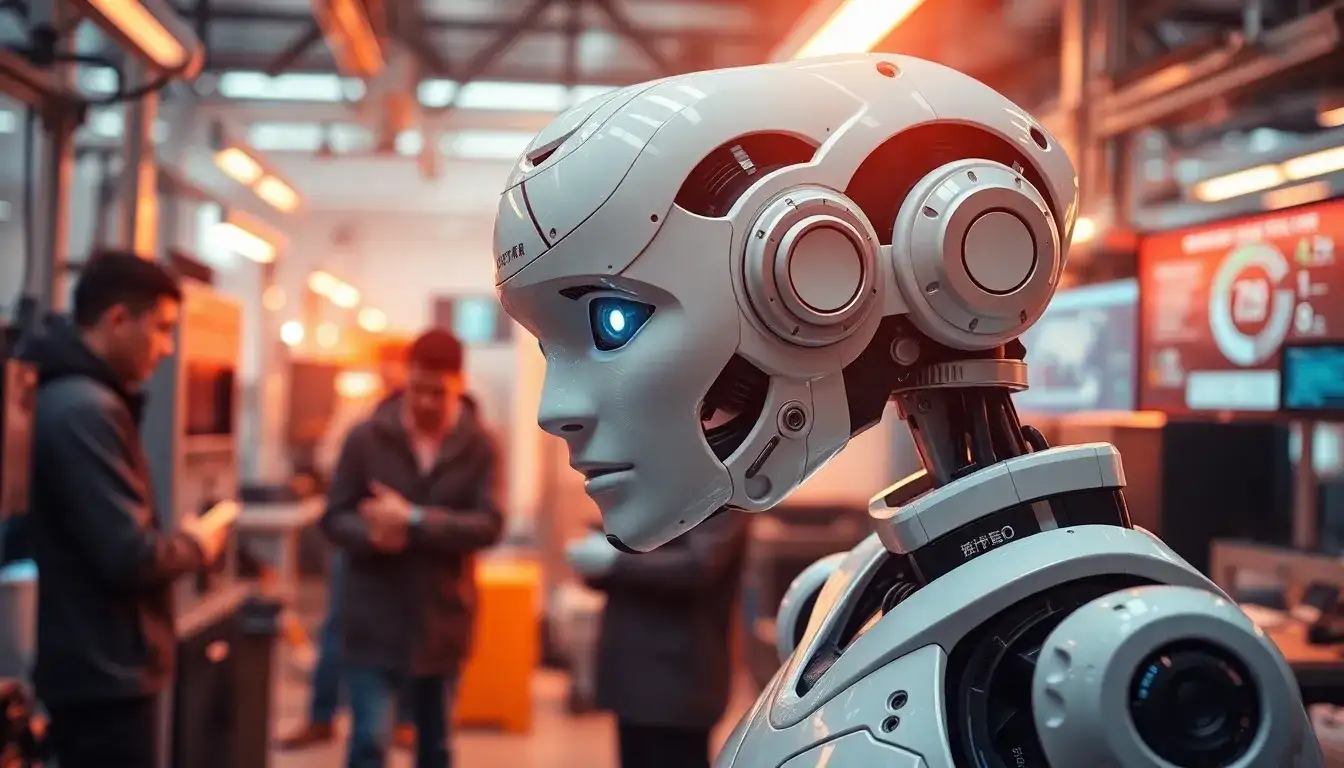
Artificial Intelligence is propelling the growth of the Chinese humanoid robot industry. On March 5, 2026, at the Great Hall of the People in Beijing, the National People’s Congress (NPC) convened, emphasizing the importance of intelligent robotics in the future economic landscape. A report by the government highlighted key areas of development, including intelligent humanoid robots, 6G technology, and the integration of artificial intelligence into various sectors.
In the past year, China has made significant strides in the development of humanoid robots, particularly with the launch of the “Droid” series. These robots have been rapidly advancing, showcasing their capabilities in various environments, from production lines to public service spaces. The government’s policies have fostered a conducive environment for the development and deployment of these technologies across different regions.
As of now, China is positioning itself as a leader in the humanoid robotics sector, with predictions indicating that by 2025, the country will have produced over 1.3 million humanoid robots. This growth is driven by advancements in artificial intelligence and robotics that are expected to enhance productivity and efficiency across industries.
According to a recent report from Omdia, the humanoid robot market in China is projected to reach 1.3 million units by 2025, driven by domestic demand and technological innovation. The market is expected to grow rapidly, with various companies focusing on enhancing their intelligent capabilities to meet increasing consumer needs.
As part of this development, there has been a concerted effort to establish a robust production ecosystem for humanoid robots. This involves collaboration between manufacturers, technology providers, and research institutions to create a seamless supply chain that can support large-scale production. The focus is on creating modular designs that allow for quick assembly and customization based on specific user requirements.
In 2026, the “Droid” series is expected to significantly impact the market, showcasing enhanced features such as advanced sensory capabilities, AI-powered interaction, and improved operational efficiency. The integration of these robots into various sectors aims to streamline processes, reduce labor costs, and enhance productivity in industries such as healthcare, manufacturing, and service.
Despite the rapid advancements, challenges remain in terms of technology integration, market acceptance, and regulatory frameworks. The government is actively working on policies that encourage innovation while ensuring safety and ethical usage of artificial intelligence technologies. As a result, the humanoid robot industry is set to undergo transformative changes in the coming years, with a focus on creating intelligent machines that can operate autonomously and efficiently.
Looking ahead, companies are gearing up to launch new humanoid robots that will address specific market needs, such as customer service and healthcare assistance. The blend of AI and robotics is seen as a pathway to a new era of intelligent machines that can enhance everyday life and business operations.
The trajectory of the humanoid robot industry in China reflects a broader trend towards automation and AI integration, promising a future where humanoid robots play a crucial role in daily activities and industrial processes. With ongoing investments and technological advancements, the potential for growth in this sector is vast.
In conclusion, the momentum behind China’s humanoid robot industry is expected to accelerate, driven by government support, technological advancements, and a growing market demand for intelligent automation solutions.
Original article by NenPower, If reposted, please credit the source: https://nenpower.com/blog/chinas-rapid-advancement-in-humanoid-robotics-and-artificial-intelligence/

