

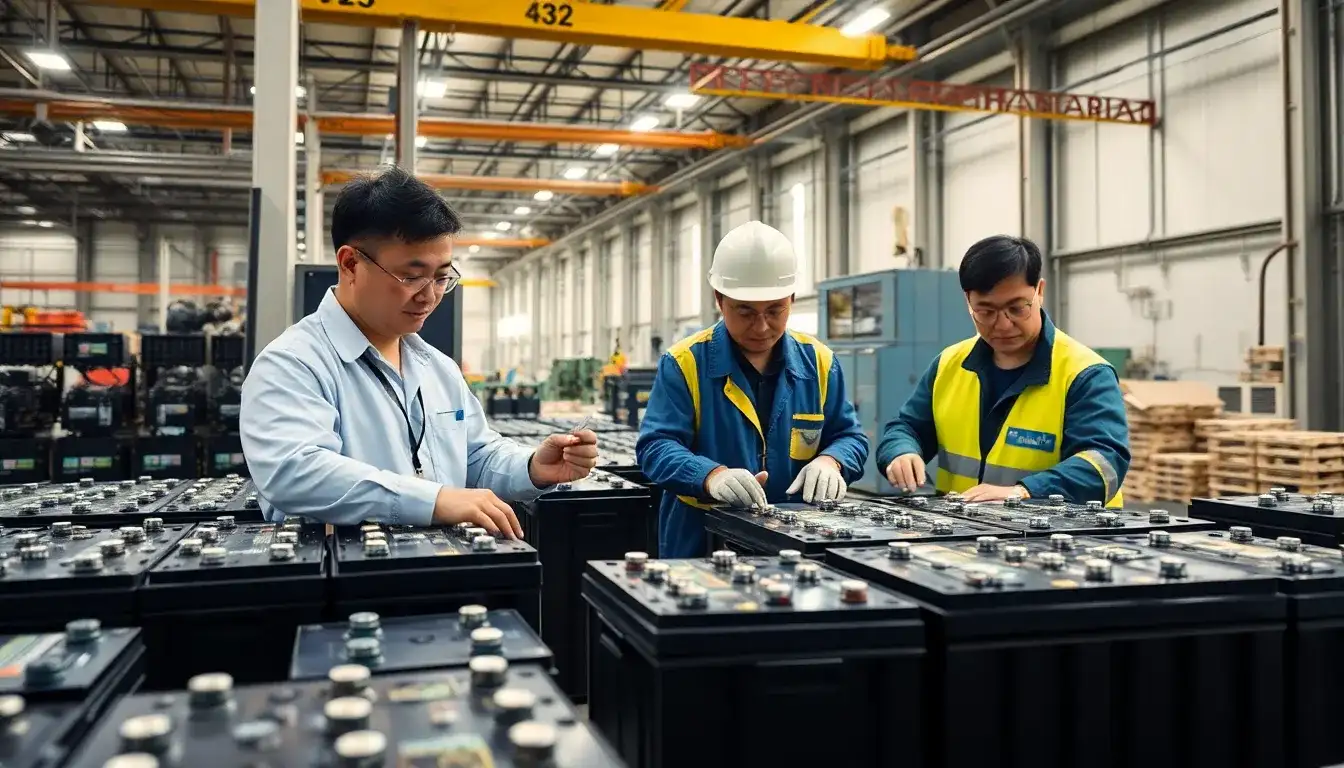
China is set to enter a large-scale retirement phase for power batteries, marking a significant milestone in the industry. As the leading country in both the production and usage of power batteries, China is projected to produce over 13 million new energy vehicles by 2024, continuing its ten-year streak as the world’s largest market.
According to estimates based on battery lifespan, China is approaching a phase where power batteries will be retired on a large scale. Statistics indicate that in 2024, the domestic power battery recycling volume will surpass 300,000 tons, corresponding to a market size of over 48 billion yuan. It is anticipated that by 2030, the domestic market scale will exceed 100 billion yuan. Promoting the recycling and utilization of power batteries is an essential task at present.
On the morning of October 17, the State Administration for Market Regulation held a press conference focused on the standardization of power battery recycling and utilization, emphasizing ongoing efforts to advance this aspect. The administration, in collaboration with the Ministry of Industry and Information Technology and other relevant departments, is actively working on developing and releasing national standards for the entire industry chain of power battery recycling and utilization, providing strong technical support for the industry’s growth.
In terms of collection, storage, and transportation, relevant national standards have been developed to meet the needs for collecting, classifying, packaging, transporting, and handling retired power batteries. These standards ensure traceability management and environmental safety throughout the recycling process. For instance, the “General Requirements for the Recycling and Utilization of Vehicle Power Batteries” standard specifies general requirements for battery packaging insulation, safety classification, transport containers, and information traceability, facilitating controllable traceability, safe transportation, and efficient recycling of retired batteries.
Regarding physical processing, national standards for dismantling, discharging, crushing, and sorting power batteries have been revised and developed, effectively promoting the standardized development of physical processing while ensuring safety and environmental protection. The “Dismantling Specifications for Vehicle Power Battery Recycling” standard outlines requirements for the dismantling of used batteries, operational procedures, and management requirements, providing crucial guidance for the safe, environmentally friendly, and automated dismantling of power batteries. Following the implementation of this standard, dismantling efficiency has improved by over 50%.
In terms of chemical regeneration, several national standards have been published concerning intermediate products, testing methods, and waste treatment in the recycling of power batteries. These standards define regeneration technology and environmental requirements, effectively reducing pollutant emissions and contributing to energy conservation and carbon reduction in the industry. For example, the “Recycling and Regeneration of Vehicle Power Batteries” series of standards stipulates processes for handling hazardous substances to ensure controllable pollution during regeneration, aiming to achieve an overall energy consumption reduction of over 30%.
The next step involves accelerating the establishment of a standard system for power battery recycling and utilization, focusing on aspects such as green design, residual energy detection, discharging, storage, and directed recycling. This will promote the revision and development of relevant national standards, further enhancing the role of standards in supporting and guiding the recycling and utilization of power batteries.
Power batteries contain significant metals like lithium, cobalt, and nickel, which are strategic resources. The recycling and utilization of power batteries essentially opens up a new source of “urban mining,” allowing for the efficient extraction and regeneration of these important metals. This will significantly reduce reliance on primary mineral extraction and imports, serving as a robust measure to ensure the security and stability of supply chains in the industry, while also contributing to the establishment of a green, low-carbon circular economy to support the sustainable development of the new energy vehicle industry.
To ensure the recovery of crucial metal resources from power batteries, the State Administration for Market Regulation has successively developed and released several national standards. Firstly, to standardize the recycling system’s construction, standards such as “Management Specifications for Vehicle Power Battery Recycling: Part 2: Recycling Service Points” address issues like the lack of unified planning, inconsistent standards for service point construction, and non-standardized recycling operations. These standards provide detailed regulations for site selection, facilities, personnel, and comprehensive operational norms from reception to storage and transfer, ensuring compliance and safety during the recycling process and effectively preventing environmental pollution and safety incidents, thus laying a solid foundation for subsequent comprehensive utilization.
Secondly, the characteristics of key intermediate products are defined. In the regeneration process, black powder, an essential intermediate product, has long lacked unified technical requirements, quality standards, and testing methods. This deficiency affects the stability and efficiency of domestic metal extraction and impacts the import of black powder. The new national standard “Recycled Black Powder for Lithium-Ion Batteries” clearly defines the definition, classification, chemical composition, and harmful substance limits of recycled black powder, which will help improve the quality of domestic recycled black powder products and ensure environmental safety in downstream smelting processes.
Thirdly, efforts are made to enhance resource recovery efficiency. Low recovery rates lead to the waste of mineral resources and increase the environmental burden of waste emissions. In response, the national standard “Recycling and Regeneration of Vehicle Power Batteries: Part 2: Material Recovery Requirements” establishes stringent resource recovery rate indicators, requiring a comprehensive recovery rate of no less than 98% for nickel, cobalt, and manganese, and no less than 85% for lithium. By improving recovery rates, companies are encouraged to invest in advanced regeneration technologies and optimize processes to maximize the recovery of essential metal resources.
Moving forward, the State Administration for Market Regulation will further refine the standard system, accelerating the revision and development of key standards related to regeneration, product carbon footprint accounting, traceability and accounting of regenerated materials, as well as methods for calculating the recognition and usage rates of regenerated materials. This will enhance regeneration efficiency and safety, ensuring the high-efficiency recycling of critical metal resources and maintaining the security of the new energy industry supply chain.
Original article by NenPower, If reposted, please credit the source: https://nenpower.com/blog/chinas-power-battery-industry-poised-for-large-scale-retirement-phase-and-market-expansion/

