

Experts Interpret! What Does China’s New Round of Nationally Determined Contribution Goals Mean?
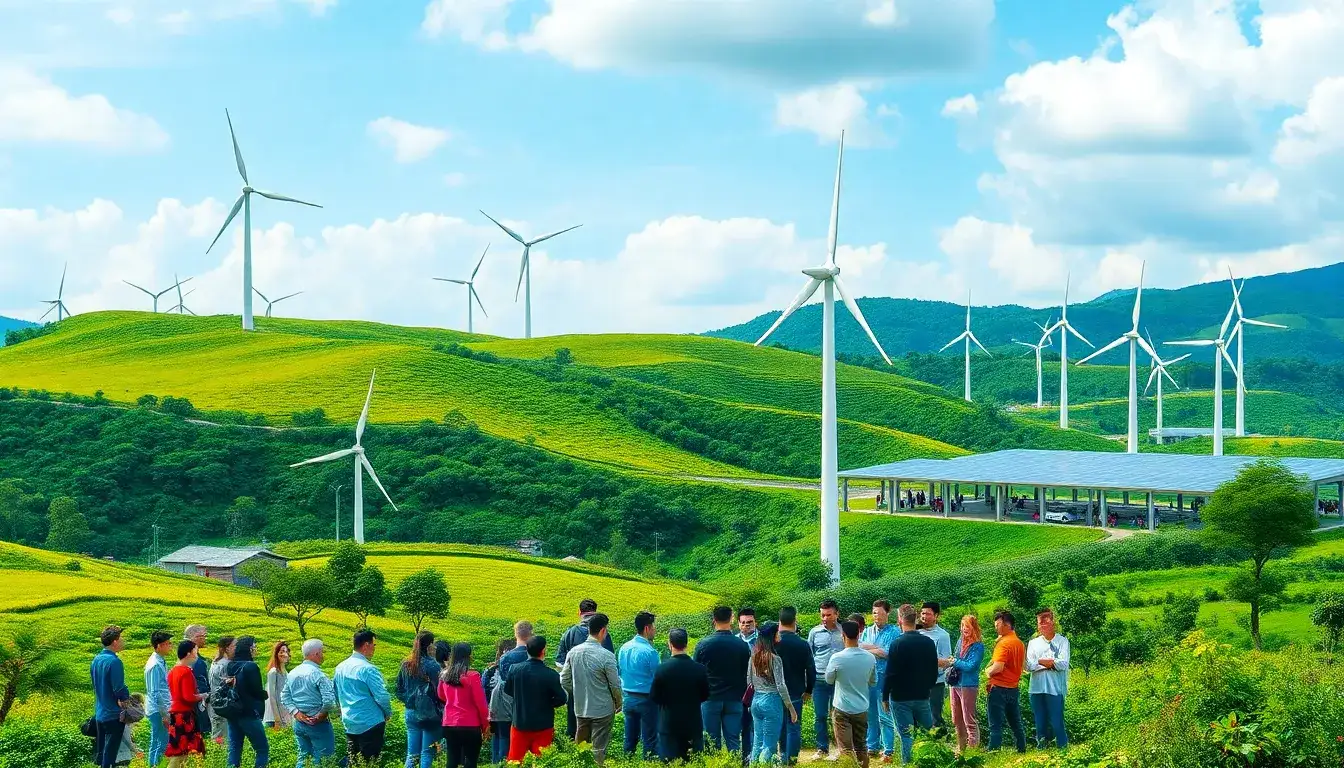
At the recently held United Nations Climate Change Summit, the Chinese government announced a new round of Nationally Determined Contribution (NDC) goals. By 2035, China aims to reduce its total greenhouse gas emissions by 7% to 10% compared to peak levels, striving to achieve even greater results. The proportion of non-fossil energy consumption in total energy consumption is expected to exceed 30%. The total installed capacity of wind and solar power generation should reach over six times that of 2020, targeting 3.6 billion kilowatts. Additionally, forest stock is projected to exceed 24 billion cubic meters, while new energy vehicles are set to become the mainstream of new vehicle sales. The national carbon emissions trading market will cover major high-emission industries, and a climate-resilient society will be fundamentally established.
In the context of a rapidly evolving global landscape and worsening climate crises, the current state of global climate governance stands at a historical crossroads. The future direction depends on the choices made by countries around the world. So, what does China’s new round of NDC goals signify? What changes can we expect?
According to Zhang Haibin, Deputy Director of the Carbon Neutrality Research Institute at Peking University, the announcement of these goals primarily boosts international confidence in the global climate governance process and strengthens collective action against climate change. Currently, global climate governance faces multiple challenges both internally and externally, leading to rising concerns about its prospects and declining confidence. Zhang noted that, from an internal perspective, the U.S. government’s withdrawal from the Paris Agreement earlier this year and the implementation of a series of anti-climate policies have significantly disrupted global climate governance, introducing considerable uncertainty.
Externally, geopolitical conflicts have intensified, and international disputes have become more frequent, resulting in a decreased focus on the climate crisis and a reduction in resources allocated to addressing climate change, further exacerbating the confidence deficit in global climate governance. “At this moment, confidence is incredibly important and invaluable,” Zhang emphasized. While it is essential for countries to express their ambitions actively, it is even more crucial to take concrete actions. Only by implementing effective climate actions and gradually promoting green and low-carbon development can we solidify progress in global climate governance and effectively tackle climate challenges.
Since announcing its carbon peak and carbon neutrality goals in 2000, China has built the world’s largest and fastest-growing renewable energy system. It has established the most comprehensive new energy industrial chain globally and has contributed to a quarter of the new green areas worldwide. Since 2016, China has provided and mobilized over 177 billion yuan in climate change-related funding to other developing countries. Furthermore, China has exported a significant amount of wind and solar equipment, facilitating energy transitions and making green a core aspect of the Belt and Road Initiative. China’s proactive measures to combat climate change have garnered widespread recognition and praise from around the world.
The new round of NDC goals marks China’s entry into a more systematic and comprehensive journey toward low-carbon resilient development. As Zhang Haibin stated, “Climate change is a typical global challenge that requires international cooperation. No country can address it alone or shield itself from its effects.” In recent years, China has supplied 70% of the world’s photovoltaic components and 60% of wind power equipment. During the current five-year plan, the export of wind and solar products has helped other countries reduce carbon dioxide emissions by approximately 4.1 billion tons. The announcement of these new NDC goals will further promote international climate cooperation.
Experts from the National Climate Strategy Center, including Chai Qimin, Li Moyu, and Ding Ding, indicated that the new round of NDC goals represents China’s first comprehensive response to climate change following its carbon peak, encompassing all greenhouse gas net emission reductions across the entire economy. This systematic approach includes multidimensional indicators covering energy and industrial transformation, as well as policy tool innovation, marking a significant milestone in China’s low-carbon resilient development journey.
Experts further noted that in recent years, China has steadily advanced its carbon peak and carbon neutrality goals, with carbon dioxide emissions per unit of GDP continuously declining. By 2024, non-fossil energy is projected to account for 19.8% of primary energy consumption, having already surpassed the 2030 target for total installed capacity of wind and solar power generation (which reached 1.67 billion kilowatts by the end of June 2025) and forest stock (currently at 20.988 billion cubic meters).
China has now established the world’s largest and fastest-growing renewable energy system and the most comprehensive new energy industrial chain. The average cost of electricity from wind and solar projects has decreased by over 60% and 80%, respectively, over the past decade, creating 46% of global jobs in the renewable energy sector.
Chai Qimin emphasized that 2035 marks a critical juncture in China’s journey toward carbon neutrality following its carbon peak. The new round of NDCs encompasses all sectors, including energy, industry, buildings, transportation, and agriculture, integrating all economic links from production to consumption. Notably, it includes non-carbon dioxide greenhouse gases such as methane, nitrous oxide, and fluorinated gases in the total control scope, marking a historic transition from relative to absolute reduction targets and advancing comprehensive governance across all economic sectors.
Additionally, experts pointed out that the new NDCs continue to emphasize energy sector indicators such as the share of non-fossil energy consumption and the total installed capacity of wind and solar power, as well as forest stock metrics. This will further drive energy transformation, accelerate the deployment and development of renewable energies like wind and solar, and facilitate a steady decline in coal consumption. It will also enhance the world’s largest carbon sink capacity through ecological protection and nature-based solutions.
China has established the largest carbon trading market globally, which currently covers the power, cement, steel, and electrolytic aluminum industries, with plans to include petrochemical, chemical, paper, and civil aviation sectors. By 2035, it aims to cover approximately 80% of national carbon dioxide emissions, achieving full coverage of major high-emission industries. The aforementioned experts stated that carbon pricing signals will be fully integrated into all aspects of economic and social development, effectively accelerating the formation of market incentives for green and low-carbon production and lifestyle.
Original article by NenPower, If reposted, please credit the source: https://nenpower.com/blog/chinas-new-national-contribution-goals-implications-for-global-climate-action-and-low-carbon-development/

