

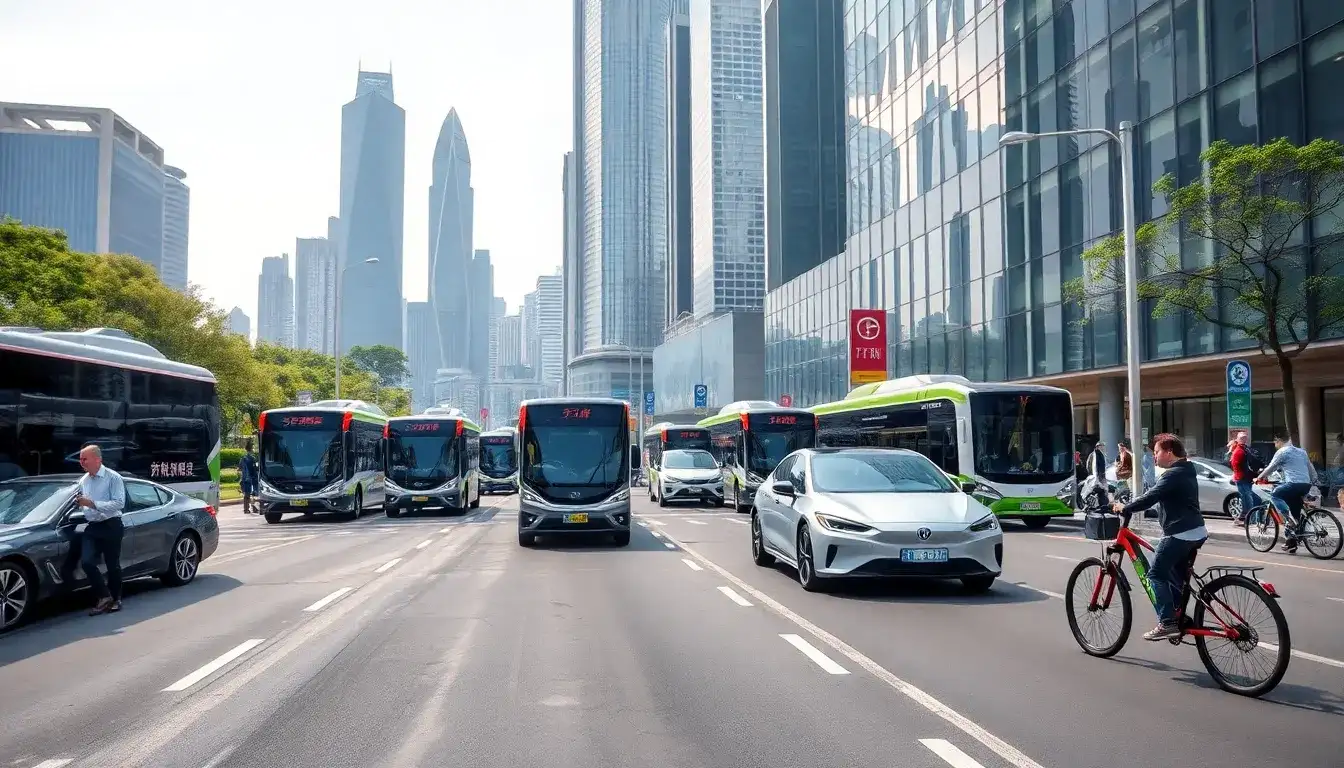
The China Passenger Car Association (CPCA) has reported that by April 2025, the penetration rate of new energy vehicles (NEVs) in China will exceed 52% for the first time. The sales data for April reveals a stark contrast in the market, where leading manufacturers are thriving while new entrants face increasing competition and challenges, particularly in terms of profitability.
With the dual drivers of policy incentives and technological advancements, NEV penetration has reached this significant milestone. However, the industry still grapples with challenges such as price wars and profitability issues hanging over it like a sword of Damocles.
In April, BYD reported impressive sales figures, moving 372,000 vehicles for the month and totaling 1.35 million units from January to April, which is a 45.1% year-on-year increase. This battery-centric company has established itself as a dominant force in the NEV market, with its Dynasty and Ocean series contributing 347,000 units. The company’s brands, including Equation Leopard, Tengshi, and Yangwang, are covering market segments from 100,000 to 1 million units, while overseas sales surged by 91.9%. Notably, BYD’s power battery installation volume grew by over 40%, showcasing the cost advantages of its vertically integrated model that leaves competitors struggling in the ongoing price battle.
Geely closely followed with 234,000 units sold in April and a total of 937,000 units from January to April, reflecting a 49.1% increase. With 125,000 units sold in the NEV sector, Geely is successfully transforming its business, with its Galaxy brand alone contributing nearly 100,000 units in a single month. The Zeekr brand saw an 18.7% increase in deliveries, while the Lynk & Co brand surpassed 10,000 units. Geely’s strategy focuses on offering high-value smart electric vehicles at competitive prices, allowing it to penetrate the mainstream market effectively.
Chery Group achieved sales of 192,000 units in April, with a cumulative total of 790,000 units. Notably, its NEV sales hit 61,000 units, marking a remarkable 90% year-on-year increase. The company has a strong export business, accounting for over 40% of its sales, solidifying its position as a leading exporter of Chinese automobiles. Chery’s dual strategy of focusing on exports and NEVs has allowed it to maintain a healthy profit margin amid industry price wars.
Among new entrants, Leap Motor, once considered a minor player, has emerged as a leader in the new energy sector with 41,000 deliveries. The Leap B10, priced from 99,800 yuan, has made a significant impact in the 100,000 yuan market, achieving over 15,000 orders on its first day. The vehicle features L2-level driver assistance and a combination of lidar and Qualcomm chips, raising the bar for competitors.
Xpeng demonstrated impressive growth with 35,000 units sold, marking a 273% increase year-on-year. Its City NGP smart driving system covers 100 cities, and the MONA M03 enters the entry-level market at 89,900 yuan. Xpeng’s continuous sales of over 30,000 units for six consecutive months establish it as the only new energy manufacturer achieving both scale and rapid growth.
Despite entering the top ten with 28,000 units sold, Xiaomi Auto faces a 3.4% decline from the previous month, raising concerns. NIO’s sub-brand, Leidao, delivered 4,400 units, which highlights the main brand’s sluggish growth, while GAC Aion struggles to navigate product cycles and price competition.
In a more challenging market, traditional joint venture brands are beginning to push back: FAW-Volkswagen has increased its NEV sales share to 12%, and SAIC-GM-Wuling is making strides in overseas markets with its popular Hongguang MINIEV.
In conclusion, the current sales boom reflects a fierce competition between technological routes and business models. As market concentration increases, manufacturers face critical decisions: should they build a comprehensive industrial empire like BYD, operate as a “cost-effective butcher” like Leap Motor, or fully commit to the smart driving arena? What is clear is that the ongoing market “elimination round” is intensifying, and finding a balance among diversified vehicle offerings, technological innovation, and precise market positioning will be key to determining success in this evolving landscape.
Original article by NenPower, If reposted, please credit the source: https://nenpower.com/blog/chinas-new-energy-vehicle-penetration-rate-surpasses-52-for-the-first-time-by-april-2025/

