

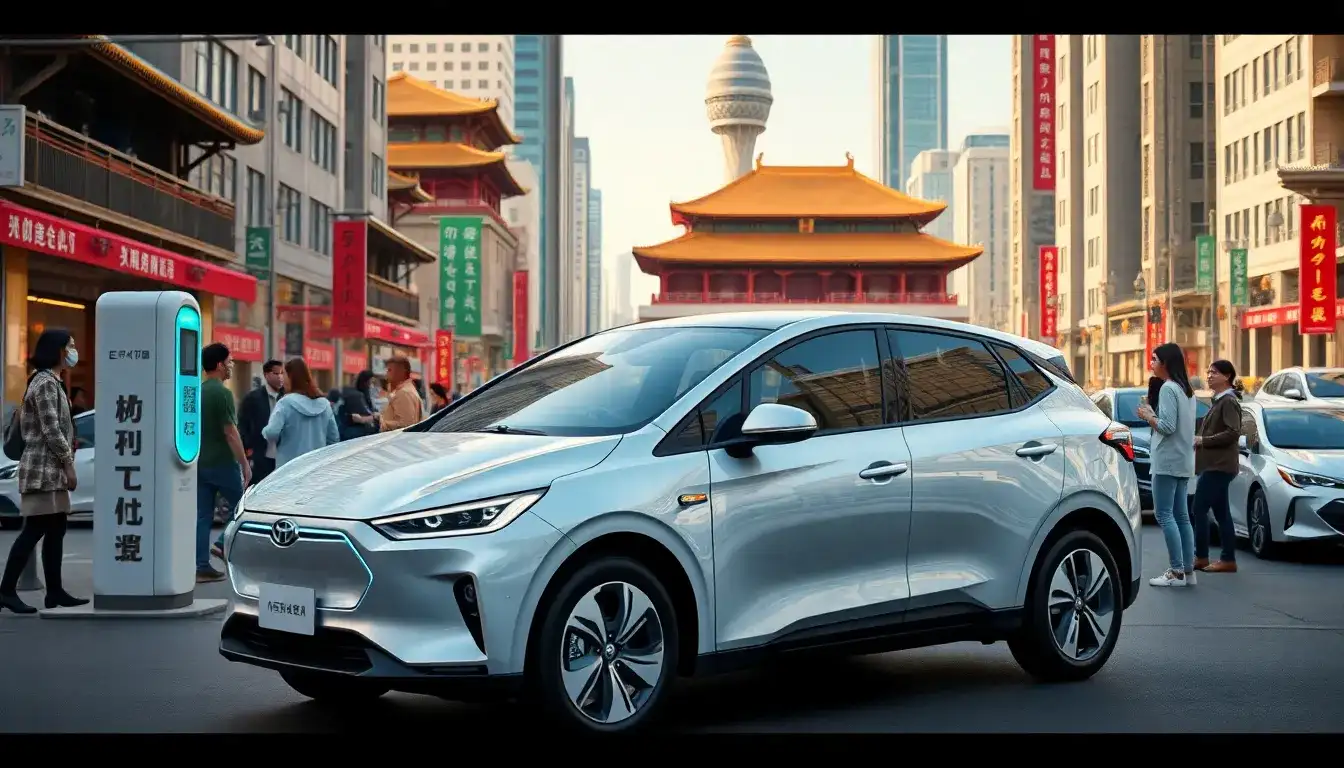
At the 2025 World New Energy Vehicle Conference held in Hainan, the topic of industry expansion overseas emerged as a focal point. China is becoming a significant force in promoting global cooperation in the new energy vehicle sector and facilitating the green and intelligent transformation of the automotive industry. A representative from Hainan Province stated that with the upcoming operational closure of the Hainan Free Trade Port, the province will aim to establish itself as a crucial base for the Chinese automotive industry’s international expansion.
Hainan plans to build a global exhibition and trading base for new energy vehicles and their components, as well as a support base for after-sales parts and services. Additionally, there will be a focus on creating a testing and calibration base for vehicles aimed at international markets, particularly in tropical regions.
The representative also noted that Hainan is a pioneer in promoting green and low-carbon transportation, with a market penetration rate for new energy vehicles exceeding 60%, ranking first in the country. Moreover, Hainan is an explorer in the realm of intelligent connected vehicles, having conducted comprehensive and localized testing of autonomous driving along its 900-kilometer tourist ring road.
Hou Fushen, Secretary-General of the China Society of Automotive Engineers, mentioned that Hainan’s model not only serves as an important reference for promoting new energy vehicles in other regions of China but also provides valuable insights for global developments in this sector.
New Models, New Dynamics: Accelerating Collaborative Expansion of the Automotive Industry Chain
Beyond Hainan, since 2025, China’s automotive industry is transitioning from a focus on single product exports to a more collaborative approach that accelerates the overseas expansion of the entire industry chain.
In Shanghai, a technology company recently equipped a new German vehicle model with its latest developed in-vehicle information service system, creating a new method for industry chain expansion abroad. Company representative Ying Lun emphasized that this new model differs from their past exports of smart connected vehicles from China, presenting better opportunities for cooperation between Europe and China.
A representative from the German Automotive Industry Association noted that China’s automotive sector is generating new momentum for international expansion. Future collaborations across the entire new energy vehicle supply chain, including battery production and charging infrastructure, are expected to become closer.
German Automotive Industry Association President, Hildegard Müller, expressed confidence that China and Germany could become driving forces in the future of mobility, describing this developmental trend as one of coexistence between competition and cooperation.
During the conference, the head of Porsche China remarked that China’s leading position in the smart new energy vehicle industry is providing domestic technology companies with fresh momentum for going global. Companies like Porsche have not only established their first research and development center outside Europe in China but are also increasing collaboration with local new energy vehicle supply chain enterprises.
Porsche China President and CEO, Pan Lichi, stated that this shift in model highlights China’s growing influence in shaping the future of electric mobility. He noted that China has become a source of automotive innovation globally and that they plan to expand partnerships with more outstanding local Chinese collaborators to deepen ecosystem integration.
In Zhengzhou, a representative from a new energy bus company shared that they are set to attend the 28th European Bus Expo in Brussels. This participation marks a departure from previous exhibitions, as they have gradually transitioned from merely exporting products to also exporting technology and solutions.
Company representative Liu Zixing explained that they tailor the development of electric buses to meet the unique operational needs dictated by various countries’ climates and geographical conditions.
Collaborative Innovation: Sharing Achievements in New Energy Vehicles
Looking ahead, how China’s new energy vehicle industry can better “go global” was addressed by a representative from the Ministry of Industry and Information Technology. They stated that China should collaborate with countries worldwide to conduct joint efforts and share innovative achievements in new energy vehicles.
The representative further emphasized that new energy vehicles are a primary direction for the global automotive industry’s transformation and upgrading, serving as a vital vehicle for a new wave of technological revolution and industrial change, and an important engine for sustained economic growth.
In the future, China plans to deepen open cooperation, enhancing mutual recognition of standards and regulatory alignment within the frameworks of the United Nations and international standardization organizations, thereby creating a favorable environment for global industrial development.
Original article by NenPower, If reposted, please credit the source: https://nenpower.com/blog/chinas-leading-edge-in-smart-new-energy-vehicles-fuels-global-expansion-of-automotive-industry/

