

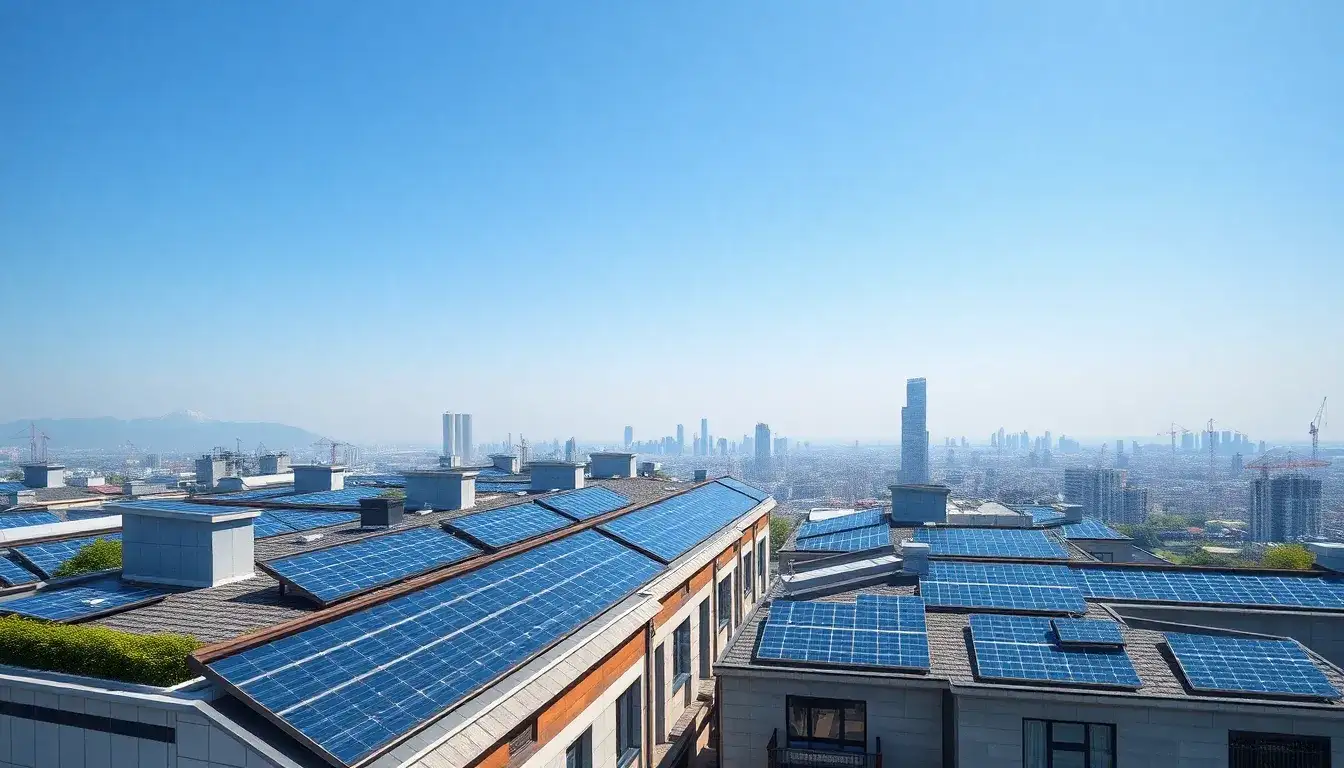
Recently, multiple distributed photovoltaic projects in the Nansha Phase I and II have successfully connected to the grid, marking a significant advancement in the operation of BIPV solar power systems. Following the upgrades, the projects are expected to generate an average annual power output exceeding 11 million kWh, representing a growth of approximately 70% compared to last year. Additionally, the projects will reduce carbon emissions by nearly 7,500 tons annually, saving around 3,000 tons of standard coal, thereby elevating the status of the largest BIPV distributed photovoltaic project in domestic ports.
This grid connection is a crucial step for the Guangzhou Port Group in accelerating the transformation and upgrading of traditional terminals and in building a smart, green port. It signifies a major leap forward in the supply of green energy at the port.
The effectiveness of green energy development has been notable. Last August, the largest single-terminal distributed photovoltaic project in the country—a 7.3 MW BIPV distributed solar project—was launched at Nansha Phase II, with an annual design capacity of 6.8 million kWh. Building on this foundation, the photovoltaic project landscape at Nansha expanded further with the construction of an additional 6.8 MW BIPV distributed solar system at Phase I and 5.3 MW at Phase II, forming a contiguous BIPV solar cluster.
The project leads the industry’s low-carbon transformation by systematically upgrading outdated facilities, utilizing new energy equipment, and applying distributed photovoltaic technology. It also addresses challenges such as reinforcing corrosion-resistant roofs, optimizing typhoon-resistant structures, and enhancing operational collaboration, thereby improving the self-sufficiency rate of renewable energy and the safety performance of buildings.
Employing a contract energy management model, the terminal prioritizes the use of electricity generated by the photovoltaic station, benefiting from preferential electricity prices. The project implements a dual-mode grid connection mechanism of “self-consumption + surplus power feeding into the grid.” This approach transforms idle rooftops into “green assets,” achieving a deep integration of port space resources with clean energy. It serves as a model for the industry, offering a “zero investment, low risk, high benefit” template for low-carbon transformation.
To ensure seamless production alongside construction, relevant departments collaborated to develop a “minimal impact plan.” Through time-scheduled construction, load shifting, and intelligent monitoring, the connection of dual lines to the grid was completed in just 7 hours. This efficient coordination allowed for a “zero interruption” operation throughout the port area. This effective integration model provides replicable experience for upgrading port infrastructure.
Original article by NenPower, If reposted, please credit the source: https://nenpower.com/blog/chinas-largest-bipv-distributed-solar-projects-successfully-connected-to-the-grid/

