

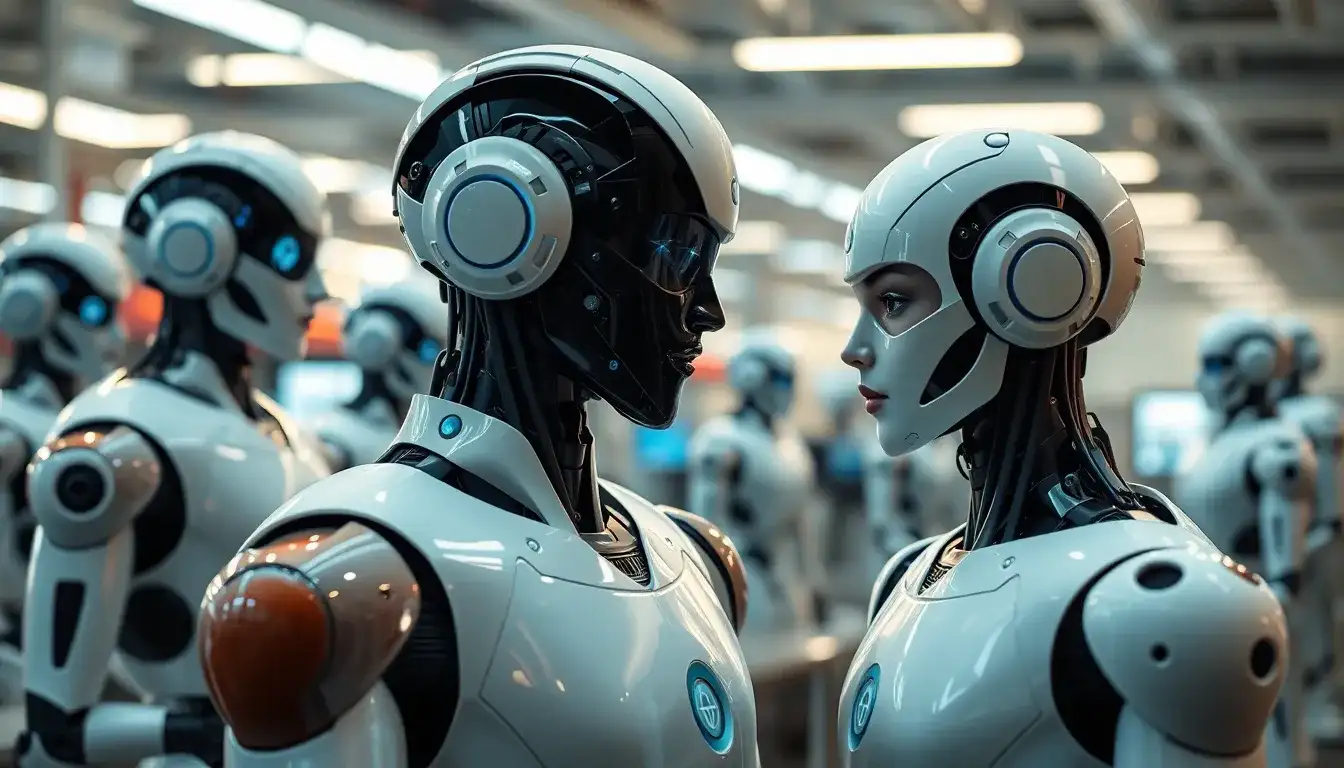
China’s humanoid robot “Jianwen” is ushering in a new era of intelligent technology and its applications. As we move towards a time where artificial intelligence (AI) is increasingly integrated into society, the advancements in humanoid robotics are noteworthy. This development has gained significant attention, especially following major technology exhibitions like the Consumer Electronics Show (CES).
Since the beginning of 2026, starting from the CES in Las Vegas, China’s self-developed humanoid robot “Jianwen” has made headlines. Numerous Chinese companies are showcasing their products and applications internationally, particularly across social media platforms and other global media.
The response to these innovations has been overwhelmingly positive. As of this moment, AI technology is rapidly evolving and becoming a significant driving force in industrial applications. The advancements in AI are expected to enhance the efficiency of various sectors, including manufacturing and service industries.
Recent reports suggest that the development of AI is entering a new phase, where it is no longer just a tool but is becoming a fundamental part of operational systems. Analysts predict that the year 2026 will mark a pivotal moment in the evolution of AI, highlighting its increasing integration into real-world applications.
In February 2026, a report from the University of Michigan and the New York Institute of Technology noted that over the next three years, there will be significant growth in generative AI, humanoid robots, and AI applications, suggesting a transformative shift in this technology landscape.
According to a report by IDC, humanoid robots are projected to reach a market value of $1.8 billion by 2025, with China being a key player in this sector. Compared to last year’s technological advancements, many European companies have expressed a keen interest in China’s rapid pace of innovation.
As we look towards the future, China is poised to become a leading hub for humanoid robot development. It is anticipated that humanoid robots will increasingly be utilized in daily life, offering convenience and enhancing overall living standards.
In summary, the Chinese humanoid robot industry is experiencing rapid growth, driven by advancements in AI and robotics. As we move forward, the expectation is that these technologies will continue to evolve, integrating more deeply into various applications and ultimately reshaping daily life.
Original article by NenPower, If reposted, please credit the source: https://nenpower.com/blog/chinas-humanoid-robots-the-rise-of-intelligent-applications-in-the-era-of-ai/

