

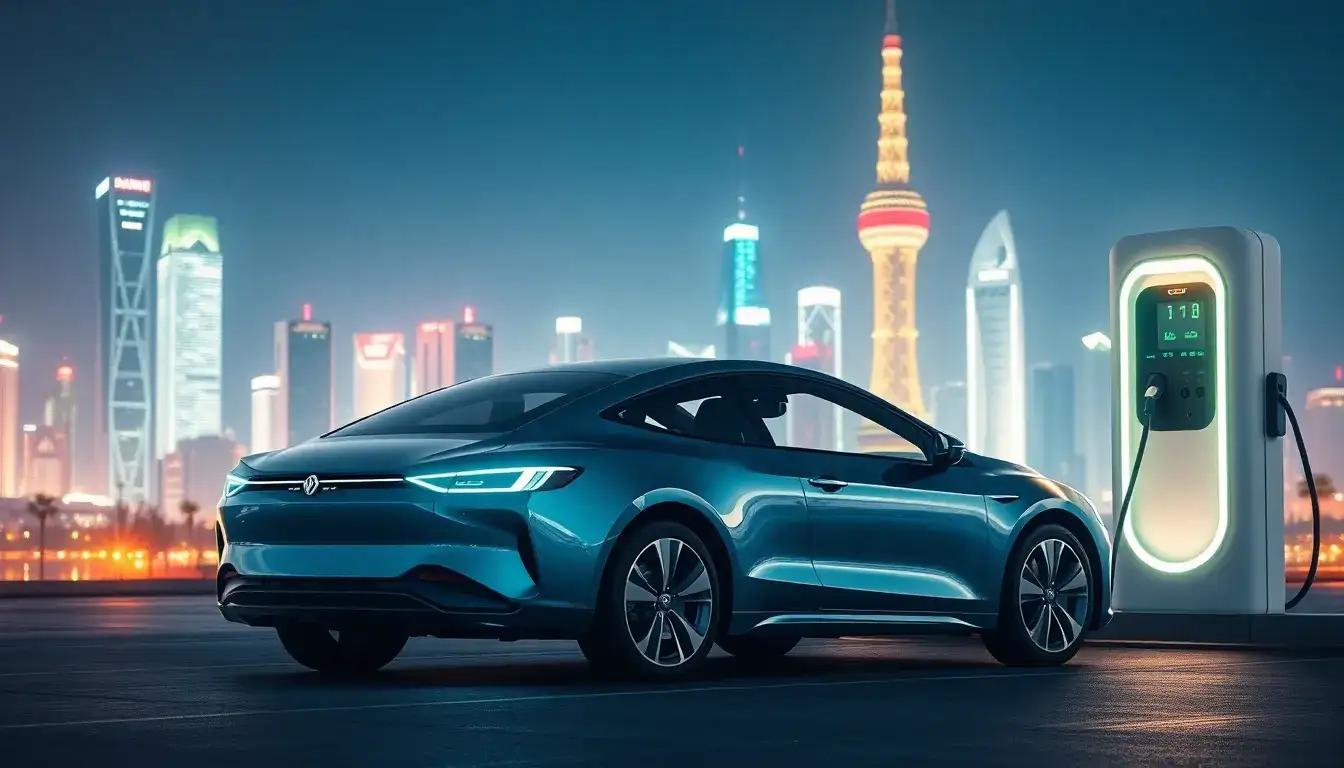
China’s Electric Vehicle Progress: From Continuous Innovation to Safety and Speed
As of October 15, 2025, China’s electric vehicle (EV) industry has made significant advancements. The focus has shifted from continuous innovation in battery technology to ensuring safety and efficiency in electric driving.
In 2023, China surpassed Japan to become the world’s largest exporter of electric vehicles. In the same year, it became the largest producer of pure electric vehicles. By the fourth quarter, China’s electric vehicle market share reached 63.2%, with domestic manufacturers like BYD leading the charge.
BYD has maintained its top position in the industry, continuously innovating and expanding its market presence. The technological advancements in electric vehicle production have also been supported by strong government policies and incentives aimed at boosting local manufacturers.
China’s electric vehicle market is characterized by intense competition, with various manufacturers focusing on enhancing battery efficiency and safety. The key challenges for the EV sector include improving battery life and maintaining safety standards. As of now, many businesses are rapidly enhancing their electric vehicle technology to meet the growing demand.
In a recent publication titled Heart of Electric Vehicles, insights were shared regarding the development of China’s electric vehicle industry. The report highlights that the industry is experiencing a rapid transformation, driven by technological advancements and increasing consumer demand.
Chinese electric vehicles are designed to be more efficient and safer than traditional gasoline vehicles. Their performance in terms of speed and safety is under constant evaluation to ensure they meet the high standards required in the global market.
China’s innovation in electric vehicle technology has led to significant improvements in battery efficiency, with many manufacturers achieving battery densities of up to 140Wh/kg. However, achieving this level of efficiency with lithium iron phosphate batteries remains a challenge.
Efforts to enhance battery performance are ongoing, with manufacturers focusing on increasing energy density while ensuring safety and reliability. The electric vehicle market’s expansion has been met with regulatory support, encouraging innovation and competition.
In 2018, the total production capacity of lithium iron phosphate batteries in China accounted for 55.5% of the market, while lithium-ion batteries made up 39.7%. However, the industry still faces challenges in terms of sustainability and efficiency.
The government has set ambitious goals for the electric vehicle sector, aiming for significant growth in production and sales. By 2023, the average energy density for electric vehicles is targeted to reach 80%, with continued improvements in battery technology expected to drive this progress.
As companies strive to enhance their electric vehicle offerings, the focus on safety and efficiency remains paramount. The market dynamics are shifting, and there is a growing recognition of the need for electric vehicles to provide a viable alternative to traditional gasoline-powered cars.
In conclusion, China’s electric vehicle industry is at a pivotal moment, with opportunities for growth and innovation on the horizon. The trajectory suggests a commitment to sustainability and technological advancement, making electric vehicles a central part of the future automotive landscape.
Original article by NenPower, If reposted, please credit the source: https://nenpower.com/blog/chinas-electric-vehicle-revolution-advancements-in-range-safety-and-charging-speed/

