

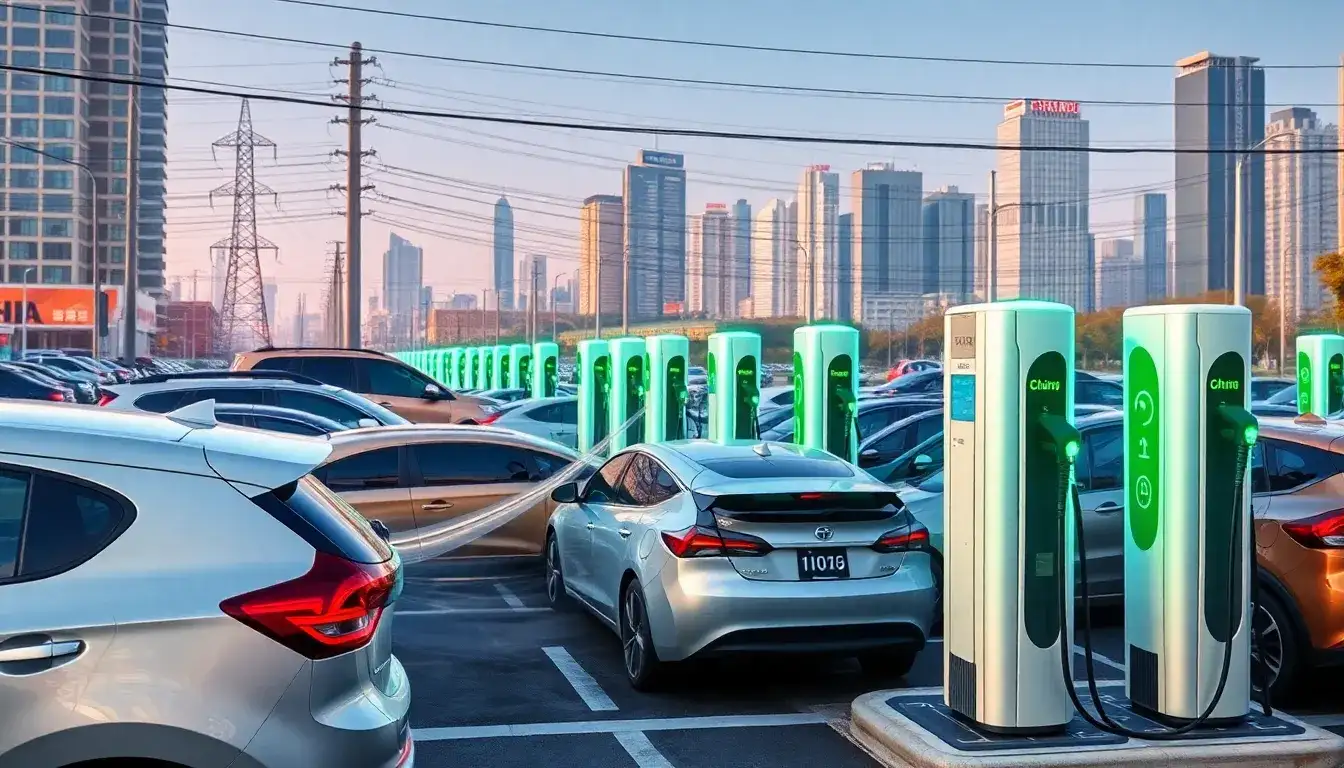
China Charging Alliance: The total number of charging infrastructure across the country has reached 13.749 million units.
On April 12, 2025, the China Charging Alliance released data regarding the operational status of electric vehicle charging and swapping infrastructure for March 2025. The report indicates that the number of public charging piles increased by <b>67,000</b> units compared to February 2025, marking a year-on-year growth of <b>34.1%</b>.

As of March 2025, member organizations within the alliance reported a total of <b>3.9 million</b> public charging piles, including <b>1.785 million</b> DC charging piles and <b>2.114 million</b> AC charging piles. From April 2024 to March 2025, an average of approximately <b>83,000</b> new public charging piles were added each month.

The top ten regions contributing to public charging pile construction—Guangdong, Zhejiang, Jiangsu, Shanghai, Shandong, Henan, Anhui, Hubei, Sichuan, and Beijing—account for <b>67.9%</b> of the total. Charging electricity consumption is primarily concentrated in Guangdong, Jiangsu, Hebei, Sichuan, Zhejiang, Shanghai, Shandong, Fujian, Henan, and Shaanxi, with the majority directed towards public buses and passenger vehicles, while other types of vehicles, such as sanitation and logistics vehicles, account for a smaller proportion.

In March 2025, the total charging electricity nationwide was approximately <b>5.87 billion kilowatt-hours</b>, an increase of <b>350 million kilowatt-hours</b> from the previous month, demonstrating a year-on-year growth of <b>55.1%</b> and a month-on-month increase of <b>6.4%</b>.

Regarding the operation of public charging infrastructure, as of March 2025, the top 15 charging operators in the country are as follows: <b>Telecharge</b> operates <b>746,000</b> units, <b>Xingxing Charging</b> with <b>659,000</b> units, <b>YunKuaichong</b> with <b>613,000</b> units, <b>Xiaoju Charging</b> with <b>231,000</b> units, <b>Weijingyun</b> with <b>215,000</b> units, <b>State Grid</b> with <b>196,000</b> units, <b>Luchongchong</b> with <b>116,000</b> units, <b>Shenzhen Vehicle Network</b> with <b>94,000</b> units, <b>Southern Grid</b> with <b>90,000</b> units, <b>Huichongdian</b> with <b>90,000</b> units, <b>Yiwei Energy</b> with <b>79,000</b> units, <b>Wancheng Wanchong</b> with <b>55,000</b> units, <b>Weilan Fast Charging</b> with <b>52,000</b> units, <b>Kunlun Network Electricity</b> with <b>50,000</b> units, and <b>Junyu Charging</b> with <b>47,000</b> units. These 15 operators account for <b>85.5%</b> of the total, while the remaining operators make up <b>14.5%</b>.

In terms of overall operational conditions of charging infrastructure, from January to March 2025, the growth in charging infrastructure was <b>931,000</b> units, a year-on-year increase of <b>30.1%</b>. This includes an increase of <b>321,000</b> public charging piles, which represents a year-on-year growth of <b>75.3%</b>, and <b>611,000</b> private charging piles built alongside vehicles, reflecting a year-on-year rise of <b>14.6%</b>.

As of March 2025, the cumulative number of charging infrastructure units nationwide stands at <b>13.749 million</b>, which is a year-on-year increase of <b>47.6%</b>.

Comparing charging infrastructure with electric vehicles, from January to March 2025, there was an increase of <b>931,000</b> charging infrastructure units, while domestic sales of new energy vehicles reached <b>2.633 million</b> units. The ratio of charging piles to new energy vehicles is <b>1:2.8</b>, indicating that charging infrastructure development is effectively keeping pace with the rapid growth of new energy vehicles.
Original article by NenPower, If reposted, please credit the source: https://nenpower.com/blog/chinas-charging-alliance-reports-total-charging-infrastructure-reaches-13-749-million-units/

