

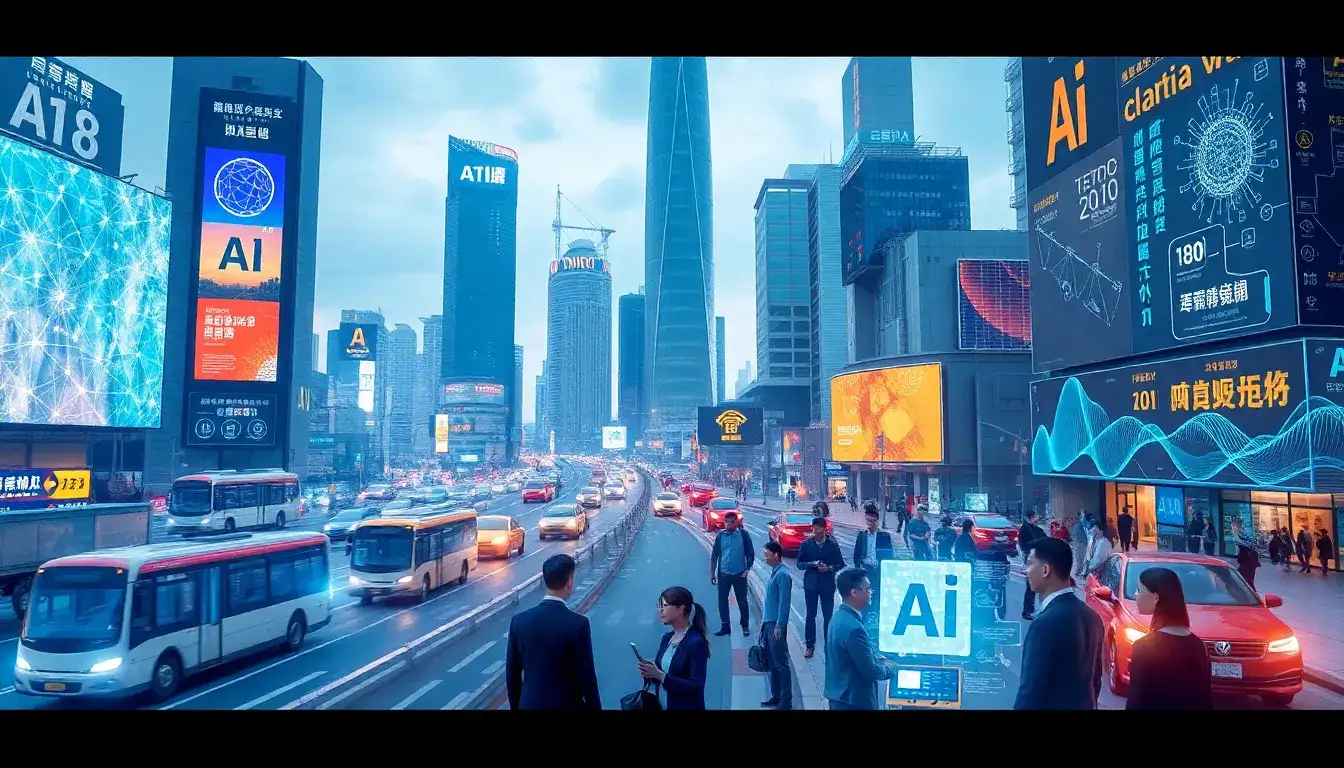
China’s AI Development Trends Towards 2026
As of January 29, 2026, the number of artificial intelligence (AI) enterprises in China has surpassed 6,000. The projected market scale for AI core businesses is estimated to reach 1.2 trillion yuan, which represents a growth of about 30% compared to previous years. The total number of AI applications is expected to exceed 100 billion. China is on track to become the largest provider of AI services globally, as indicated by these statistics. This data paints a comprehensive picture of China’s AI development by 2025.
On one hand, AI technology is advancing rapidly, breaking through barriers that have not been encountered in developed countries. On the other hand, the integration of AI with economic and social governance is deepening. In recent months, numerous countries have seen an increase in AI enterprises. Industry experts have noted that conversational AI, exemplified by applications like ChatGPT, has significantly shifted towards an era of “intelligent automation.” 2026 is seen as the year of the “Fifth Wave” of progress.
Based on the guidelines for the Fifth Wave, China aims to strengthen the development of AI and related industries, enhance cultural construction, improve social governance, and ensure that the benefits of AI are distributed across a hundred million people. The new era of AI development is anticipated to usher in fresh trends.
The technological trends indicate that AI is transitioning from “manual labor” to “smart applications.” Since December 2022, DeepSeek has made significant advancements in AI applications, and its subsequent AI enterprise will be promoted under the brand “DeepSeek.” With the rapid growth of AI development, the new generation of large-scale AI applications is expected to emerge.
According to the latest statistics, the number of AI computing clusters in China has reached 42, with AI computing capabilities exceeding 1590 EFLOPS, placing it in the top ranks globally. Experts believe that China’s AI computing capabilities will continue to progress under the combined influence of “government support and market innovation.” The landscape of AI enterprise development will shift toward a more integrated approach.
The AI landscape is evolving through a two-pronged approach: technological advancement and the pursuit of breakthroughs in applications. The goal is to ensure that AI technologies are applicable and beneficial in various sectors, including education, healthcare, and manufacturing.
By 2025, China is projected to establish high-quality AI data clusters across more than 500 industries, focusing on key sectors such as transportation, healthcare, education, and manufacturing. AI applications are expected to become a new competitive advantage for Chinese enterprises, transforming how they operate and deliver services.
China’s AI development is increasingly seen as a vital part of its economic strategy. The government is actively promoting the establishment of AI clusters to enhance the efficiency and effectiveness of AI technologies across various industries.
As AI continues to evolve, the focus will increasingly shift to how these technologies can be harnessed to improve the quality of life for citizens while maintaining ethical standards and governance.
In summary, the trajectory of AI in China is marked by rapid advancements and substantial investments, which are expected to yield significant returns in various sectors by 2026. The integration of AI into everyday life will likely redefine the landscape of technology and business.
Original article by NenPower, If reposted, please credit the source: https://nenpower.com/blog/chinas-ai-development-trends-leading-up-to-2026/

