

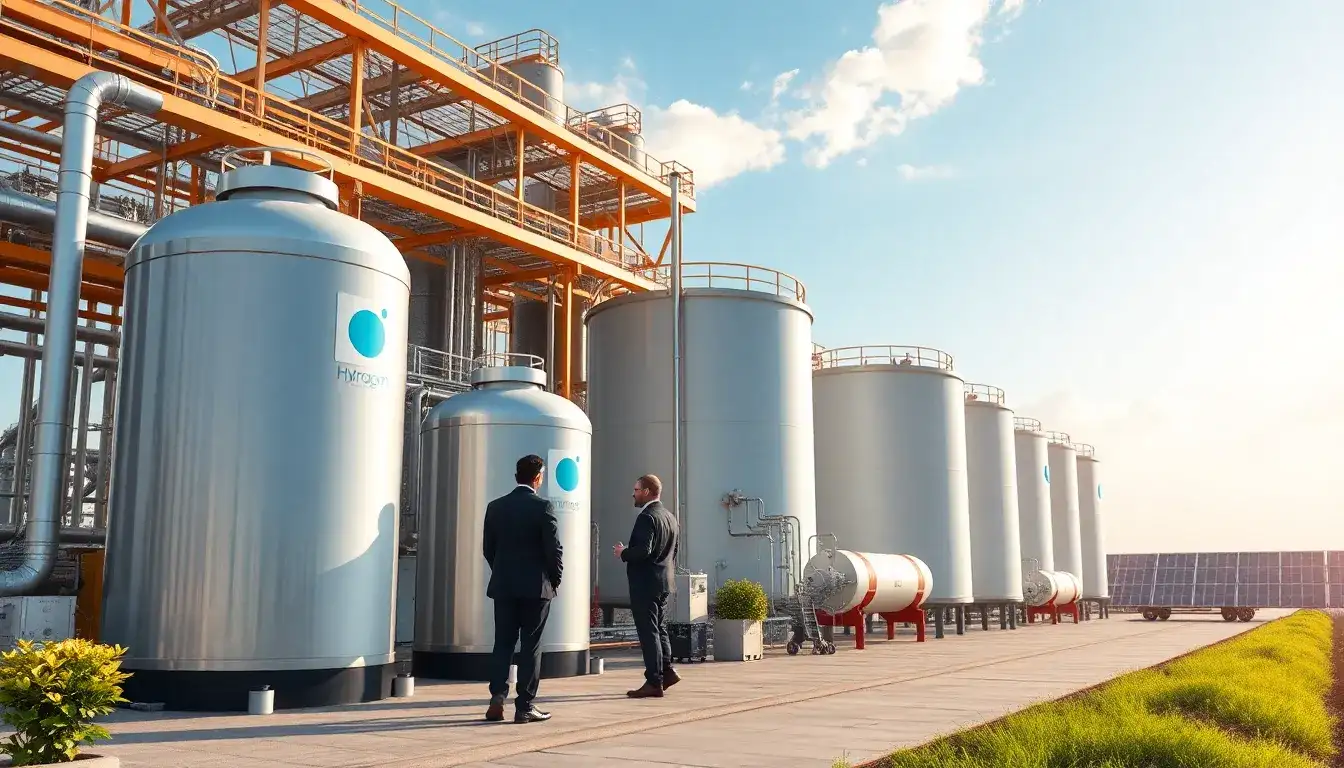
Amid the backdrop of achieving carbon neutrality, water electrolysis technology has emerged as a key method for realizing low-carbon and efficient hydrogen energy utilization, playing a pivotal role in promoting the large-scale application of clean energy. The market for water electrolysis for hydrogen production is currently experiencing rapid growth. Recently, Bluestar Beihua Machinery, a subsidiary of Sinochem International, showcased its innovative water electrolysis hydrogen production solution at the 2025 International Hydrogen Energy Conference and the International Hydrogen and Fuel Cell Industry Exhibition, in collaboration with the Southwest Institute.
Hydrogen Energy: A Green Beacon in the New Energy Landscape
Hydrogen, as a clean and efficient renewable secondary energy source, produces only water as a byproduct during combustion or electrochemical reactions, resulting in zero greenhouse gas emissions. It can be utilized across various sectors, including transportation, industry, electricity, and construction, with significant advantages in heavy industries such as metallurgy and chemical manufacturing, as well as long-distance transport. Hydrogen energy is a crucial pathway to achieving carbon neutrality, and water electrolysis for hydrogen production could become a new mainstream clean energy source.
Hydrogen can be categorized based on its production sources into three types: “grey hydrogen,” “blue hydrogen,” and “green hydrogen.” Grey hydrogen is produced from fossil fuels such as oil, natural gas, and coal, which results in lower production costs but high carbon emissions. Blue hydrogen also comes from fossil fuels but incorporates carbon capture and storage technologies, leading to relatively lower emissions, although at higher capture costs. Green hydrogen is produced through water electrolysis using renewable energy sources such as wind, hydro, solar, and nuclear power, resulting in no carbon emissions during the production process, making it the cleanest form of hydrogen.
In recent years, the total domestic hydrogen production capacity has been rapidly increasing, with projections indicating that by 2030, China’s annual hydrogen production will reach 53 million tons. By 2050, the proportion of renewable energy in hydrogen production, referred to as “green hydrogen,” is expected to reach 70%. Currently, the domestic hydrogen energy industry is transitioning from technology demonstration to commercialization.
Integrated Hydrogen, Ammonia, and Methanol Solutions: A Call for “Zero Carbon”
At the International Hydrogen Energy Conference, Bluestar Beihua Machinery, in collaboration with the Southwest Institute, presented physical products including high-density, atmospheric alkaline water electrolysis cells and proton exchange membrane (PEM) water electrolysis devices. They also showcased 3D models of large-scale wind and solar hydrogen production facilities, a 5,000 tons/year carbon dioxide hydrogenation to methanol unit, and a 60,000 tons/year hydrogen to synthetic ammonia unit. This marks the first formal presentation of the integrated hydrogen, ammonia, and methanol solutions by a Sinochem subsidiary to the industry.
High-Density Atmospheric Alkaline Water Electrolysis Cells
These cells are suitable for large-scale water electrolysis hydrogen production systems. They can be assembled, maintained, and repaired on-site, providing convenience in installation and use.
PEM Water Electrolysis Hydrogen Production Devices
The PEM electrolysis devices feature a compact structure that effectively saves space. They are designed for high current density and a wide power response range, making them suitable for pure water electrolysis scenarios. They can complement large-scale alkaline water hydrogen production systems to meet low-load operation requirements.
Large-Scale Wind and Solar Hydrogen Production Facilities
These facilities can produce hydrogen at a maximum capacity of 3,000 standard cubic meters per hour, with a complete system capacity reaching up to 20,000 standard cubic meters per hour. The facilities are designed to be safe and stable, and their operational efficiency, versatility, responsiveness, and precision are at the international leading level. They can dynamically adjust hydrogen production from the electrolysis cells within a range of 10% to 110% based on the fluctuations in photovoltaic and wind power generation.
Carbon Dioxide Hydrogenation to Methanol Units
Utilizing the Southwest Institute’s low-energy, two-stage carbon dioxide hydrogenation to methanol technology, along with proprietary catalysts, this unit synthesizes methanol from hydrogen and carbon dioxide under conditions of 5.0-8.0 MPa and 220-280°C. Operational data shows that the technology achieves a total hydrogen conversion rate, total carbon dioxide conversion rate, and total selectivity for methanol exceeding 99%.
Hydrogen to Synthetic Ammonia Units
This unit employs a low-pressure ammonia synthesis process to generate ammonia (green ammonia) from hydrogen and nitrogen at conditions of 10-14 MPa and 400-500°C, followed by low-temperature separation to yield liquid ammonia. Green ammonia can be used as a green fuel and as a raw material for downstream products, and it also serves as a carrier for green hydrogen, enabling its storage and transportation through ammonia decomposition. The unit features a flexible production configuration and control scheme, ensuring continuous stable operation even during power fluctuations while optimizing overall economic efficiency.
Strengthening Industry Presence
As a veteran in the electrolysis technology field, Bluestar Beihua Machinery has been involved in the chlor-alkali electrolysis sector since the 1970s. With the continuous improvement of legal regulations in the water electrolysis hydrogen production market, the company actively promotes applicable new technologies to support the healthy development of the green hydrogen industry. In the hydrogen energy sector, Bluestar Beihua Machinery covers the entire industry chain, possessing core process technologies related to electrodes, electrolysis cells, and water electrolysis hydrogen production. Furthermore, the company successfully adapted caustic soda electrolysis technology for water electrolysis hydrogen production. Since entering the international market in 2006, Bluestar Beihua Machinery has established 39 units across 23 countries and regions, becoming one of the top three providers of electrolysis technology worldwide and a permanent council member of the China Chlor-Alkali Industry Association.
As of now, Bluestar Beihua Machinery has manufactured over 24 million tons of chlor-alkali equipment (based on 100% caustic soda capacity) and produces approximately 600,000 tons of hydrogen annually through the chlor-alkali electrolysis process, contributing significantly to the sustainable development of the industry. Sinochem will continue to leverage technological innovation as a driving force, guided by market demand, to accelerate the formation of new productive forces and support the optimization of energy structures and the achievement of carbon neutrality goals.
Original article by NenPower, If reposted, please credit the source: https://nenpower.com/blog/china-national-chemical-unveils-integrated-hydrogen-ammonia-solution-at-international-hydrogen-energy-conference/

