

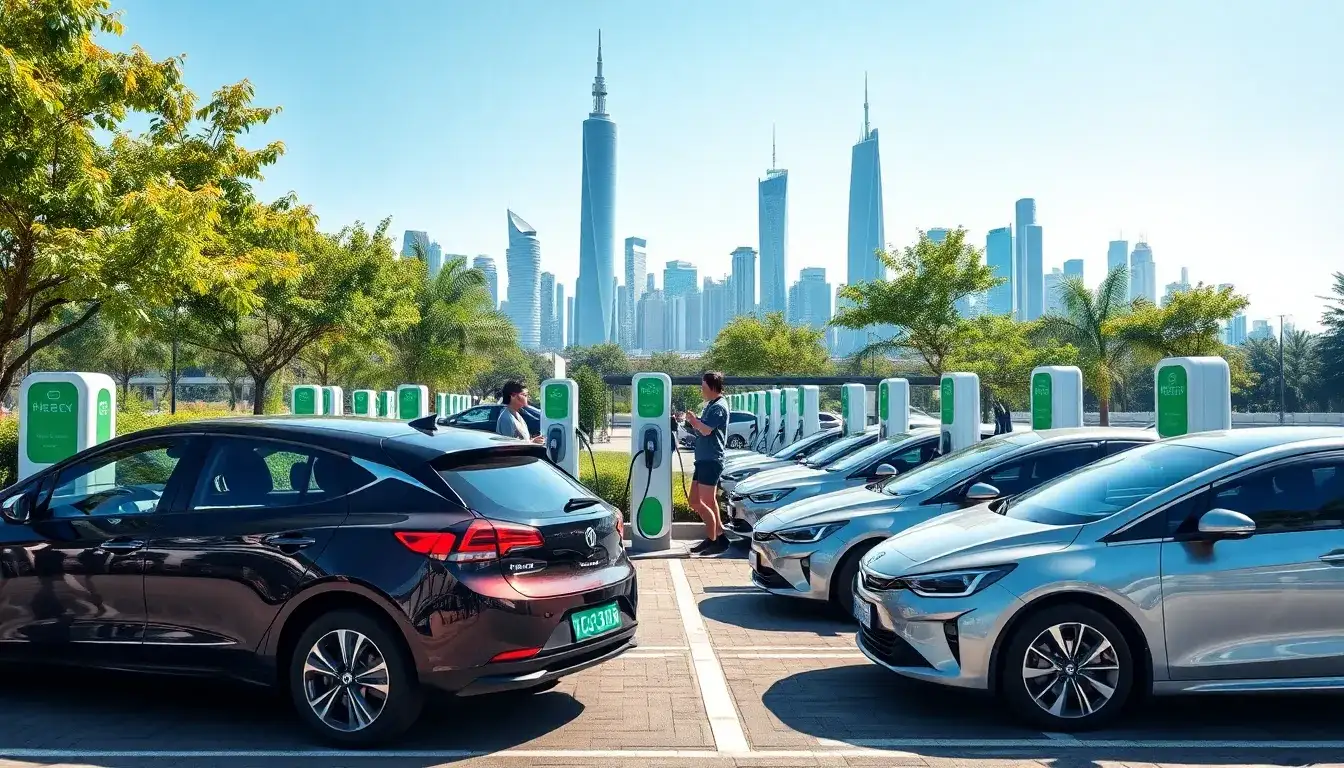
Electric vehicle charging stations are rapidly evolving, with the introduction of the “Integrated Energy Exchange” model in China. As of May 27, 2025, there are significant developments in the charging infrastructure, particularly along the West Coast, where a series of 17 charging stations have been launched to provide high-efficiency energy supplementation for public transport systems.
These charging stations are equipped to handle a range of electric vehicles, including passenger cars and commercial vehicles, and are designed to meet the increasing demand for efficient energy solutions. The new model combines multifaceted coordination with energy storage capabilities, aiming to optimize energy use for electric vehicle components.
In the Deep Blue Bay Area, electric vehicle charging has seen rapid growth. The region reported a reduction of approximately 2000 tons of crude oil consumption, which corresponds to a decrease of over 5000 tons of carbon dioxide emissions, contributing to the carbon footprint reduction efforts.
On May 18, the Time Era officially launched the “75# Standard” for electric vehicle charging, alongside a comprehensive solution for charging station infrastructure. This initiative focuses on efficiency, energy conservation, and a strong commitment to electric vehicle development, with the goal of achieving an 80% clean energy supply by 2030.
Furthermore, the Integrated Energy Exchange model is becoming a key player in China’s energy landscape, facilitating the transition towards a more sustainable transport system. The Transport Department and the National Development and Reform Commission have collaborated to outline a vision for 2035, promoting the integration of electric vehicles into the broader energy system.
By 2024, it is projected that carbon emissions from China’s transportation sector will reach 9.2 billion tons, which is approximately 8.1% of the nation’s total emissions. Among these, electric vehicles are expected to contribute to a significant reduction in emissions.
The Time Era aims to achieve a carbon-neutral transport system by reducing reliance on traditional fossil fuels and promoting electric vehicle adoption. The strategy includes developing charging networks to support the increasing number of electric vehicles on the road.
By 2025, there are plans to establish 300 intelligent charging stations across 13 key cities, enhancing the efficiency of energy transport and distribution networks. By 2030, the goal is to create 15,000 charging points to support the growing electric vehicle market.
The green energy transition is set to accelerate, with the goal of achieving a 50% clean energy supply in the electric vehicle market within the next three years. This comprehensive strategy will enable a significant shift towards renewable energy sources, while maintaining a focus on sustainable development and environmental preservation.
As the electric vehicle market continues to expand, the potential for energy-efficient transport solutions will grow, paving the way for a greener future. This shift is not only beneficial for environmental sustainability but also positions China as a leader in the global transition to electric mobility.
Original article by NenPower, If reposted, please credit the source: https://nenpower.com/blog/china-launches-new-electric-vehicle-charging-stations-to-enhance-energy-integration/

