

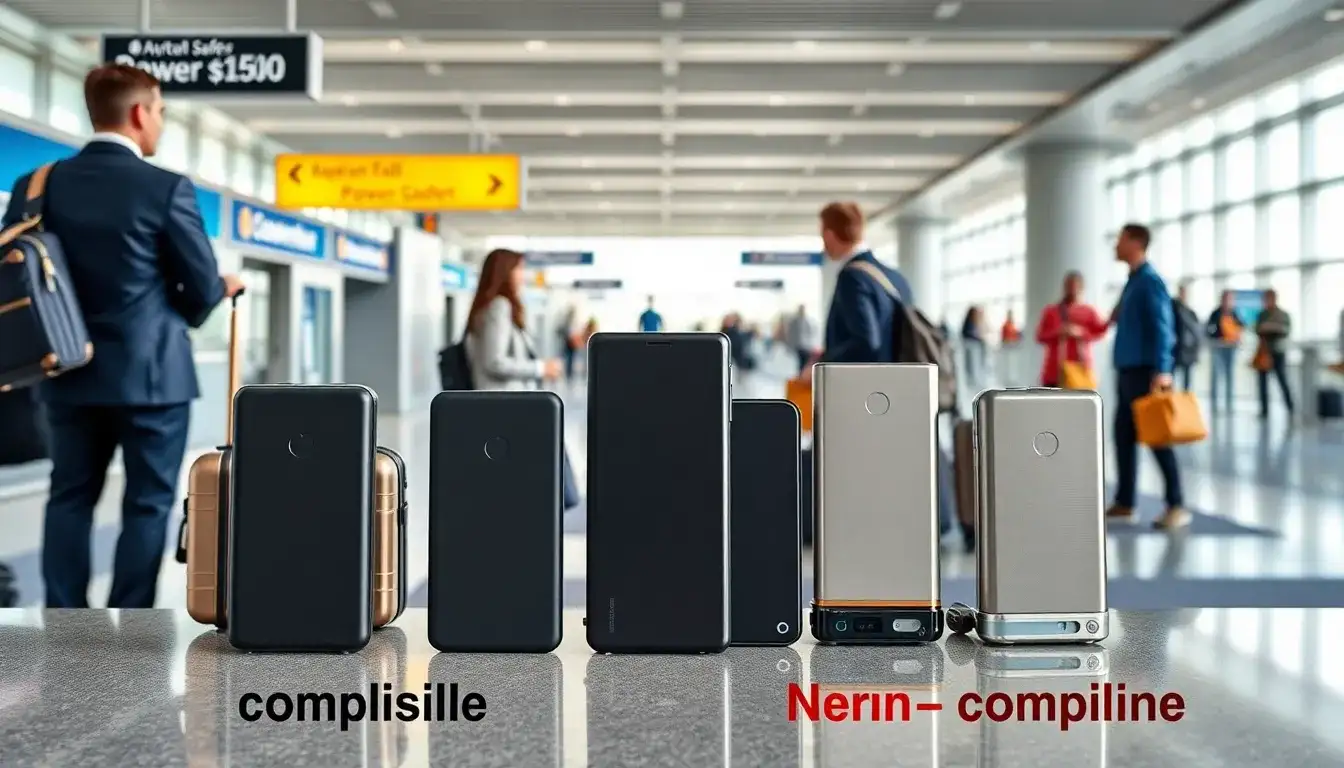
Starting June 28, 2025, China will enforce a new regulation prohibiting the transport of non-compliant power banks on all domestic flights, aimed at enhancing aviation safety. This measure, announced by the Civil Aviation Administration of China (CAAC), is a response to an alarming increase in incidents related to lithium-ion batteries, which have raised significant safety concerns during flights.
Under the new policy, passengers are required to ensure that all power banks they bring on board are certified with the 3C mark, which indicates compliance with China’s Compulsory Certification standards for electronic products. This regulation is designed to mitigate the fire hazards associated with substandard or defective portable chargers, particularly those using lithium-ion batteries, which have been involved in numerous in-flight emergencies.
### The Need for Change: Addressing Safety Concerns
The 3C certification is crucial as it confirms that electronic products adhere to safety guidelines. According to the new regulations, any power bank that lacks this certification, has unclear labeling, or is associated with product recalls will be banned from flights. This decision comes in light of a troubling rise in cases of overheating, smoke, or even fires caused by power banks on aircraft, endangering both passengers and crew members.
Lithium-ion batteries are particularly sensitive when confined to the pressurized environment of an airplane cabin, making faulty or malfunctioning batteries exceptionally dangerous. The recent surge in incidents has prompted increased regulatory oversight, resulting in stricter safety measures.
### A Catalyst for Change: Recent Product Recalls
The CAAC’s new decision is largely influenced by the rise in recalls of power banks from several prominent manufacturers in China. For instance, on June 16, 2025, Shenzhen Romoss Technology recalled around 490,000 units of three different power bank models due to risks of overheating and fire. By June 20, the company’s 3C certification was suspended, and affected products were removed from major online platforms, including Douyin (China’s version of TikTok).
Similarly, Anker Innovations faced the recall of 1.15 million power bank units in the United States on June 13, followed by an additional 710,000 units in China, due to unauthorized changes in battery materials that compromised safety. Other brands, such as Baseus and Ugreen, also encountered problems with their power bank designs, leading to the loss of 3C certification for certain models. These recalls have underscored the urgency for stricter regulations regarding the transport of lithium-ion powered devices.
### Strengthening Flight Safety: New Directives from CAAC
In addition to banning non-compliant power banks, the CAAC has implemented new directives aimed at enhancing safety protocols at airports and on aircraft. These directives focus on improving inspection processes, ensuring that both passengers and airline personnel are aware of the risks associated with non-compliant power banks.
Airport and airline staff will receive specialized training to help them identify uncertified products and manage battery-related emergencies effectively. These initiatives are intended to minimize the likelihood of incidents involving power banks during flights. Additionally, public awareness campaigns will be launched to educate travelers about the new regulations and the dangers of carrying non-compliant portable chargers on airplanes.
### Understanding the Risks of Non-Compliant Power Banks
The dangers associated with non-compliant power banks are well-documented. Lithium-ion batteries, commonly used in portable chargers, can overheat or catch fire under certain conditions. If poorly designed or damaged, these batteries can malfunction, leading to perilous situations, particularly in the confined and pressurized environment of an aircraft.
Overheating power banks pose a serious threat as they may release toxic gases or ignite fires that can spread rapidly in enclosed spaces. Such incidents can be disastrous, especially during flight when emergency response times are constrained. The CAAC’s regulations are designed to allow only safe, certified power banks on board, ensuring compliance with stringent safety standards and reducing the risk of malfunctions during flights.
### Global Trends: Emphasis on Battery Safety
China is not alone in addressing the risks associated with lithium-ion batteries in aviation. The International Civil Aviation Organization (ICAO) has been focusing on battery safety for several years. Various countries have introduced measures to ensure the safe transport of lithium-ion batteries, including restrictions on carrying power banks in checked luggage and limiting the size of batteries allowed in carry-on bags.
For example, the Federal Aviation Administration (FAA) in the United States has established regulations prohibiting power banks in checked luggage and imposing watt-hour capacity limits on batteries in carry-on baggage. Similarly, the European Aviation Safety Agency (EASA) recommends that power banks be carried only in cabin luggage and equipped with overcurrent protection to prevent potential malfunctions.
While the CAAC’s new regulations specifically target domestic flights within China, they are likely to set a precedent for similar actions in other countries, particularly as the demand for portable charging devices continues to rise globally. As lithium-ion batteries become increasingly prevalent in consumer electronics, ensuring their safety in aviation environments is more critical than ever.
### Looking Ahead: Enhanced Safety and Awareness
The CAAC’s new policy is expected to improve safety standards for air travel in China significantly. The ban on non-compliant power banks is a major step toward preventing accidents caused by defective lithium-ion batteries. By mandating 3C certification, the CAAC is ensuring that only safe, thoroughly tested power banks are permitted on flights, which will help mitigate the risk of in-flight emergencies.
Airlines and airports will also benefit from the newly implemented training and inspection protocols, enabling them to manage the risks associated with portable chargers more effectively. With increased awareness of the dangers posed by non-compliant devices, travelers will be better informed about the importance of using certified power banks when flying.
### Conclusion: Advancing Aviation Safety through Stricter Regulations
In summary, China’s new regulations banning non-compliant power banks on domestic flights mark a significant advancement in improving aviation safety. Given the rising incidents involving lithium-ion batteries, the introduction of stricter regulations was essential to protect passengers and ensure safe air travel.
As China continues to set high standards for battery safety, the CAAC’s actions are likely to inspire other countries to adopt similar policies, promoting a safer environment for air travel worldwide. By certifying power banks and other portable charging devices, China exemplifies how rigorous safety measures can be implemented to guarantee a smooth and secure journey for all passengers.
Travelers are encouraged to check their devices for the 3C certification before flying, as this simple step can help prevent potential safety hazards and contribute to a safer flying experience for everyone.
Original article by NenPower, If reposted, please credit the source: https://nenpower.com/blog/china-enforces-ban-on-non-compliant-power-banks-for-domestic-flights-starting-june-28-to-enhance-aviation-safety/

