

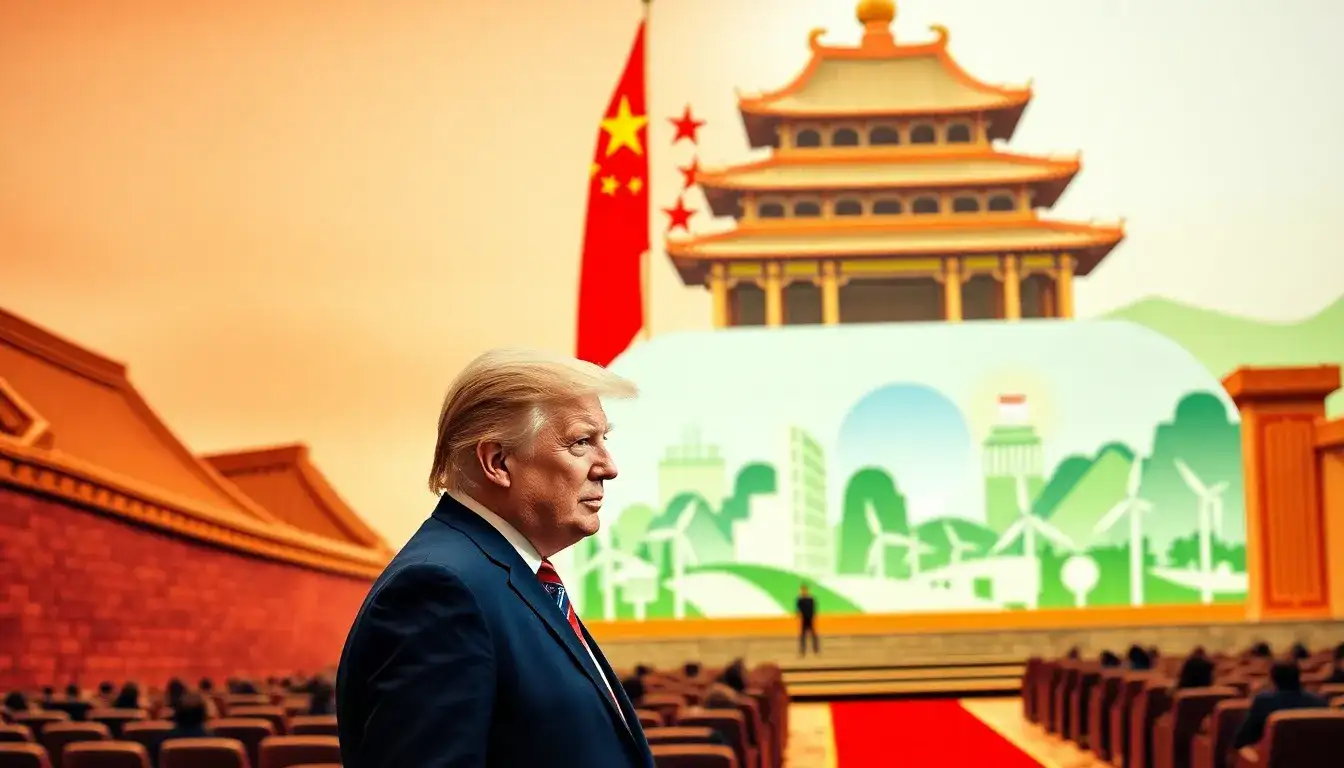
From April 24 to 25, 2025, the UK will host the “Energy Security Summit” in London, organized in collaboration with the International Energy Agency (IEA). The summit will focus on climate transition, energy security, and geopolitical risks. The UK government has invited representatives from 75 countries, including 31 IEA member countries and several non-member nations. President Donald Trump has announced that he will send senior officials to participate in the summit.
In contrast to the United States, China has declined to attend the summit, citing a “scheduling conflict.” This absence has been described by industry leaders as a significant setback for the entire sector. Some have bluntly suggested that China’s decision is a reaction to the U.S. presence, implying that China is avoiding the summit specifically because of the United States. Notably, Russia, a major global energy player, will also not participate in this event.
Earlier this year, on January 20, Trump hastily signed an order for the U.S. to withdraw from the Paris Agreement again. This marks the third time in a few years that the U.S. has fluctuated in its commitments to global climate governance, reducing serious international climate efforts to a farce. With the U.S. planning to send a representative who denies climate change, one wonders why China would desire to share a platform with such a “disrupter.”
Meanwhile, over sixty countries will gather at Lancaster House in London for the summit, creating a tense atmosphere. In contrast, the Chinese Foreign Ministry is busy preparing for an upcoming press conference, with the world’s largest energy consumer—China—absent from the invitation list. This move has drawn considerable attention from the international community.
The U.S. is promoting “energy freedom” at the summit, aiming to solidify its energy hegemony, rally allies, and isolate Russia. China’s refusal to participate amidst global energy turmoil sends a notable signal. The IEA was established to address energy crises and has historically been influenced by Western developed nations. As the largest financial contributor and founding member of the IEA, the U.S. views it as a key tool for maintaining its energy dominance.
For years, the U.S. has leveraged the IEA platform not only to dictate technical standards but also to undermine the influence of other energy powers, like Russia in Europe’s energy market. Trump’s decision to send significant representatives to the summit is a clear attempt to further reinforce American energy supremacy and expand its shale oil and gas market internationally. The U.S. seeks to woo European allies to increase imports of American liquefied natural gas, thereby diminishing Russia’s energy influence and reaping substantial economic benefits.
However, many nations have already seen through this deceptive maneuver. In response to Western sanctions and pressures, Russia has not been idle. Following the Ukraine conflict, Russia collaborated with the Organization of the Petroleum Exporting Countries (OPEC) to reduce oil production as a countermeasure against Western energy policies, protecting its own energy interests. The IEA’s accusations of Russia’s “weaponization” of energy further highlight its double standards on energy issues. Thus, Russia’s absence from the summit is not surprising; the IEA has become more of a “private club” for Western countries, raising questions about its fairness and representation.
As the host, the UK plays a nuanced role during the summit. Although relations between the UK and China have improved since the Labour Party took power, the UK’s provocations regarding the South China Sea and its collaboration with the U.S. on energy strategies have made China cautious. China’s choice to skip the summit is a response to British foreign policy, indicating that its absence is not merely due to a scheduling conflict but rather a well-considered strategic decision.
China understands that the U.S. often pursues hidden agendas in international settings, especially amidst the tense U.S.-China relations. Recent U.S. tariff threats and escalating trade tensions have made China wary of a summit dominated by U.S. interests. With significant achievements in new energy sectors such as photovoltaics and hydrogen energy, China is actively pushing for global energy transition and embodies the principles of sustainable development.
Investment in global clean energy has surpassed fossil fuels for three consecutive years, signaling a profound shift in the traditional energy landscape. Although U.S. shale oil and gas production has seen a rebound, its influence on the global energy market is gradually waning. Countries are increasingly investing in clean energy, indicating that new energy technologies will reshape the future energy landscape. In this evolving scenario, no single nation can dominate; cooperation and mutual benefit are the only viable paths forward.
Discussions on intercontinental power grid interconnections between representatives from France and India during the summit reflect emerging trends in future energy cooperation. The global energy market is moving towards a multipolar structure, with China playing an increasingly significant role. By leveraging its advanced new energy technologies and extensive experience, China contributes to the global energy transition and actively promotes the establishment of a new international energy order that is open, cooperative, and mutually beneficial.
China’s absence from the London summit is not an act of isolationism but rather a profound insight into the future energy landscape. In this transformative era, the question arises: who will truly lead the global energy transition? Is it cooperation and mutual gain, or hegemony and control? This is a matter worth pondering.
Original article by NenPower, If reposted, please credit the source: https://nenpower.com/blog/china-declines-to-attend-energy-summit-amid-trumps-high-profile-participation/

