

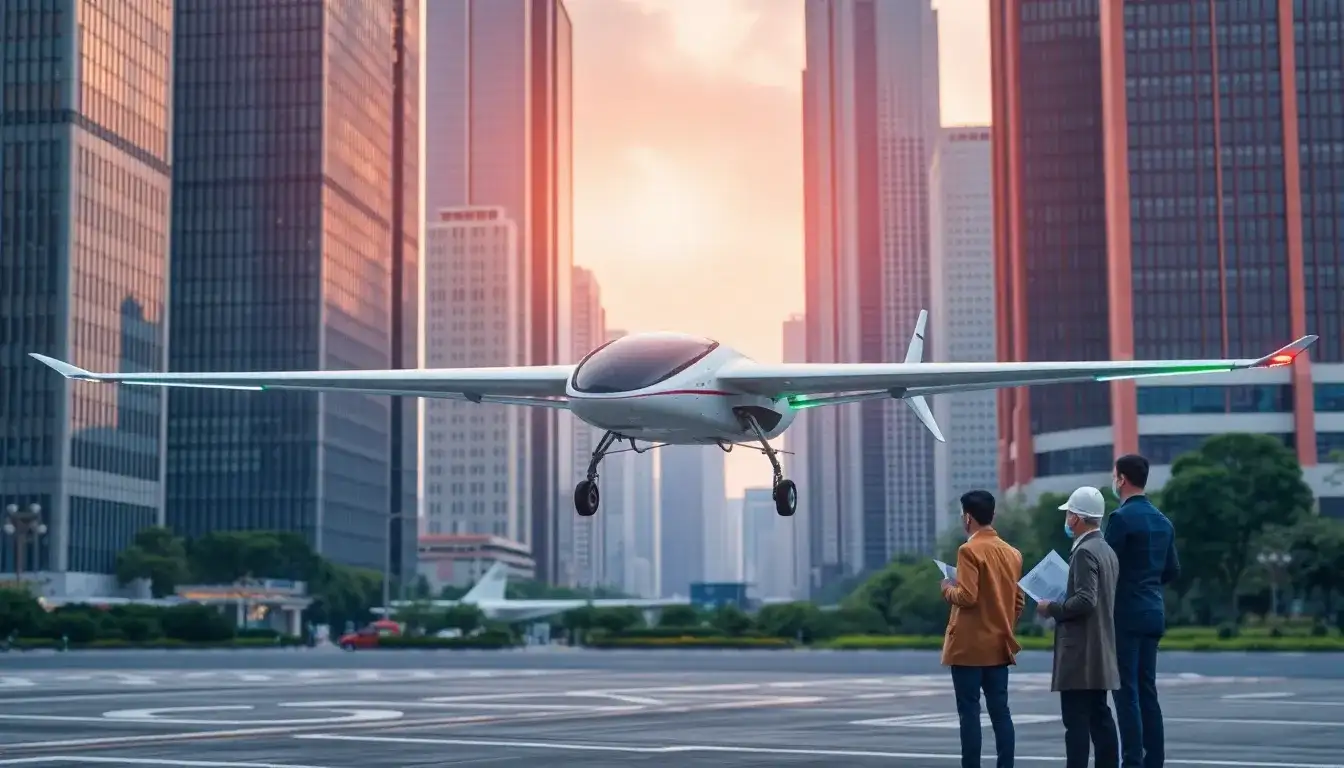
Creating Electric Vertical Takeoff and Landing (eVTOL) Aircraft: China’s Regulatory Framework Advancing Electric Aviation Technology
On May 18, 2025, the Science and Technology Daily reported that within the undefined Chinese regulatory framework for civil aviation, a sleek black electric aircraft was seen undergoing high-speed flight tests. The aircraft displayed remarkable stability during its test flights, indicating its advanced capabilities.
This aircraft is the J250ST001, a new model developed by the regulatory authority, specifically designed for pure electric eVTOL operations, suitable for up to three passenger levels. The electric power business department has stated, “This product is expected to revolutionize the domestic eVTOL market, enabling successful test flights of its prototype.”
eVTOL, commonly referred to as “flying cars,” represents a significant advancement in the realm of urban air mobility. Similar to new energy vehicles, eVTOLs primarily utilize “three electrics” technology, which includes electric motors, batteries, and electric control systems. Typically, electric motors serve as the primary propulsion system, replacing traditional combustion engines found in aircraft, thereby significantly enhancing operational efficiency.
The energy density of electric motors directly impacts the effective payload capacity of the aircraft, approximately limiting it to 20% of the aircraft’s base capacity. Compared to new energy vehicles, the safety and reliability requirements for electric aircraft are notably more stringent.
According to regulatory announcements, the energy density of electric motors for aircraft is expected to be double that of new energy vehicles, necessitating non-stop high-output performance to enhance flight efficiency. Additionally, electric motors must provide a variety of operational conditions to optimize performance levels.
“These advancements have significantly boosted the technological competitiveness of the eVTOL electric motor market,” noted the regulatory authority. “By 2030, the eVTOL market is projected to reach 500 billion, reflecting a substantial need for electric motors and electric control systems.”
The regulatory framework in China has continually focused on the development of electric propulsion systems for aviation. Recently, the department overseeing electric power has been accelerating the design and development of electric motors suitable for the eVTOL sector, with various manufacturers also ramping up production.
Since the 1970s, the Chinese regulatory authority has been dedicated to the advancement of electric propulsion systems for aircraft. In recent years, this focus has intensified, leading to increased investment in electric power technology and market-oriented developments for eVTOL electric products.
The J250ST001 is currently undergoing testing in the laboratory. With a maximum weight of less than 300 kg and a thrust reaching 125 kg, the aircraft achieves flight times of approximately 2 minutes, meeting national engineering standards and surpassing benchmarks set by similar products.
The key features of this product include the integration of electric motors, electric control systems, and propulsion systems into a single unit, representing a sophisticated design that optimizes performance across various operational levels while reducing volume, weight, and energy consumption.
During the production process of electric motors, the regulatory authority has also applied various intelligent manufacturing techniques. “For instance, our motor design incorporates digital twin technology, achieving remarkable efficiency gains across 46 production processes,” said a representative from the regulatory department.
Currently, this product has already been recognized for over 20 applications in electric motor control and is expected to undergo testing in multiple eVTOL aircraft in 2024.
As urban air mobility evolves, the rapid development of eVTOL aircraft is viewed as a crucial step forward. At present, only one international electric aircraft manufacturer has received approval from the European Aviation Safety Agency (EASA), while domestic products remain untested for compliance.
The regulatory authority expressed, “Moving forward, we plan to accelerate the development of large-scale electric aircraft products, advancing certification processes to allow for faster urban air mobility.”
Original article by NenPower, If reposted, please credit the source: https://nenpower.com/blog/china-advances-evtol-electric-aircraft-development-amid-regulatory-reforms/

