

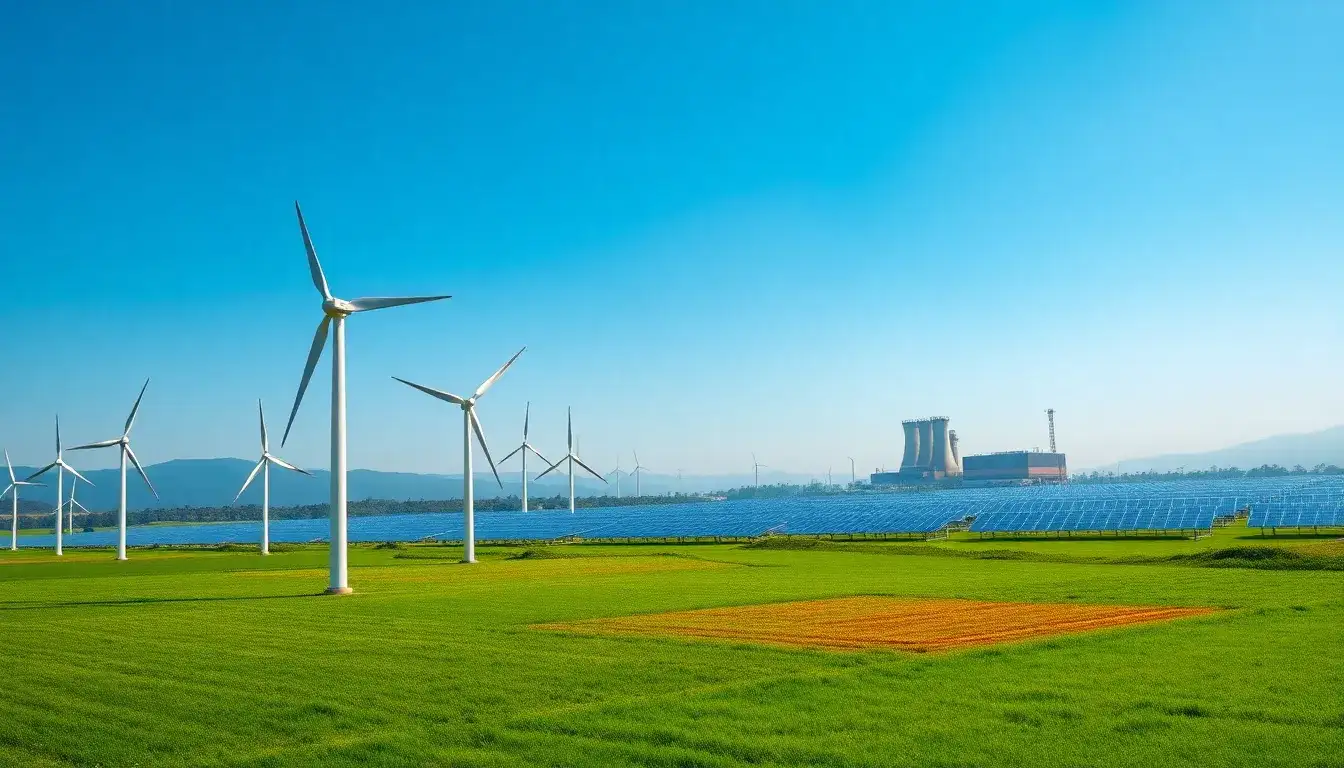
China has achieved a historic transformation in its energy sector. According to the latest data from the National Energy Administration, by the first quarter of 2025, the installed capacity of wind and solar power reached 1.482 billion kilowatts, surpassing that of thermal power for the first time, which stood at 1.451 billion kilowatts. As the installation of wind and solar power continues to grow rapidly, it is expected that this trend will become the norm.
Currently, China has established a comprehensive energy supply system that includes coal, oil, gas, nuclear, hydro, wind, and solar energy. The surpassing of thermal power by wind and solar power marks a significant shift in the electric power system from being coal-dominated to being led by clean energy.
In the past, China was known as a major thermal power nation. Today, it is flourishing with wind and solar energy across the country. What has fueled this remarkable rise in wind and solar energy? The answer lies in technological advancements that have made costs more accessible.
Innovation is the key to unlocking the door to energy transformation. Continuous innovations in photovoltaic technologies, such as high-efficiency crystalline silicon cells and perovskite cells, have repeatedly set new world records for conversion efficiency. Mass-produced advanced crystalline silicon photovoltaic cells now exceed 25% in conversion efficiency. Additionally, domestic electronic-grade polysilicon purity has reached 99.999999999%, meeting the stringent requirements of aerospace applications. Furthermore, China has successfully produced the world’s longest wind turbine blades, measuring 143 meters.
Clean energy is transitioning from being considered “noble electricity” to becoming “popular electricity.” According to a report released by the International Renewable Energy Agency in 2024, the average cost of wind power generation globally has decreased by over 60% in the past decade, while photovoltaic power generation costs have dropped by over 80%, largely attributed to advancements in China.
China has developed a relatively complete supply chain for the wind and solar energy sectors. By 2024, China is set to establish the world’s largest and most comprehensive new energy industry chain. For 16 consecutive years, it has ranked first globally in photovoltaic module production. At the same time, China is actively integrating into the global clean energy supply chain, continuously sharing high-quality clean energy products with the world. In 2024, exports of wind turbine units from China increased by 71.9%; photovoltaic product exports exceeded 200 billion yuan for four consecutive years; and lithium battery exports reached 3.91 billion units, setting a new historical high.
Supportive policies and a conducive environment have played a significant role in this transformation. In response to changes in the energy landscape, China has dynamically improved policies related to renewable energy grid pricing, consumption assurance, and market allocation, creating an equitable, open, and inclusive market environment that attracts various social forces to participate in new energy development and construction. These policies are not one-size-fits-all; instead, they mesh with the market like gears, helping to fully unleash market innovation.
For instance, there are over 100 publicly listed companies in China’s photovoltaic industry. This profound change in the energy sector is reshaping China’s development landscape, accelerating industrial upgrades and optimizing the entire economic structure. The job market is also experiencing a green migration, injecting new vitality into industrial development.
China’s energy transition has already surpassed national borders. Firstly, it provides developing countries with a “shortcut” to progress. China supplies 70% of the world’s photovoltaic modules and 60% of wind power equipment, significantly reducing global wind and solar power generation costs. Through the Belt and Road Initiative, China has collaborated on green energy projects with over a hundred countries and regions. In Argentina, Chinese companies have built the highest and largest photovoltaic power station in South America, the Huarache Solar Power Station, which supplies clean energy to 250,000 households and helps the region achieve energy self-sufficiency.
Secondly, China has demonstrated that development and emission reduction can go hand in hand. It shows that industrialization with a population in the billions can follow a green development path, providing a model that modern development does not have to follow the sequence of pollution first, then remediation. Just as ultra-high voltage technology can transmit electricity across mountains and oceans, China’s energy transition extends beyond mere numbers.
As wind and solar energy become the primary sources, and energy storage allows for on-demand electricity use, this shift represents not only an adjustment in energy structure but also a revolutionary paradigm shift in development, serving as a vivid testament to global sustainable development.
Original article by NenPower, If reposted, please credit the source: https://nenpower.com/blog/china-achieves-historic-shift-as-wind-and-solar-power-capacity-surpasses-coal-fired-power/

