

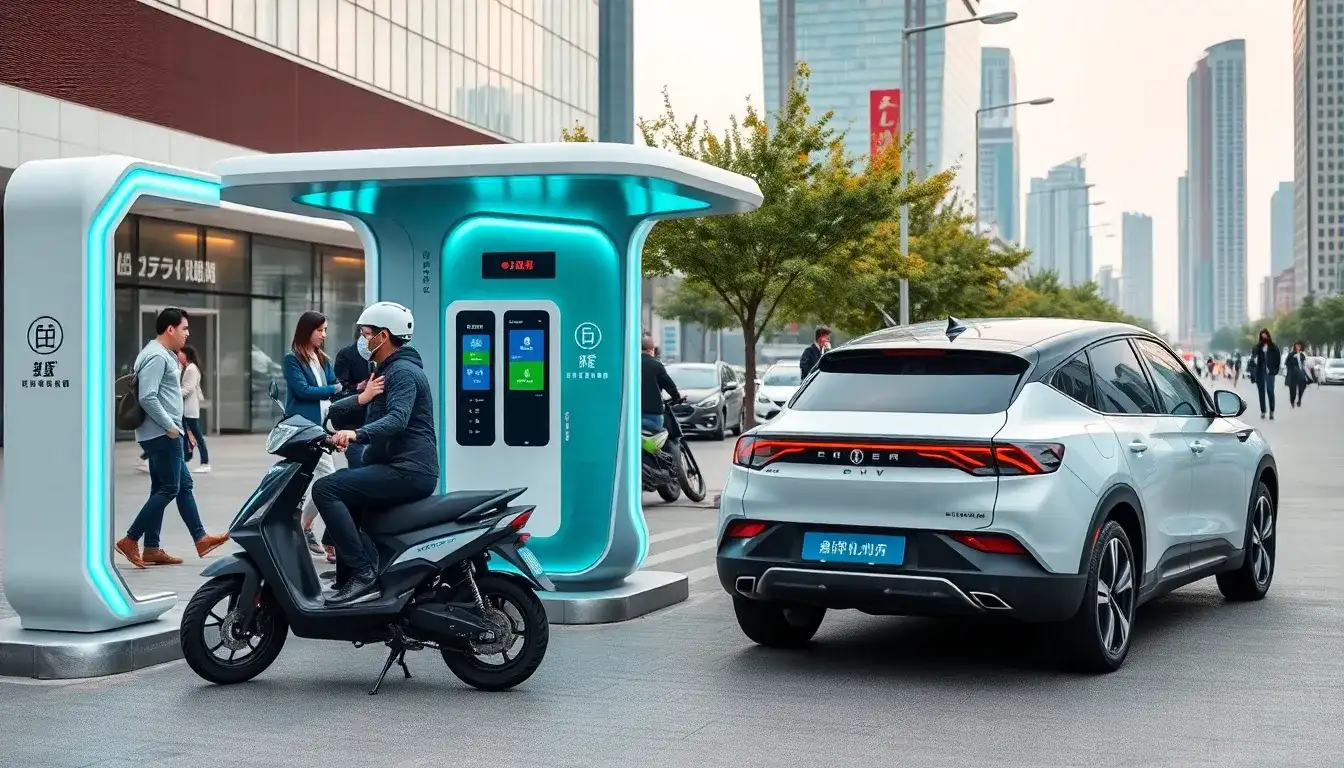
The electric vehicle (EV) battery swapping industry in China is at the brink of significant scale development. The integration of improved policy regulations, breakthroughs in technology, and deepening regional practices are collectively driving this sector from being merely an “energy supplement” to becoming a “core of the energy revolution.”
Policy Framework and Standards
In 2023, the State Council of China issued the “Guiding Opinions on Further Constructing a High-Quality Charging Infrastructure System,” which clearly states the goal of achieving a “widely covered and reasonably structured charging and battery swapping network” by 2030. This sets the groundwork for standardized development of battery swapping models. Following this, various regions have introduced policies to promote battery swapping, with some even outlining specific construction plans for battery swapping stations. Recently, Shanxi Province released the country’s first provincial-level standard for the construction of chassis-type battery swapping stations, ensuring regulated construction. Additionally, Beijing published the “Operational Management Specifications for Electric Vehicle Battery Swapping Stations,” establishing an industry standard system that addresses safety management, service standards, and data supervision. These policies and standards collectively provide foundational support for the standardized development of the battery swapping industry.
From Technological Innovation to Ecosystem Building
Leading companies are driving industry transformation through technological innovation and model breakthroughs. For instance, NIO’s 4.0 battery swapping stations utilize fully automated robotic arms, reducing the battery swapping time to just 3 minutes while also supporting real-time battery health monitoring. CATL has introduced the “Chocolate Battery Swapping Block” using Cell to Pack (CTP) technology, achieving a 15% increase in battery pack energy density. Its “separation of vehicle and battery” business model lowers vehicle purchase costs by 30% and enables full life-cycle management of battery assets through a “battery bank.” With the push from these enterprises, the establishment of battery swapping ecosystems across regions is also advancing. For example, Chengdu’s East New Area plans to develop a cluster of 16 charging and battery swapping stations, creating a 15-minute battery swapping service zone. A dedicated taxi battery swapping station in Handan has reduced the daily energy replenishment time for operating vehicles to just 3 minutes.
Three Major Trends in Battery Swapping Models
1. Technological Integration: The deep integration of technologies such as solar energy storage, charging, V2G (Vehicle to Grid), and smart microgrids is transforming battery swapping stations from mere energy facilities to energy service nodes.
2. Scenario Expansion: The expansion from commercial vehicles to passenger cars and from urban areas to rural regions is unlocking the potential of lower-tier markets, as seen in battery swapping network constructions in counties like Dehong in Yunnan and Gaozhou in Guangdong.
3. Ecological Reconstruction: Cross-sector collaboration among automotive companies, battery manufacturers, grid companies, and energy service providers is constructing a new industrial ecosystem characterized by “vehicle-station-network-cloud” cooperation.
Handan’s First Taxi Battery Swapping Station Officially Opens
On May 7, 2025, Handan City in Hebei Province officially launched its first battery swapping station dedicated to taxis. This station, built with an investment of over 3 million yuan by Xin’ao Company, is located at the west gate of Zhao Yuan Park in the Fuxing District. After two months of intensive construction, the station is now fully operational. It can serve over 100 vehicles simultaneously, using a per-kilometer billing model of just 0.3 yuan per kilometer, with each battery swap taking only 3 minutes.
Beijing Releases Operational Management Specifications for Battery Swapping Stations
On May 6, the Beijing Municipal Market Supervision Administration published a notice seeking opinions on the “Operational Management Specifications for Electric Vehicle Battery Swapping Stations.” The document stipulates that the battery swapping time for electric passenger vehicles should not exceed 4 minutes, while for electric commercial vehicles, it should not exceed 5 minutes. Furthermore, battery swapping stations must be equipped to receive thermal runaway alarms from batteries on-site and take safety measures such as stopping charging and isolating the affected batteries. The transfer and isolation of batteries in the event of a thermal runaway alarm must be completed within 5 minutes, ensuring that the issue does not spread to other battery packs.
Chengdu East New Area Plans to Build 16 Charging and Battery Swapping Stations
On May 1, it was reported that the Chengdu East New Area Airport New City Investment Company plans to construct 14 charging stations, with 470 charging terminals and 2 battery swapping stations within the next two years, expected to be operational by 2026, thereby enhancing public service infrastructure.
Yunnan’s First Comprehensive Energy Station Combining Solar, Storage, and Battery Swapping Goes Live
On April 30, Yunnan Province’s first comprehensive energy station, which integrates photovoltaic power generation, energy storage, charging and discharging, and battery swapping, officially began operations. The station features 32 charging spaces and utilizes V2G technology. Additionally, a NIO 4.0 battery swapping station has been implemented to service 50 vehicles daily.
NIO’s Battery Swapping Network Fully Covers Guangdong
On April 29, with the official opening of two charging and battery swapping integrated stations in Zhanjiang’s Chikan District and Xuwen County, NIO announced the achievement of its goal for “battery swapping coverage in all counties” in Guangdong Province. Consequently, all 122 county-level administrative regions in Guangdong are now serviced by NIO battery swapping stations, providing local users with a more convenient energy replenishment experience.
FAW Liberation and Zhongyi Times Sign Agreement for 1,000 Battery Swapping Heavy Trucks
On April 15, under the witness of Times Qi Ji, FAW Liberation Automotive Sales Company and Zhongyi Times (Jiangxi) New Energy Technology Co., Ltd. officially signed a procurement agreement for 1,000 battery swapping heavy trucks in Yichun, Jiangxi. The first batch is expected to be delivered by the end of June this year and will serve the transportation of fly ash and coal for power plants in Jiangxi Province.
First Provincial Standard for Chassis-type Battery Swapping Station Launched
Recently, the Shanxi Provincial Market Supervision Administration officially released the “Guidelines for the Construction of Battery Swapping Stations for Pure Electric Chassis-type Commercial Vehicles” (DB14/T 3350-2025), marking the first provincial-level standard for chassis-type battery swapping stations in the country. This standard will come into effect on July 10, 2025, signifying a milestone in the standardized development of China’s new energy heavy truck battery swapping industry.
Original article by NenPower, If reposted, please credit the source: https://nenpower.com/blog/china-accelerates-development-of-electric-vehicle-battery-swapping-industry/

