

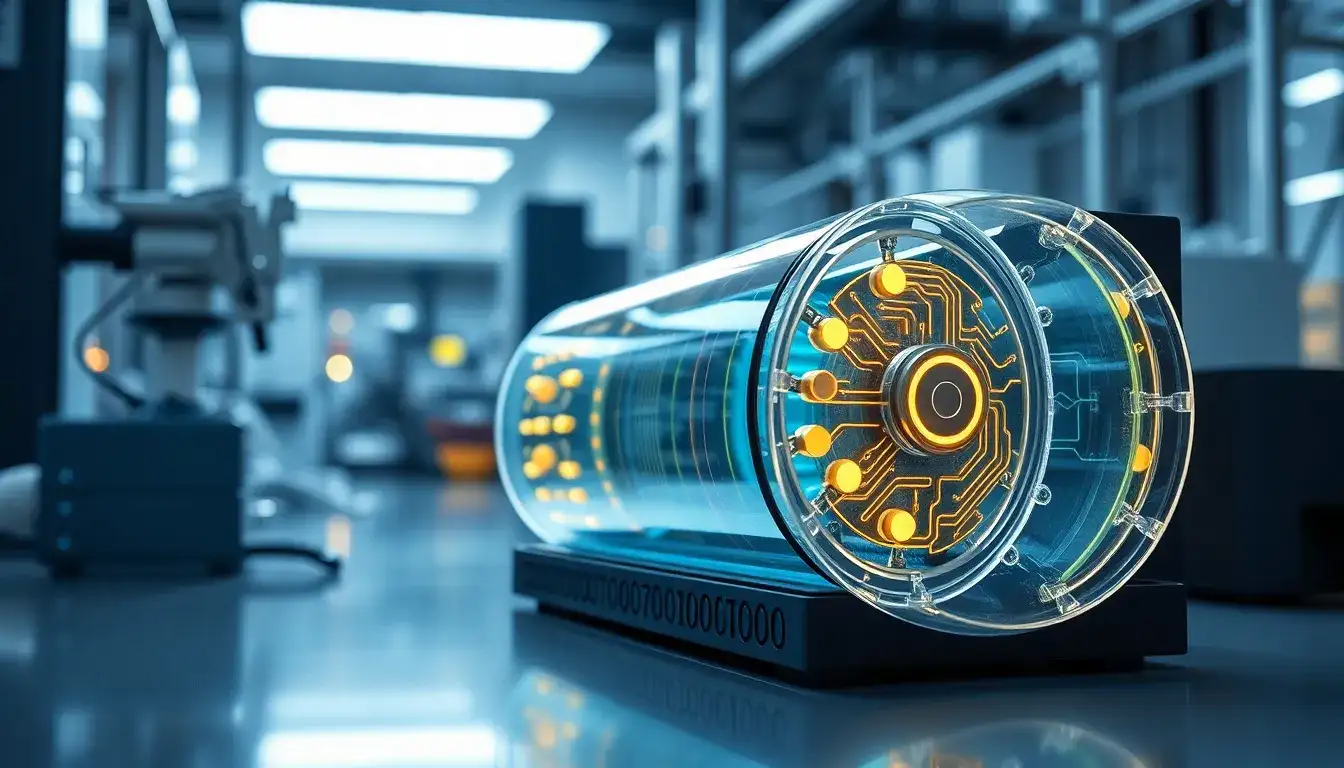
Structural Batteries from Chalmers Highlighted by the World Economic Forum
—
Structural battery composites, a groundbreaking technology that integrates energy storage directly into load-bearing materials, have been recognized as one of the most promising future technologies for 2025 by the World Economic Forum during its Annual Meeting of the New Champions, held from June 24-26. This innovative technology is being developed by researchers at the Department of Industrial and Materials Science at Chalmers University of Technology.
In 2013, the World Economic Forum (WEF) initiated the Top 10 Emerging Technologies report series, which shines a light on innovations anticipated to have a significant positive impact on society and the environment over the next three to five years. This report is created in collaboration with leading researchers and experts and aligns with the forum’s mission to foster global cooperation and innovation for a better future. This year’s edition marks the seventh in the series.
According to Leif Asp, a professor at the Department of Industrial and Materials Science, “The recognition of our research by the World Economic Forum shows that structural batteries have the potential to change how we design and manufacture future products.”
### Energy Stored in Load-Bearing Materials
Structural batteries allow for energy storage within the very materials that support a structure, such as aircraft fuselages, vehicle frames, and electronic devices. This innovation eliminates the need for separate battery packs and wiring, leading to reduced weight, saved space, and increased energy efficiency. In ongoing research, teams have demonstrated that the multifunctional performance of these materials can be doubled. The structural battery composites feature an energy density exceeding 60 Wh/kg and an elastic modulus above 100 GPa. This means the material offers about half the energy capacity of a conventional lithium-ion battery with similar chemistry and is half as stiff as steel, yet it can simultaneously carry loads and store energy. Leif Asp emphasizes, “By integrating energy storage into structural materials, we not only reduce emissions, but we also redefine how products are designed from the ground up.”
### Inspiration from Biological Systems
This technology draws inspiration from biological systems that store and distribute energy efficiently. Additionally, innovations such as carbon fiber electrodes help reduce reliance on critical raw materials, thereby supporting a more sustainable and circular economy. Johanna Xu, an assistant professor at the Department of Industrial and Materials Science, states, “This can open up entirely new design possibilities for electric vehicles and portable electronics, where weight reduction and efficiency are crucial. We are also investigating how these multifunctional materials behave in real-world conditions – for example, how mechanical stress affects battery performance, and how energy use can impact structural properties.”
### Chalmers Launches New Competence Center
The introduction of structural battery composites represents a significant advancement towards multifunctional and resource-efficient systems that will propel the next generation of sustainable design. Concurrently, Chalmers is launching the MAXBATT Competence Center, which aims to unite universities in western Sweden with the Västra Götaland region to secure the future of battery production in Sweden. This center will concentrate on scaling up the technology and ensuring a skilled workforce for future battery factories. As the use of renewable energy continues to rise, structural batteries present a compelling solution to the challenges of energy storage. This technology enhances performance while promoting responsible material use, a crucial factor in achieving net-zero emissions by 2040, a central objective of the Net Zero Industry initiative. Björn Johansson, a professor at the Department of Industrial and Materials Science and director of the competence center, remarks, “The paradigm shift that structural batteries represent is fully in line with the goals of the Net Zero Industry Impact Programme, which aims to radically improve resource efficiency and resilience in Swedish manufacturing.”
### More About the Research
– **World’s strongest battery paves the way for light, energy-efficient vehicles**
– **Watch a video on structural batteries**
– **Recent publications**:
– Electro-chemo-mechanical modelling of structural battery composite full cells by Larsson et al.
– Introducing the first coupled electro-chemo-mechanical computational model of a structural battery composite full cell.
– High-energy cathode in carbon fibre structural battery by Chaudhary et al.
– Introducing an all-carbon fibre structural battery composite full cell with an NMC coated carbon fibre positive electrode.
### Contact Information
– **Leif Asp**
Full Professor, Material and Computational Mechanics, Industrial and Materials Science
[leif.asp@chalmers.se](mailto:leif.asp@chalmers.se)
+46 31 772 15 43
– **Johanna Xu**
Assistant Professor, Material and Computational Mechanics, Industrial and Materials Science
[johanna.xu@chalmers.se](mailto:johanna.xu@chalmers.se)
+46 31 772 10 73
– **Björn Johansson**
Full Professor, Production Systems, Industrial and Materials Science
[bjorn.johansson@chalmers.se](mailto:bjorn.johansson@chalmers.se)
+46 31 772 38 09
Original article by NenPower, If reposted, please credit the source: https://nenpower.com/blog/chalmers-structural-batteries-recognized-as-key-emerging-technology-by-world-economic-forum/

