

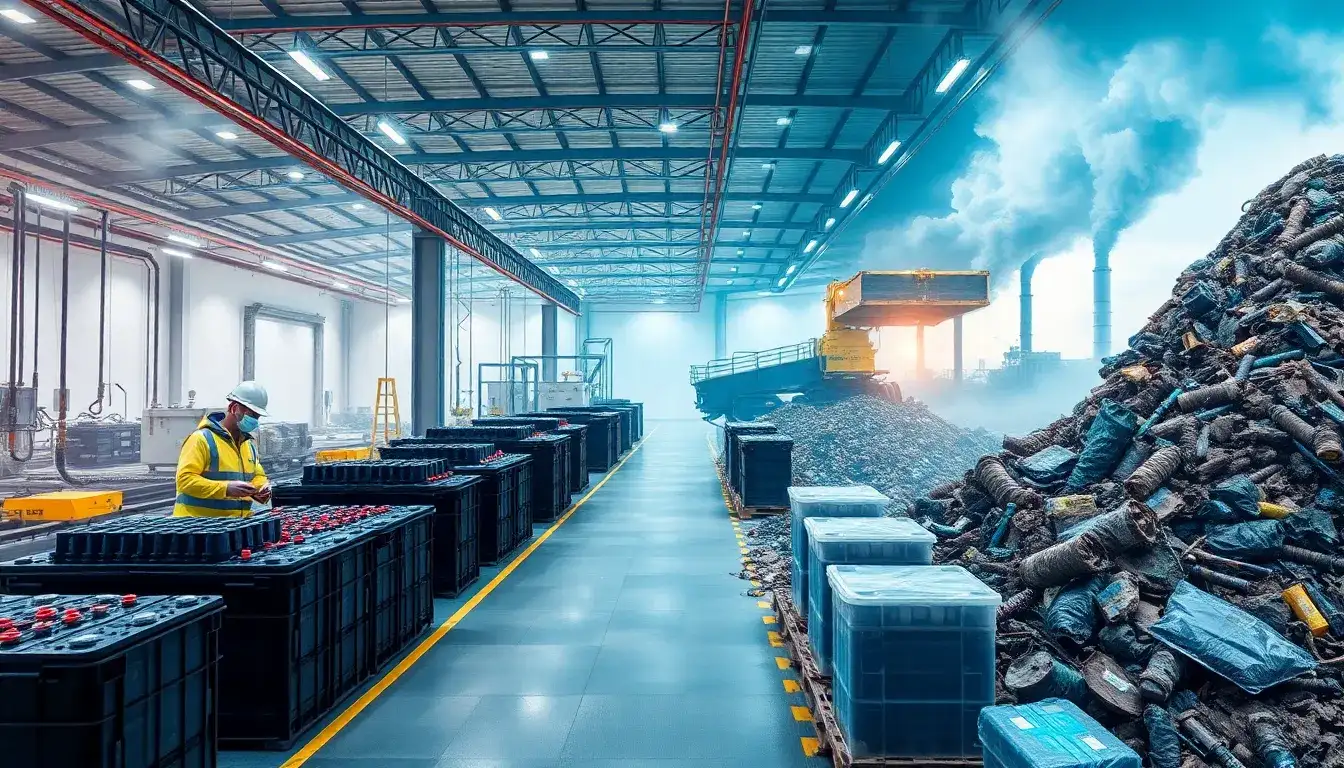
The rapid growth of the new energy vehicle industry has created significant opportunities in the power battery recycling market. However, this multi-billion dollar market is also plagued by numerous issues, leading to intense competition between environmental protection and profit motives.
Despite the government’s implementation of policies to regulate the power battery recycling industry, a large number of unqualified small workshops are still operating in this space. These workshops, lacking in environmental investment, can offer significantly higher prices to purchase retired power batteries, which puts legitimate companies at a disadvantage in terms of recycling volumes. Statistics show that the standardized recycling rate of power batteries from new energy vehicles in China is below 25%, resulting in many retired batteries flowing into unofficial channels.
The environmental risks are significant, with serious pollution hazards. Retired power batteries are classified as hazardous materials, and improper handling can lead to severe environmental contamination. Heavy metals such as nickel and cobalt, along with toxic substances like lithium hexafluorophosphate found in electrolytes, can pollute soil and water sources, posing health risks to humans if not treated professionally. Some small workshops employ dangerous methods like violent disassembly and outdoor operations, leading to high pollution rates.
Competition among automotive enterprises is fierce, placing legitimate companies under pressure. Driven by profit motives, small workshops inflate recycling prices, squeezing the survival space for legitimate businesses. These companies often have to invest significant funds in environmental equipment and research and development, resulting in higher costs that make it difficult to compete with the low-cost operations of smaller workshops. Furthermore, the recycling industry suffers from unclear pricing mechanisms and unregulated market management, exacerbating the chaos.
The industry is faced with both overcapacity and technological bottlenecks. While the market outlook is promising, the power battery recycling sector currently experiences overcapacity. In 2023, the nominal total capacity of companies on the “white list” far exceeds the actual total volume of retired power batteries, with a capacity utilization rate of only 15.3%. Additionally, the technology for recycling power batteries is uneven, with various battery types and complex structures, highlighting the urgent need for improved disassembly and treatment technologies.
To address the chaotic situation in the power battery recycling market, comprehensive measures are required. On one hand, industry regulation must be strengthened, raising entry barriers and strictly cracking down on illegal recycling activities to ensure fair competition. On the other hand, investment in technological innovation should be increased to enhance the relevant standard systems, thereby improving the technical level and efficiency of recycling. Moreover, collaboration among enterprises, government, and society is essential to promote the healthy development of the power battery recycling industry, achieving a win-win situation in both economic and environmental benefits.
The emergence of the automotive power battery recycling market presents both opportunities and challenges. Only through regulatory management, technological innovation, and social collaboration can the current issues be effectively resolved, allowing this multi-billion dollar market to realize its true value and provide robust support for the sustainable development of the new energy vehicle industry.
Original article by NenPower, If reposted, please credit the source: https://nenpower.com/blog/challenges-in-the-electric-vehicle-battery-recycling-market-environmental-concerns-and-profit-struggles-behind-a-billion-dollar-industry/

